Emilie Mauricio
January 15, 2026
•
7 min read
Every January, millions of people make resolutions. By February, 80% have already abandoned them. The problem isn't your willpower—it's the approach. Traditional New Year's resolutions set you up to fail because they focus on rigid outcomes instead of sustainable mindset shifts.
2026 doesn't need another list of things you "should" do. What you need is a framework for intentional living that actually sticks. Here's how to start the new year with a mindset that transforms not just January, but every month that follows.
Resolutions fail because they're built on restriction and external pressure. "Lose 20 pounds." "Go to the gym five times a week." "Stop spending money on coffee." These goals sound motivating, but they're disconnected from your actual life, values, and emotional needs.
Research from the American Psychological Association shows that behavior change requires more than willpower—it demands self-awareness, flexibility, and a supportive environment. When you set rigid goals without understanding why they matter to you or how they fit into your daily reality, you're setting yourself up for the restrict-and-splurge cycle that mirrors failed diets.
What works instead? Intention-based living. This approach prioritizes understanding your values, building awareness of your patterns, and making small, aligned choices that compound over time.

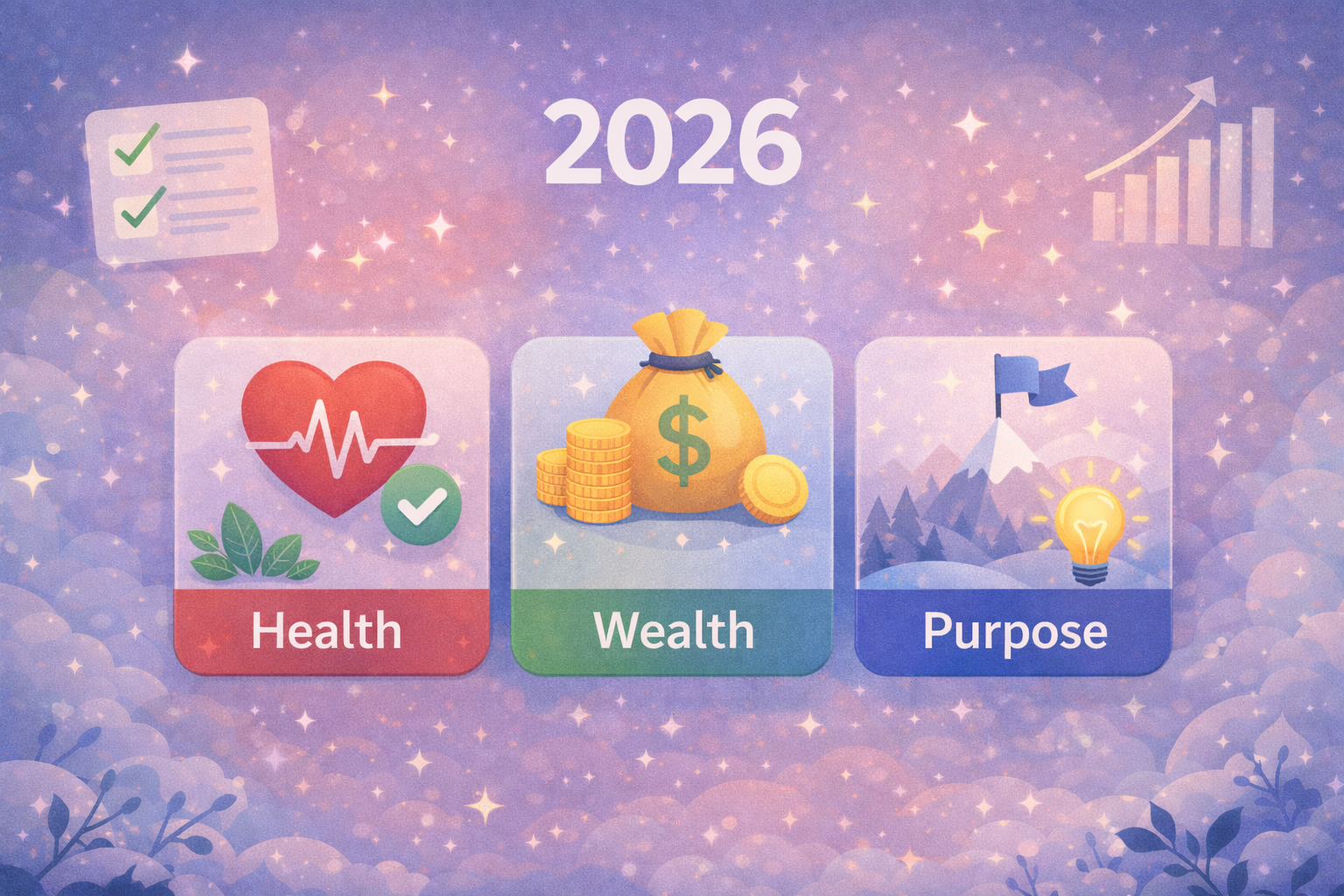
Sustainable change happens when you address the whole picture of your wellbeing. At Brightn, we've built our approach around three interconnected pillars: Health, Wealth, and Purpose. These aren't separate goals—they're dimensions of a balanced, meaningful life.
Intentional health means moving beyond "I should work out more" to understanding what your body and mind actually need. It's about:
Research from Harvard Medical School shows that consistent small habits—like a 60-second daily check-in or a 10-minute walk—produce measurable improvements in mental health, including reduced anxiety and better emotional regulation.
Financial stress is a mental health issue. When 72% of adults report money-related anxiety, it's clear that wealth isn't about becoming rich—it's about reducing stress and creating security.
Intentional wealth starts with understanding your relationship with money:
Rather than rigid budgeting (which fails for the same reasons diets do), try value-based spending. Identify what truly matters to you, then allocate resources accordingly. Track your emotional state when making financial decisions. Notice patterns. This awareness creates lasting change.
Purpose isn't about finding your "calling" in one dramatic moment. It's about understanding what makes you feel alive and building daily habits that connect you to that feeling.
Ask yourself:
Starting 2026 with purpose means making space for these questions. It means choosing actions that align with your values, not just crossing items off someone else's checklist.
Don't just set a goal to "exercise more." Build a system: lay out workout clothes the night before, schedule movement into your calendar, and track your mood before and after physical activity to reinforce the positive connection.
Atomic Habits author James Clear explains that you don't rise to the level of your goals—you fall to the level of your systems. The small, repeatable processes you build determine your long-term success.

Before you commit to any new behavior, understand your current patterns. Use journaling prompts to explore:
When you understand the emotional drivers behind your behavior, you can address the root cause instead of forcing surface-level changes through sheer willpower.
Forget the all-or-nothing mentality. Start impossibly small. Want to meditate? Begin with three deep breaths each morning. Want to journal? Write one sentence about your day. Want to manage stress better? Do a 60-second mood check-in.
These micro-habits work because they eliminate resistance. Once you're doing the tiny version, it's easier to expand. More importantly, they build identity. You become someone who meditates, journals, or manages stress—even if you start with just seconds a day.
Perfectionism kills momentum. Instead of measuring success by whether you did something perfectly, track whether you showed up at all. Use mood tracking to notice emotional patterns over time rather than judging individual days as "good" or "bad."
Research published in the Journal of Clinical Psychology shows that self-compassion—not self-criticism—predicts long-term behavior change and mental wellness.
Intentional living requires regular check-ins. Set aside time weekly to ask:
Reflection transforms random actions into deliberate practice. It's how you turn intentions into lasting habits.

Digital tools can either distract you or support your growth—it depends on how you use them. The best mental wellness apps don't just track data; they help you build self-awareness and create personalized strategies for sustainable change.
Brightn combines AI-powered journaling, mood tracking, and personalized wellness planning to support all three pillars of intentional living. Unlike generic apps that forget your progress, Brightn's intelligent companion, Luma, remembers what works for your unique brain and adapts to your patterns.
Features that support intentional living include:
When you use technology intentionally, it becomes a tool for growth rather than another source of overwhelm.
Starting 2026 with intention means rejecting the resolution mindset entirely. It means understanding that lasting change happens through:
Awareness over judgment Systems over goals Compassion over criticism Flexibility over rigidity Connection over isolation
You don't need to transform overnight. You need to show up consistently for yourself—even when it's messy, even when it's imperfect, even when you don't feel motivated.
The new year isn't magic. But your daily choices can be. Every moment is a chance to choose intention over autopilot, to align your actions with your values, to build a life that feels like yours.
2026 can be different—not because you made resolutions, but because you built a mindset that makes sustainable change inevitable.
Ready to move beyond resolutions? Download Brightn and start building habits that actually stick. With personalized AI support, mood tracking, and evidence-based wellness strategies, you'll have everything you need to make 2026 your most intentional year yet.

Related Resources:
About Brightn: Brightn is an AI-powered mental wellness platform that helps you improve your mental health through personalized support for Health, Wealth, and Purpose. With intelligent journaling, mood tracking, and evidence-based strategies, Brightn makes mental wellness accessible, preventative, and personalized. Download now on iOS and Android.