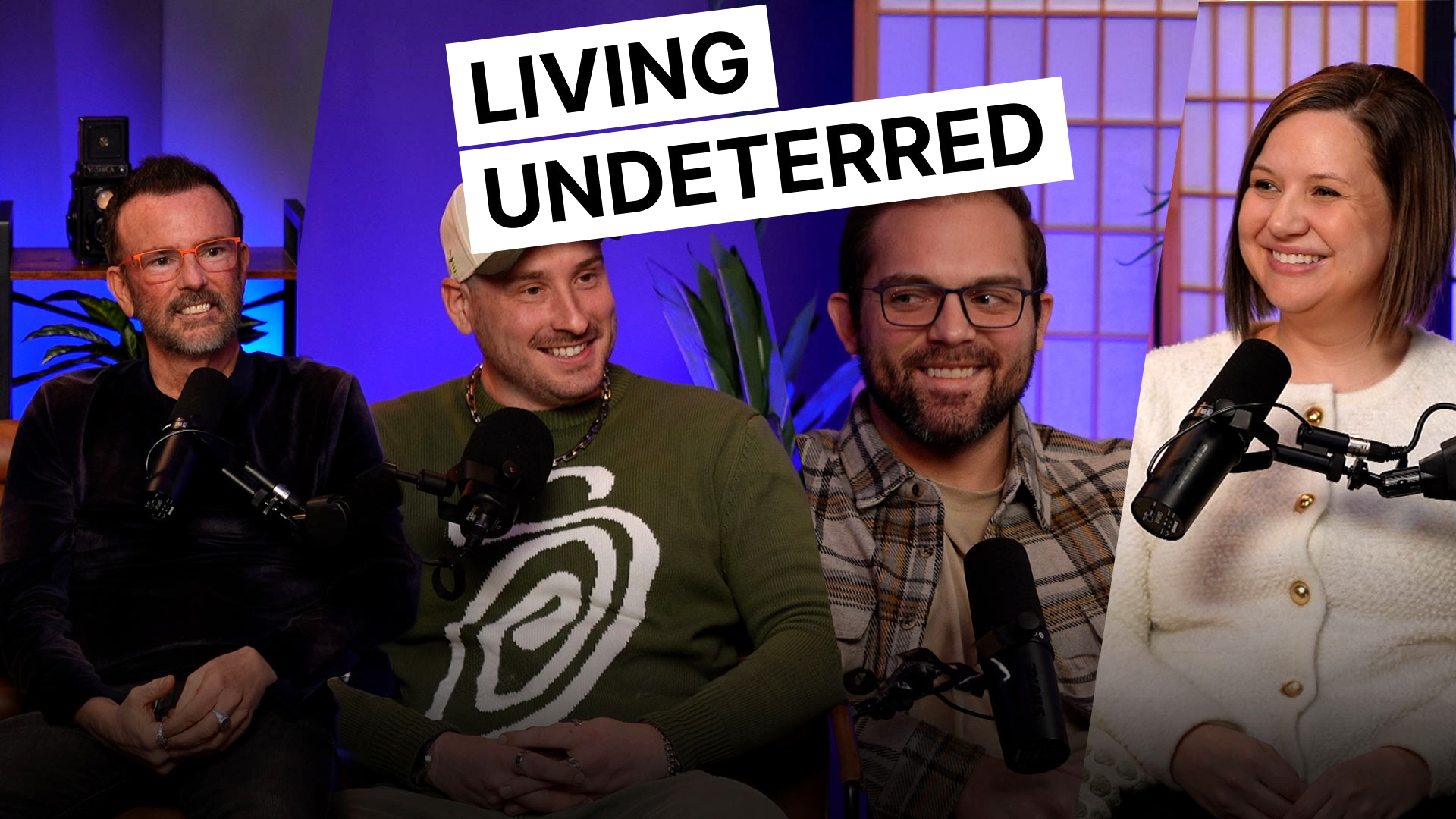
The Episode: Meet the team
Tyce shares that this is his first podcast and the first time the whole team has been together in person. He talks about his Iowa roots, his background in film and advertising, and how a hometown connection with Carson led him to Brightn at the right time.
Carson explains his role bringing the technology to life, and how his background in entrepreneurship and the Army shaped his perspective. In the military, mental health often stays unspoken, but he saw how openness and getting help can ripple through a whole team. He connects that to why building something accessible and practical matters.
Emilie reflects on teaching through the pandemic, watching student hardships intensify, and realizing she was trying to support others while not taking care of herself. She was drawn to Jeff because he was willing to talk about mental health publicly when many people still avoided it. That courage made the mission feel real.
"Where do we even start?" (and why it feels harder now)
Jeff frames the problem: COVID, social media, constant comparison, and the general negativity people swim in every day. He asks the team if we need to "go back to basics" or use tools like AI as an ally.
Carson points out a major generational shift: older generations often didn't talk about mental health at all, while Gen Z and millennials are more open to it. He highlights how fear of judgment still blocks people, especially at work, and why stigma creates silence.
Tyce adds a blunt reality: many of the pressures we're dealing with are brand new. Algorithms didn't exist like this 10 years ago. Major companies are fighting for our attention constantly, and people are still learning how to manage it. He shares that reducing screen time is a personal priority because the default path is endless scrolling.
Emilie admits she's felt the same: even watching TV turns into multitasking with scrolling. She brings the conversation back to the starting point: self-awareness, getting "right with yourself," and building a foundation before you can really show up for others.
Boundaries, discipline, and "small wins"
Jeff shares his "word of the year" shift: last year was about finding innocence again, and this year is about boundaries and protecting time. He ties it to a personal lesson: even when things look successful externally, it can fall apart if you are not taking care of yourself.
Mental health is like sweeping your front porch. You do it daily, because it always returns. No one can do it for you, and if you stop, it stacks up.
Tyce introduces a metaphor that becomes a theme: mental health is like sweeping your front porch. You do it daily, because it always returns. No one can do it for you, and if you stop, it stacks up. His word: consistency.
Emilie relates hard to that, calling herself "all in or nothing." She knows exercise helps but still struggles to do it. What changed things for her is consistent journaling in Brightn, because it helps her break spirals and reset her day.
Jeff draws a clear distinction: motivation is common, discipline is rare.
Carson builds on it with a practical mindset: motivation is often an output of effort. Start with one controllable action, then momentum shows up. Make the goal smaller than your excuses.
Tyce adds a key mental reframe: be easier on yourself. One email is still a win. One small action still counts. The shame spiral about not doing everything is often the bigger problem.
AI and connection: isolation vs support
Jeff shares a surprising observation from user feedback: some people feel more connected, not more isolated, when using Brightn.
Emilie explains why. When she journals, she feels heard and understood, without the risk of someone shutting her down. That creates relief, which makes her more open to being around people again.
Carson contrasts AI with social media. Social media made everyone "connected," but often in a disingenuous way, optimized for extremes and performance. AI, used well, can help people be more authentic because the fear of judgment drops and the intention can be healthier.
Tyce gives a real-world example: using AI as a neutral sounding board in tense situations (like relationship conflict) to step back, avoid harsh reactions, and see another perspective. He also calls out the difference between good-intention tools with guardrails vs the worst uses of AI that create justified backlash.
Parenting, presence, and letting life be life
Jeff shifts into a deeper theme: we often live like we are broken and need to be fixed, and he rejects that framing. The goal is peace, presence, and a better lived experience, not chasing some final "I'm healed" finish line.
Emilie connects this to becoming a parent. Watching time move so fast with her daughter has forced her to slow down and be present. She also emphasizes transparency and honest conversations at home, especially because many things were not talked about when she was growing up.
Jeff reflects on parenting changes across generations: kids used to roam, fail, get scrapes, and build resilience. Now, parents are more protective, partly because we hear about everything instantly. He believes resilience requires room to make mistakes.
Tyce acknowledges how hard that is, even imagining the anxiety of parenting. But he returns to the same truth: suffering and growth are part of life, and resilience is built through it, not around it.
Stigma, substances, and harm reduction
Tyce makes a direct point: stigma stops people from getting help, especially around substance use. People may avoid medical support because they're afraid of being judged or punished. Removing shame and increasing resources can save lives.
Jeff goes deeper from personal experience, calling out how policies that label harm reduction tools (like fentanyl test strips) as "paraphernalia" can be deadly. He's not arguing for "everything legal," he's arguing for preventing deaths and giving people a chance to reach their sober day.
The personal stories (and why they share them)
Toward the end, the roundtable gets more personal.
Emilie talks about former students, moments she wishes she had listened differently, and how hard seasons can shape your decisions. She's grateful the Brightn team checks in on each other and creates an environment where honesty is normal.
Carson shares that in 2020 his godfather took his own life after years of silent depression, despite "checking all the boxes." After that loss, Carson describes his own period of coping the wrong way and a crisis that forced him to get help. He ties it directly to why he's passionate about reflective journaling and building tools that help people interrupt spirals before they become permanent decisions.
Jeff responds with empathy and clarity: sharing stories is hard, but silence is worse. Most people have something in their family or history that makes this real, even if it looks "fine" from the outside.
Closing: A Grounded Message
- You're not alone.
- You've already survived 100% of your worst days.
- Purpose becomes passion when it gets personal.
- Do one small thing today. Sweep your porch. Help someone. Compliment someone. Build momentum.
And Jeff ends with a reminder that fits the whole roundtable: you are exactly where you need to be right now, and we're all in this together.