Blogs

New Year Energy: Creating Sustainable Change

Rylee Lueken
January 2, 2026
10 min read

New Year Energy: Creating Sustainable Change

The January Spark (And Why It Fades So Fast)

New Year energy is loud. New planners, “New Year, New Me” posts, everyone suddenly waking up at 5 a.m.

But by February, a lot of that energy has disappeared. Research suggests that around 80 percent of resolutions are dropped by early in the year, and over 90 percent are abandoned within a few months. Many people also feel pressured to even make resolutions at all, with more than 60 percent of people reporting they feel they should set a New Year goal and many trying three or more at once.

So if you have ever bought the gym membership and then ghosted it, or splurged on a brand new planner only to abandon it by week three, nothing is wrong with you. You are reacting in a totally human way to how our brains are wired and how resolutions are usually set.

The good news: the research on change is actually pretty hopeful. Sustainable change is possible, especially when you stop trying to become a “new you” overnight and start building small, realistic habits that fit your real life.

Why Change Feels So Hard 

Psychology and biology both agree on this: your brain is not deeply excited about big, sudden change. Our nervous systems evolved to conserve energy and keep us comfortable. That used to protect us during food shortages or other dangers. Now it can nudge us toward the couch instead of a walk, or toward scrolling instead of sleep.

On top of that:

  • We often aim way too big, too fast, like “work out every day,” “completely fix my finances,” or “be a totally new person this year.” Humans are not wired to make huge, sweeping changes all at once.
  • We set goals we feel we should want, without asking what we actually care about or why it matters to us.
  • We skip stages. Real behavior change usually moves through phases like awareness, thinking about change, planning, then action and maintenance. If you are still in “thinking about it” mode but try to jump to “totally transformed,” it is very hard to sustain.

None of that means change is impossible. It means you need a strategy that works with your brain instead of against it.

From “New Year, New Me” To “New Year, Improved Me”

Several experts suggest flipping the script. Instead of a full personality reboot, focus on realistic, sustainable improvements. Forbes calls this a “New Year, Improved Me” mindset, where you set attainable resolutions that support your mental, financial, social, and physical wellbeing.

Big dreams are fine. Ambitious goals like running a race or making a major health change can be powerful, especially when you surround yourself with encouragement and support. The key is what you do next:

  • Break big dreams into small steps. Tiny, specific actions build confidence and momentum. Even simple “first wins” matter, like making a list or taking a 10-minute walk.

  • Turn goals into habits. A new behavior does not become automatic overnight, but repeated small actions can quickly start to feel “off” when you skip them, which is actually helpful for staying consistent.

  • Start with fewer goals, not more. Choosing one or two priorities instead of a long list. That makes it more likely you will follow through instead of feeling like you failed at everything.

Think less “new identity,” more “new systems.”

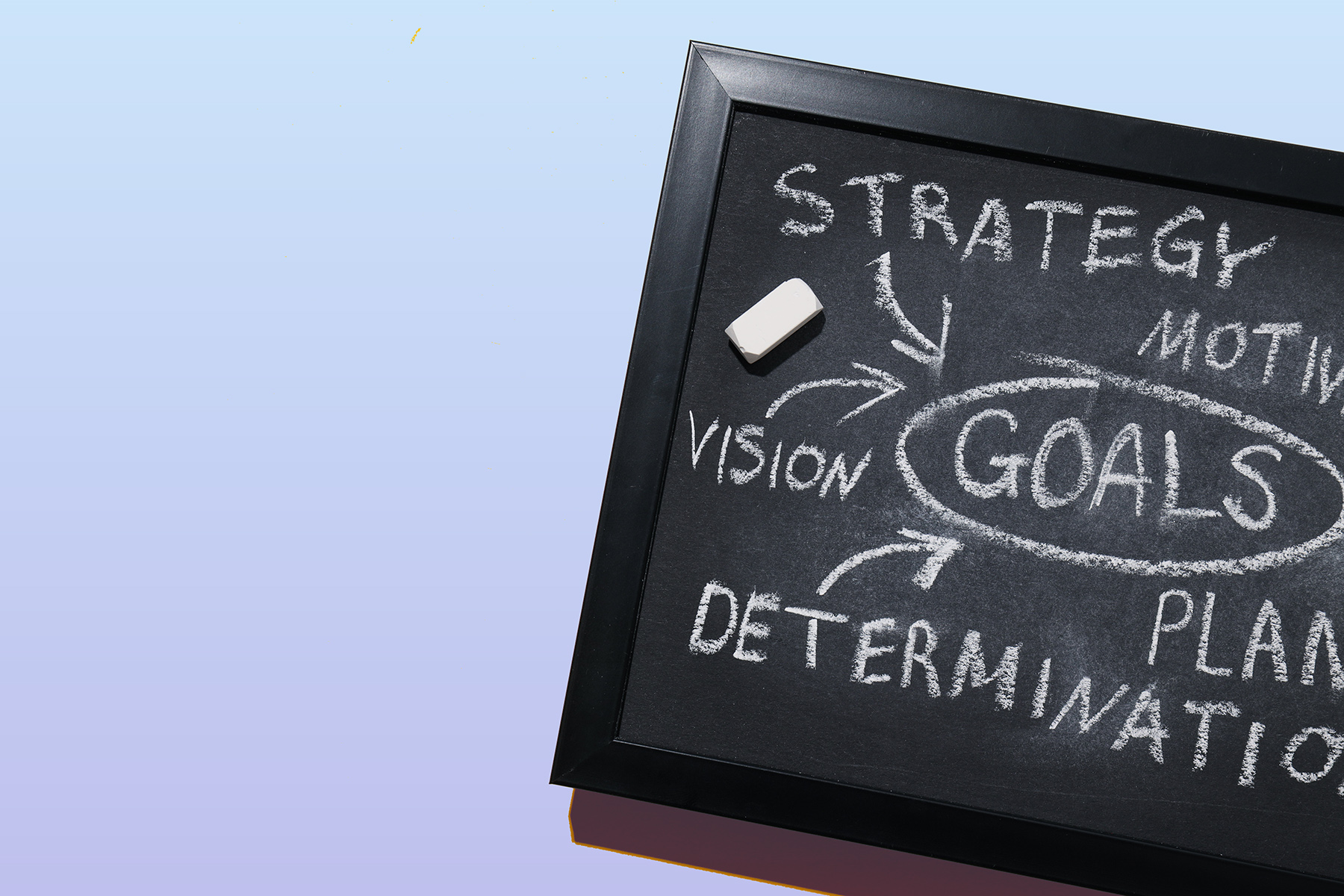
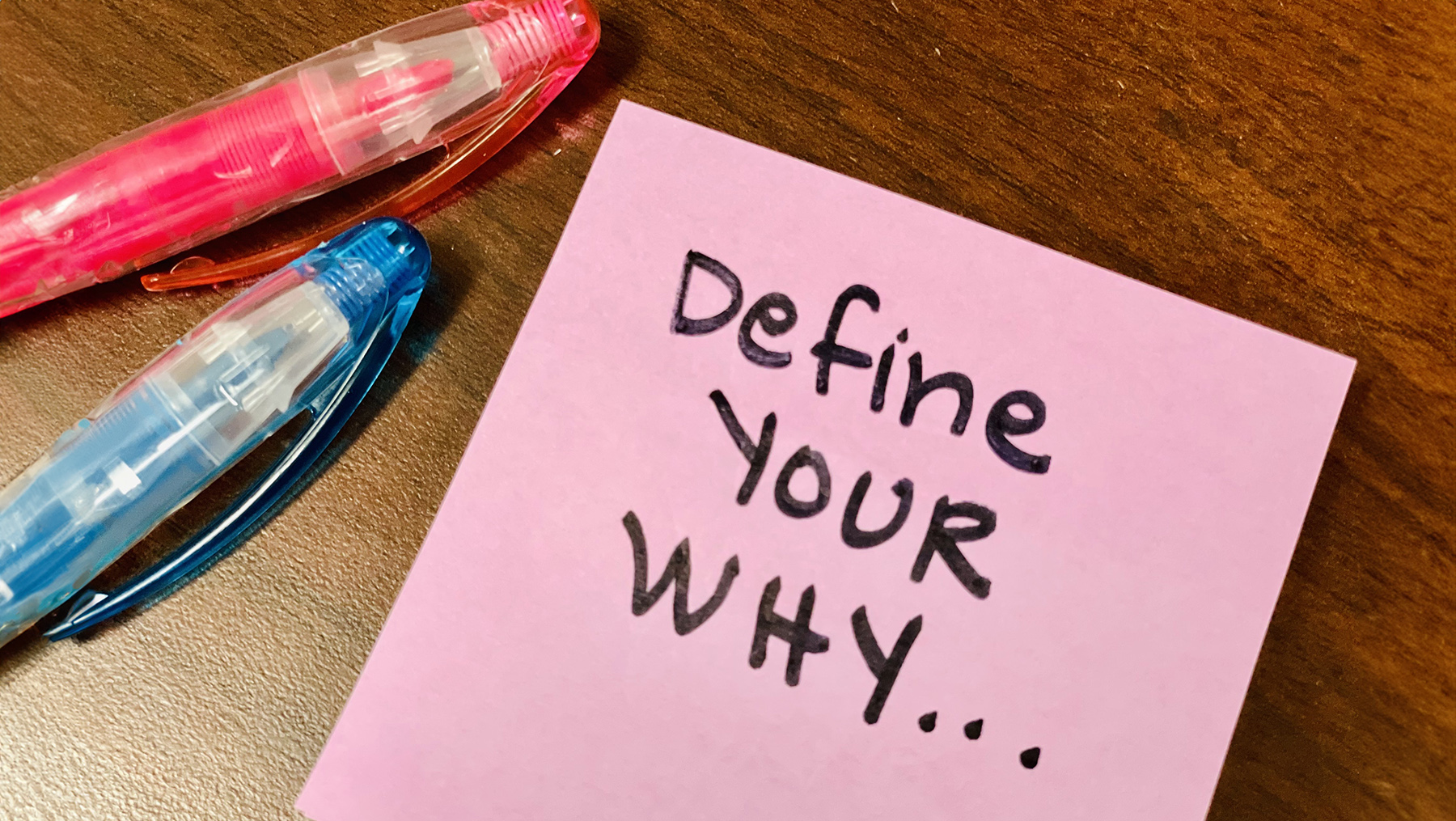
Step One: Choose One Focus And Find Your Why

Before you write a long list of intentions, pause. Ask yourself two questions:

  1. What is one area of my life I really want to improve this year?
  2. Why do I actually care about this?

Research shows that goals tied to a clear, personal “why” lead to stronger commitment than goals you picked because you felt you should. This lines up with findings that personally meaningful goals support better follow-through and wellbeing.

Some examples of answers to the two questions above:

  • “I want more energy so I can focus in class and still have a social life.”
  • “I want to feel less stressed about money so I am not constantly anxious about rent or tuition.”
  • “I want my mental health to feel more steady instead of like I am always crashing and restarting.”

This thoughtfulness will help you plan your resolution instead of just naming it. Try and think through how long it might take, what might get in the way, and what support you will need. Your “why” is what you come back to when motivation dips. It matters more than a perfect goal.

Step Two: Make It Tiny, Specific, and Doable

Most resolutions fall apart because we treat January 1 like a launchpad for a totally new lifestyle. The reality is that our brains don’t respond well to massive, vague goals. Instead of aiming for dramatic overnight transformation, the science suggests starting with steps that feel almost too easy.

  • Being specific is one of the strongest predictors of success. “Exercise more” doesn’t give your brain anything concrete to latch onto, but “walk for 20 minutes after class on Monday, Wednesday, and Friday” creates a clear expectation you can actually follow. 
  • Break your big dreams into small, confidence-building steps, because even tiny wins build momentum and make the next step feel more doable. For instance, try “mini-goals”: start with something like 10 minutes of walking a few times a week and gradually expanding as it becomes easier.
  • Patience matters here, too. Habits take an average of 66 days to form, which means consistency beats intensity every time. As James Clear famously puts it, habits are “the compound interest of self-improvement” — the small actions that don’t look like much today can add up to massive change over time when you repeat them consistently.

If your next step feels overwhelming, that’s your sign to scale it down. Sustainable change usually starts with the smallest version of the habit — the one that makes you say, “Okay, I can actually do that this week
Step Three: Build Systems And Support Around You

Willpower alone is fragile. Systems and community make change more sustainable. Here’s a a few key ideas to make your goals more concrete:

  • Make your goal visible. Writing down your goal and putting it where you see it daily keeps it on your radar. A sticky note on your mirror or a simple tracker on your wall can help you remember what you care about.

  • Share your goal with someone. When you tell a friend, roommate, partner, or group what you are working toward, it becomes more real and more supported. One study reported that people who share their goals and set up accountability are about 65 percent more likely to achieve them, and regular check-ins can raise that to 95 percent.

  • Use alternatives if resolutions are not your thing. Psychology Today suggests playful options, like choosing a “nudge word” for the year (for example, “steady,” “courage,” or “rest”) or making a “to-don’t list” of things you are choosing not to do anymore, like automatically saying yes to every request or doom-scrolling in bed.

Systems do not have to be fancy. A group chat where you drop a checkmark when you complete your small habit counts. A note on your desk that says “Drink water instead of soda today” counts. The point is to make your environment help you remember who you are trying to become.

Step Four: Expect Setbacks And Use Them As Data

Most people imagine change as a straight line. In reality, it is more like a messy spiral. Treat every “failed” attempt as a lesson instead of a verdict. When you hit a snag, ask what did and did not work, then adjust. Maybe the step was too big. Maybe the timing was wrong. You can scale back or break it into smaller chunks instead of quitting altogether.

Research from Stanford highlights that self compassion helps us stay motivated after slip-ups. Being harsh with yourself tends to make you give up. Recognizing that setbacks are expected, then refocusing on your goal, makes it easier to stick with the process.

You can also shift the win criteria. Aim to “compete to complete.” For example, focus on finishing the workout in whatever way you can, not doing it perfectly. Any amount of effort is better than none, and you still benefit even when you do less than you planned.

Setbacks are not proof you cannot change. They are proof you are in the middle of changing.

New Year Energy Ideas That Are Actually Sustainable

If you are not sure where to start, here are a few research-aligned areas that tend to support both mental health and long term wellbeing:

  • Mental health first. Prioritizing therapy, coaching, mindfulness, or journaling can support your overall success and help with accountability. Even swapping a few minutes of scrolling for a podcast, meditation, or reflective journaling can make a difference.

  • Money habits for future you. Simple steps like creating a basic budget, starting a small savings plan, or reading an approachable money book can reduce stress over time.

  • Friendships and community. Regular connection is strongly tied to happiness and reduced feelings of stress. That can look like a weekly call, a standing coffee date, or joining a club, gym class, or volunteer group that matches your interests.

  • Movement that fits your life. Consistency beats intensity. Commit to something realistic, like a 20-minute walk a few days a week or a short YouTube workout. Habit pairing can help, like walking while listening to a favorite podcast.

  • A to-don’t list for burnout. Creating a small list of things you are done doing this year, like over-committing or attending every optional meeting, can protect your energy so you actually have space for your new habits.

  • One month experiments. If a full-year goal feels overwhelming, try a one month “resolution,” like Journaling January or Screen-Free Sundays. Research on challenges like Dry January shows that even short experiments can create lasting benefits and lead to better long term habits.

You do not have to implement everything. One tiny, well chosen habit can be enough to change how this year feels.
How Brightn Can Support Sustainable Change

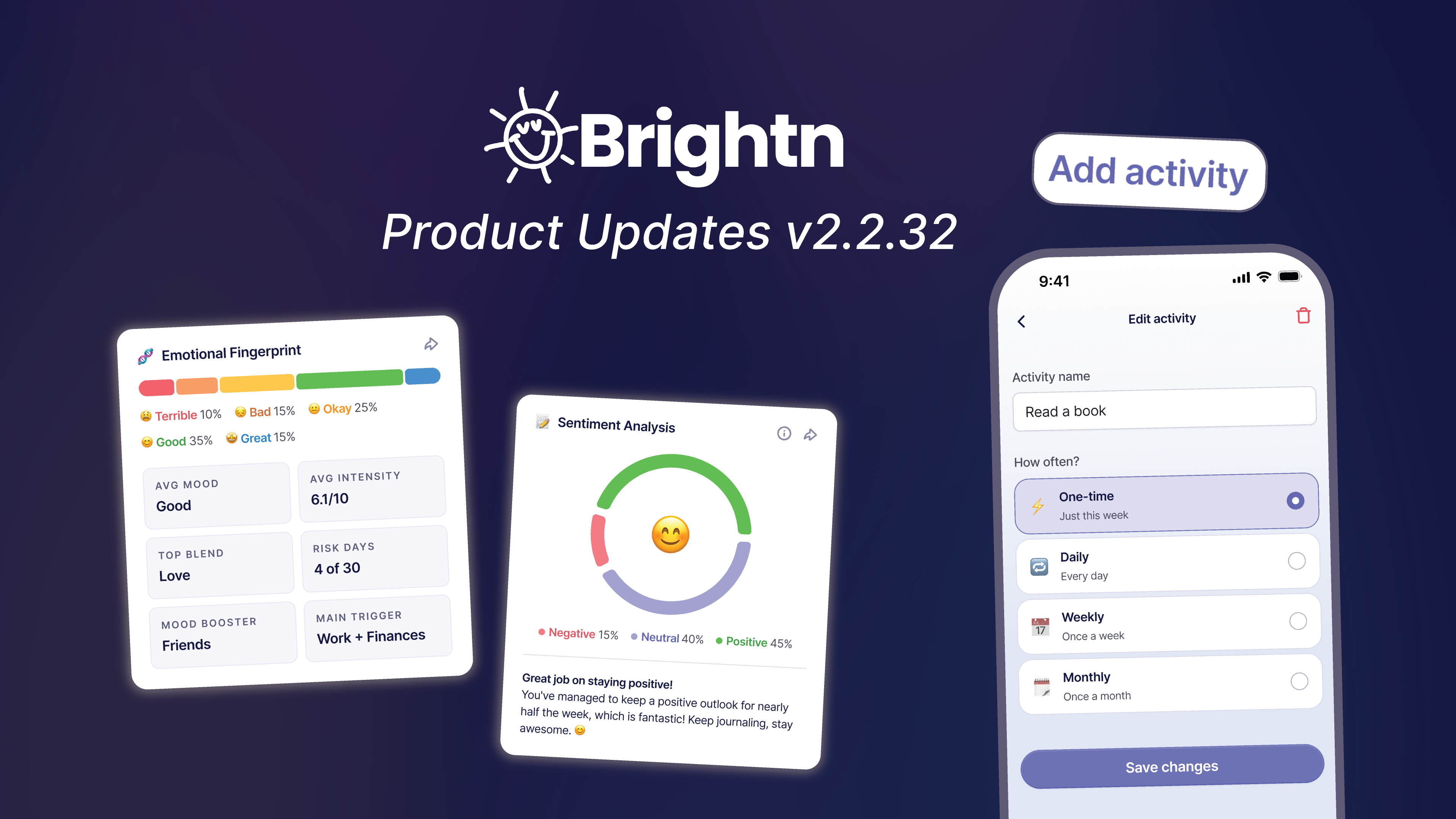
New Year energy can be exciting, but sustainable change is built day by day. Brightn can help you bridge that gap.

Through short check-ins, guided prompts, and bite-sized tools, Brightn can support you as you:

  • Clarify your “why” behind a new habit.
  • Break big goals into realistic mini steps.
  • Track small wins so you actually see your progress.
  • Practice self compassion and reset after setbacks.

Instead of trying to overhaul your life alone, you get a space that helps you reflect, reset, and keep going in ways that fit your schedule and energy.

Start your journey to calmer celebrations - Download Brightn free

Closing Thoughts: You Do Not Need A New You. You Need A Next Step.

New Year energy can feel like pressure to become an entirely different person overnight. The research says you do not need that. What actually works is much quieter.

Choosing one focus.
Knowing why it matters to you.
Shrinking the first step until it fits into your real day.
Letting small habits compound over time.
Letting people you trust support you.
Treating setbacks like feedback, not failure.

You do not have to be perfect to change. You just have to keep choosing the next small, honest step that moves you closer to the life you want. This year does not have to be “New Year, New Me.” It can simply be: New Year, still you, better supported.

Related Articles

Sources

Latest posts

Expert Insights on mental health

New Year Energy: Creating Sustainable Change

New Year energy often fades fast, but sustainable change is built through small, realistic habits that work with your brain, not against it. This article explains why New Year’s resolutions fail, how habit formation really works, and how to create lasting change through clear goals, supportive systems, self-compassion, and evidence-based strategies for mental health, motivation, and long-term wellbeing.

New Year, New Mindset: How to Start 2026 With Intention (Not Just Resolutions)

Starting 2026 with intention means moving beyond traditional New Year’s resolutions and focusing on sustainable mindset shifts that support long-term mental wellness. This article explains why resolutions fail and how intentional living, grounded in self-awareness, flexibility, and values, leads to lasting change. Using the three pillars of Health, Wealth, and Purpose, it outlines practical, science-backed strategies like micro-habits, systems over goals, mood tracking, and regular reflection to build habits that actually stick. Readers learn how to create an intentional mindset that reduces stress, improves mental health, and supports meaningful growth throughout the year, not just in January.

Year-End Mental Health Check-In: Assessing Your Emotional Wellness

A year-end mental health check-in helps you assess your emotional wellbeing beyond productivity, grades, or external success. This blog explains why mental health reflection matters, how stress can quietly build over time, and which questions help you understand your emotional patterns before the new year begins. Learn how small, consistent habits, self-compassion, and intentional mental health goals support emotional resilience, reduce burnout, and create a healthier foundation for the year ahead.