Rylee
January 15, 2026
•
12 min read
Daily mental health check-ins reduce stress by 40% and prevent burnout. Learn science-backed techniques for gratitude, journaling, and mood tracking. Start free with Brightn.
Between constant notifications, work deadlines, and social obligations, most people lose touch with how they're actually feeling. Stress builds silently. Burnout creeps in. Mental health declines—until suddenly you're overwhelmed and don't know why.
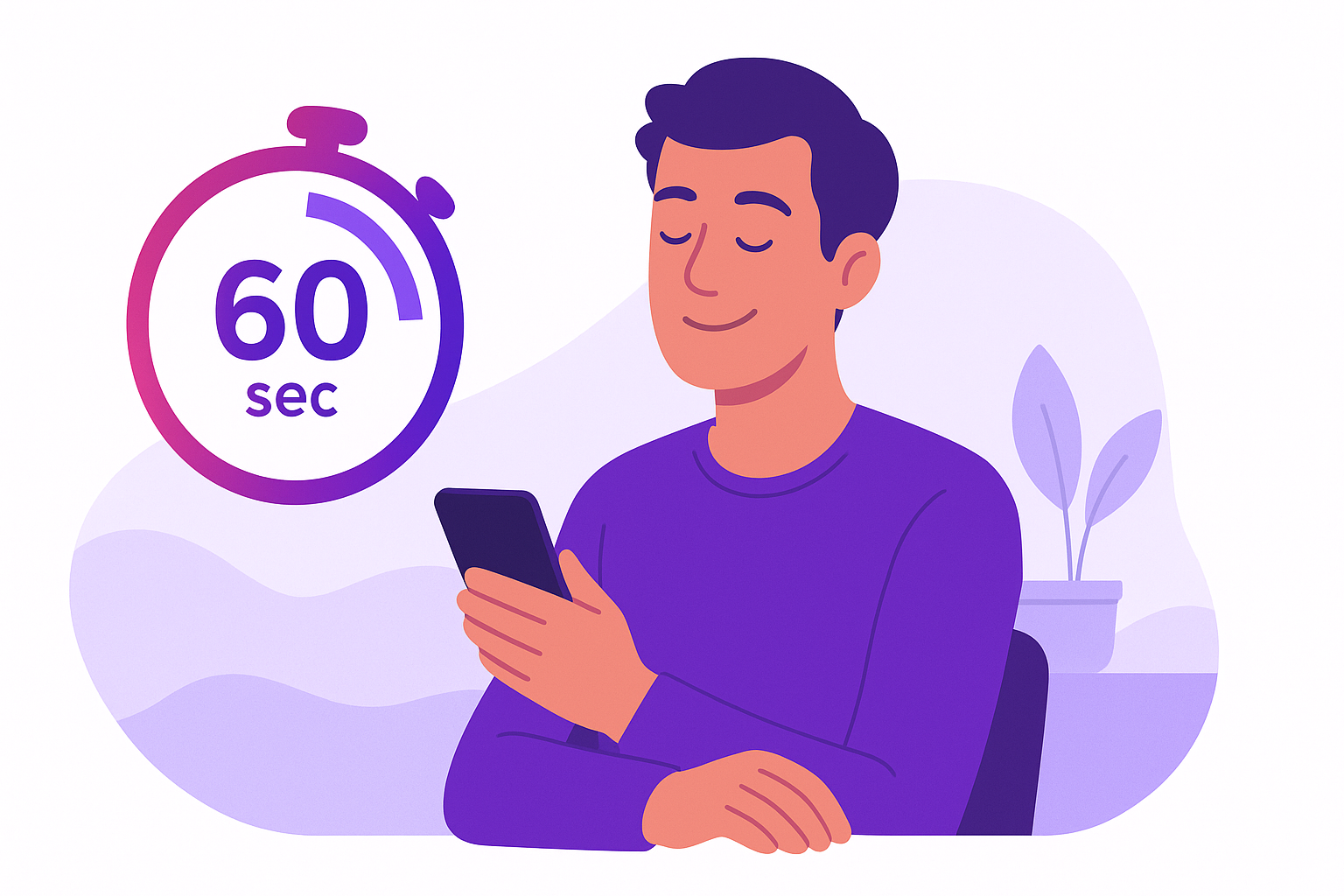
Daily mental health check-ins interrupt this cycle. Taking just 60 seconds to ask yourself "How am I doing?" creates awareness that prevents small stressors from becoming major problems. Research shows that people who practice daily check-ins report 40% less stress and significantly better emotional regulation.
The psychology behind this is simple: you can't manage what you don't measure. Without pausing to assess your mental state, emotions pile up, leading to emotional exhaustion and declining wellness. Daily check-ins shift you from reacting to stress to actively managing it.
Start your daily check-in practice with Brightn - get personalized prompts and track your progress in under a minute.
Humans are "creatures of habit" because predictability reduces cognitive load. Every decision you make—what to wear, when to eat, how to respond to stress—uses mental energy. When routines handle these decisions automatically, your brain conserves resources for more important tasks.
This is why establishing a daily check-in routine feels effortless once it becomes automatic. The first few days require conscious effort, but after two weeks, your brain creates neural pathways that make the habit feel natural. You're not forcing yourself to remember—you're building a mental wellness system that runs on autopilot.
Daily routines also lower anxiety by creating predictability. When you know what to expect from your day, your nervous system stays calmer. This neurological benefit explains why people with consistent routines report better mental health outcomes than those with chaotic schedules.
Writing down three things you're grateful for takes 90 seconds and delivers measurable benefits. Mayo Clinic Health System research shows that gratitude practices reduce stress hormones, improve sleep quality by 25%, and boost immune system function.
The mechanism is neurological: focusing on positive experiences trains your brain to notice more positives throughout the day. Over weeks, this shifts your baseline mood upward.
Today's example:
Tomorrow's example:
Notice these aren't extraordinary events—they're small moments worth acknowledging. That's the point. Gratitude isn't about major accomplishments; it's about recognizing everyday positives you'd otherwise overlook.

Affirmations are short, positive statements you repeat to yourself: "I am capable of handling challenges" or "I deserve rest and peace." They help reframe negative thought patterns and remind you of your strengths.
Research from Positive Psychology demonstrates that daily affirmations reduce anxiety, boost confidence, and buffer against low self-worth. The key is consistency—saying or writing affirmations daily builds mental resilience over time.
Your affirmations should reflect what you need to hear most. If you struggle with perfectionism, try "Progress matters more than perfection." If you experience impostor syndrome, use "My accomplishments are real and earned."
Brightn provides personalized affirmation prompts based on your mood patterns, making it easier to practice daily without feeling repetitive.
Journaling offers a private space to process thoughts and emotions. Kaiser Permanente research shows that writing for just five minutes daily lowers stress, improves focus, and makes overwhelming feelings more manageable.
The therapeutic value comes from externalizing internal experiences. When thoughts loop endlessly in your mind, they feel insurmountable. Writing them down provides distance and clarity—suddenly, problems seem more solvable.
Journaling also creates a progress record. Looking back at entries from weeks or months ago shows how far you've come, which builds confidence during difficult periods. You can also identify patterns: certain people, situations, or times of day that consistently affect your mood.
For those new to journaling, Brightn's resources page offers prompts and techniques to get started, including our guide on 33 Effective Journaling Prompts for Anxiety Relief.
Mood tracking means logging your emotional state at different times throughout the day. This simple practice helps you notice patterns you'd otherwise miss: poor sleep makes you irritable, certain meetings trigger anxiety, or exercise consistently improves your outlook.
Healthline's research on mood journaling shows that tracking emotions builds awareness of triggers and helps you develop healthier coping strategies. More importantly, it allows you to spot early warning signs of depression, anxiety, or burnout—so you can intervene before things escalate.
Mood tracking works best with tools designed for the purpose. Brightn makes it effortless to log your emotions and visualize trends over weeks and months, revealing insights that pen-and-paper tracking often misses.
Most people fail at new habits because they try to change too much at once. Building a sustainable check-in routine requires strategic planning:

Clarify why this habit matters to you. Are you trying to reduce stress? Prevent burnout? Better understand your emotional patterns? Track energy levels throughout the day?
Write down one or two specific reasons. When motivation wanes—and it will—these reasons remind you why you started.
Don't try to create time out of thin air. Instead, attach your check-in to something you already do daily. This technique, called habit stacking, makes the new behavior automatic.
Examples:
The key is choosing a trigger you can't skip. If you "sometimes" drink coffee, it's not a reliable anchor. Pick something you do every single day at roughly the same time.
Choose a method that matches your personality:
There's no "best" format—only what you'll actually use consistently.
One minute is genuinely enough. Longer isn't better when you're building a new habit. The goal is awareness, not comprehensive analysis.
You don't need to solve anything during your check-in. You're simply noticing: "I'm feeling stressed today. I slept poorly. My shoulders are tense." That awareness alone changes how you navigate the rest of your day.
If some days you feel like writing more, that's fine—but never let "not enough time" become an excuse to skip entirely.

Use a habit tracker to mark each day you complete your check-in. Focus on maintaining your streak, not on perfect execution.
Missed a day? Start again immediately. Two consecutive misses signals the habit is slipping—recommit with extra intention. Research shows that maintaining an 80% consistency rate (5-6 days per week) produces the same long-term benefits as perfect daily practice.
Brightn includes built-in streak tracking to help you stay consistent without additional effort.
A single check-in feels insignificant. You assess your mood, note some gratitude, and move on. Nothing seems different.
But habits work through accumulation. One check-in is a drop of water. A month of daily check-ins is a stream. A year becomes a river that reshapes your mental landscape.
This principle—small actions compounding into major change—applies to all wellness habits. Our guide on building healthy habits explores how this works neurologically and practically.
People who practice daily check-ins report:
These benefits don't appear overnight. They emerge gradually as your brain builds new patterns of self-awareness and emotional processing.
You have one minute. The issue isn't time—it's priority. If checking in matters to you, schedule it like any other important appointment. Set a phone reminder. Put it in your calendar. Make it non-negotiable.
Time-blocking works: dedicate 9:00-9:01 AM to your check-in. When it's scheduled, it happens.
Use environmental cues. Put your journal on your pillow so you see it before bed. Set a daily phone alarm. Leave yourself a sticky note on the bathroom mirror.
Better yet, use Brightn's reminder system to prompt you at optimal times based on your routine.
Start with basic prompts:
These questions provide structure without requiring deep introspection. Answer briefly and honestly—that's all.

This discomfort is normal initially. Push through it. You're not talking to yourself for entertainment—you're collecting data about your mental state. It's as practical as checking your bank balance.
If speaking feels awkward, write instead. If writing feels formal, use voice memos. Find the format that creates least resistance.
This fear is valid but counterproductive. Avoiding difficult emotions doesn't make them disappear—it makes them grow in the dark. Check-ins bring things into the light where you can address them.
Start small. You don't have to excavate deep trauma during a daily check-in. Simply acknowledge surface-level feelings: "I'm tired today" or "I'm frustrated about that meeting." Over time, the practice builds confidence to explore more.
If check-ins consistently surface intense emotions you can't manage alone, that's valuable information—it means you should seek professional support.
How long until I see results from daily check-ins?
Most people notice improved self-awareness within 1-2 weeks. Measurable stress reduction typically appears after 3-4 weeks of consistent practice. Long-term benefits like burnout prevention and emotional resilience develop over months.
What's the best time of day for check-ins?
Whenever you'll actually do it consistently. Morning check-ins help set intentions for the day. Evening check-ins facilitate reflection and better sleep. Some people benefit from both—a brief morning and evening practice.
Can check-ins replace therapy?
No. Check-ins are a self-care tool, not a substitute for professional mental health treatment. They complement therapy by building awareness between sessions and tracking progress over time.
What if my mood is consistently negative?
Persistent low mood, anxiety, or emotional numbness warrants professional evaluation. Check-ins should reveal patterns—if the pattern shows consistent distress for several weeks, reach out to a mental health provider.
Do I need an app or can I use pen and paper?
Both work. Paper journaling offers a tactile, distraction-free experience. Apps like Brightn provide guided prompts, mood visualization, and reminders that increase consistency. Choose based on personal preference.
How detailed should my check-ins be?
As detailed as useful, as brief as sustainable. A one-sentence observation counts. So does a paragraph of reflection. Adjust based on available time and current needs.
What if I miss several days in a row?
Don't spiral into guilt—just restart. Habits break sometimes. What matters is returning to the practice rather than maintaining a perfect streak. Flexibility prevents all-or-nothing thinking that kills habits.
Daily check-ins work best within a broader wellness framework. Beyond checking in, prioritize:
Consistent Sleep: Regular sleep schedules improve mood regulation, memory consolidation, and stress resilience. University of Michigan research shows that irregular sleep patterns correlate with 40% higher depression rates.
Regular Nutrition: Eating balanced meals at consistent times stabilizes energy and mood. Harvard research links nutrient-rich diets to lower depression risk.
Daily Movement: Exercise releases endorphins and reduces stress hormones. Even 15-minute walks significantly improve mental health.
Mindfulness Practice: Meditation, deep breathing, or yoga for 10-15 minutes daily reduces anxiety and improves focus.
These habits create a reinforcing cycle. Better sleep improves mood, which increases motivation to exercise, which enhances sleep quality. Check-ins help you monitor this cycle and spot when one area needs attention.
For a deeper exploration of building sustainable wellness habits, read our comprehensive guide on how small habits create lasting mental wellness.
Mental wellness isn't built through occasional grand gestures—it's constructed through small, consistent actions. Daily check-ins are one of the simplest yet most powerful habits you can build.
Taking 60 seconds to ask "How am I doing?" creates awareness that prevents burnout, reduces stress, and builds emotional resilience. The research is clear: people who practice daily check-ins experience better mental health outcomes than those who don't.
You don't need perfect conditions to start. You need one minute and willingness to pay attention to yourself.
Download Brightn to get guided daily check-ins, personalized prompts, and progress tracking that makes this practice effortless. Join thousands of people building stronger mental wellness through small daily actions.
Your future self will thank you for starting today.

Explore our complete mental wellness resources library for evidence-based guidance on building better mental health habits:
Harvard Health. "Nutritional Psychiatry: Your Brain on Food." Harvard Health Publishing, https://www.health.harvard.edu/blog/nutritional-psychiatry-your-brain-on-food-201511168626