Jeffrey Johnston
August 31, 2026
•
6 min read
Some people find purpose by surviving what once nearly destroyed them.
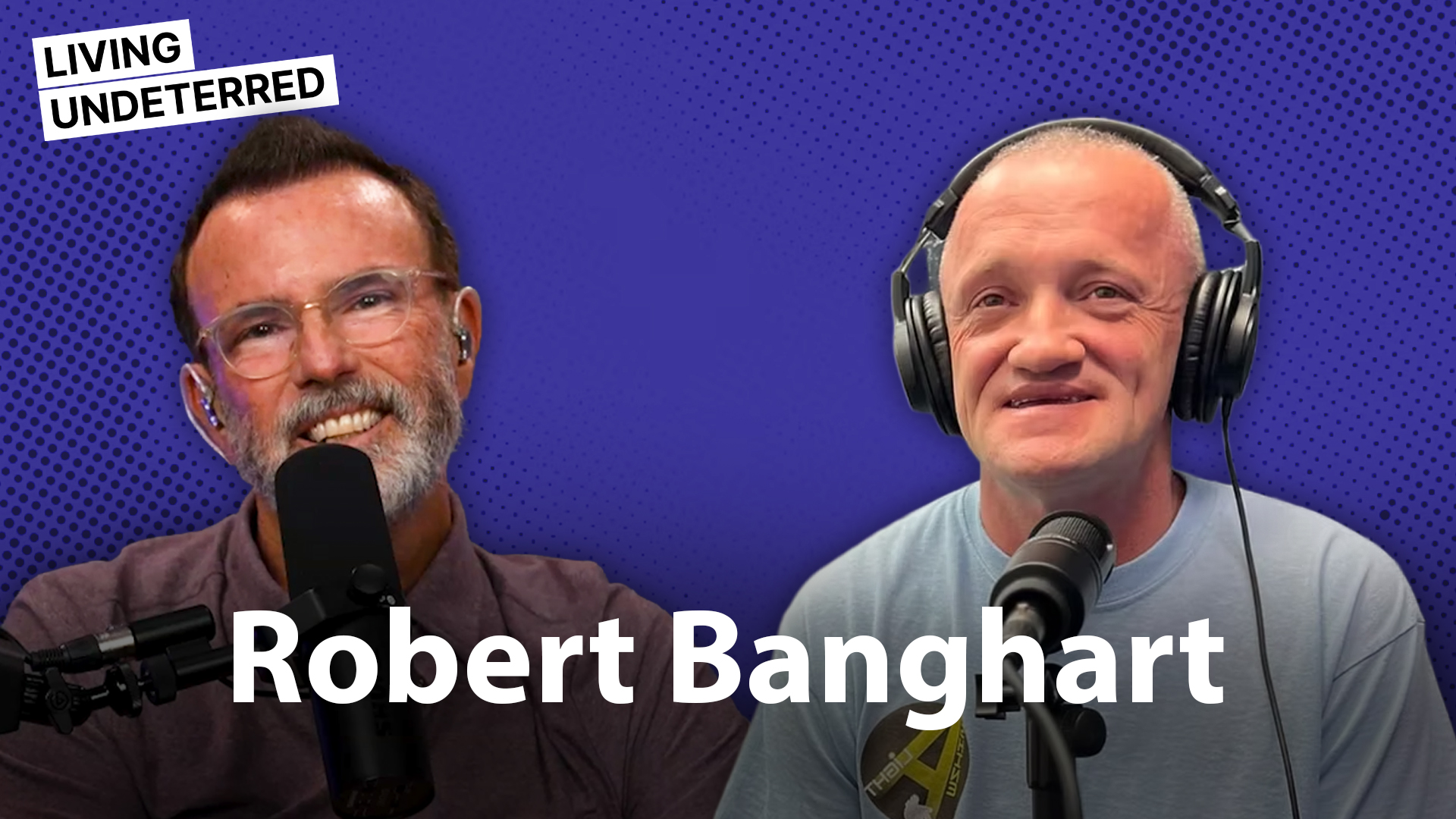
In this episode of the Living Undeterred Podcast, host Jeff Johnston sits down with Robert Banghart for a powerful conversation about addiction, recovery, homelessness, service, and the kind of purpose that comes from lived experience.
Robert is a person in long-term recovery since August 10, 2018. He serves as Vice President of Community and Governmental Affairs for Shine a Light Foundation, Director of Community Engagement for Crossroads of Southern Nevada, and Board President for Narcan at Night. His work centers on reaching people experiencing homelessness, substance use disorder, and crisis, especially those living in the tunnels and washes of Las Vegas.
But this episode is not just about Robert's work. It is about why he does it.
Robert opens up about addiction, shame, self-worth, homelessness, faith, harm reduction, and what it means to become an example for someone else. Jeff and Robert also explore the hardest question families often ask: how do you help someone who is still in active addiction?
The answer is not simple. But Robert's perspective is clear: stay connected, reduce shame, keep showing up, and make sure people know there is a way out.
Recovery is personal.
Robert shares that recovery gave him a life he once did not believe he deserved. His passion for this work did not happen all at once. It grew through mentors, community, service, and the slow realization that his story could help someone else.
Shame keeps addiction alive.
One of the most powerful moments in the conversation comes when Robert says, "Shame is a garden where addiction or alcoholism can thrive." That line captures so much of the episode. The path forward is not built through judgment. It is built through connection, honesty, and grace.
You cannot force someone into recovery.
Robert and Jeff talk honestly about how heartbreaking it is when families want to save someone who is not ready. Robert explains that the best tool is often example: staying present, communicating, avoiding shame, and being available when someone becomes ready.
Homelessness is not one decision.
Robert describes living in the Las Vegas tunnels as "a physical representation of a mental space" that many people can understand, even if they have never been homeless. He explains that people do not wake up one day and choose the tunnels. It happens over time.
Service can become sacred ground.
For Robert, outreach is not just work. It is deeply personal. Going back into the tunnels as someone in recovery became sacred because it allowed him to stand on the other side of his story and offer others a way out.
Robert Banghart is a recovery advocate, nonprofit leader, and person in long-term recovery. In Las Vegas, he works with organizations focused on homelessness, substance use disorder, treatment access, and overdose prevention.
Robert serves as Vice President of Community and Governmental Affairs for Shine a Light Foundation, which does outreach in the tunnels, washes, encampments, and parks of Las Vegas. He is also Director of Community Engagement for Crossroads of Southern Nevada, the largest detox and treatment center in the state, and Board President for Narcan at Night.
At the center of all of it is lived experience. Robert knows what it means to struggle, to be unhoused, to feel disconnected from himself, and to find a way back.
For Robert, recovery is personal. He describes it as something that gave him a life he once did not think he deserved.
He explains that he did not immediately walk into recovery with passion and purpose. Instead, people around him saw something in him before he could see it in himself. Mentors opened doors, led by example, and helped him understand that his story could become useful to someone else.
That shift changed everything. Recovery became more than staying sober. It became a responsibility to be an example.
Robert says it is easier to understand now in retrospect. Looking back, he believes the struggle existed long before substances entered the picture.
He describes being "restless, irritable, and discontent" from an early age. Before drugs or alcohol, he says his first drug of choice was behavior. He found relief in reactions, arguments, chaos, and intensity.
That insight became an important part of understanding himself. Addiction was not just about substances. It was about a deeper discomfort with being himself.
One of the most powerful moments Robert shares is from early recovery, when he was living in sober living and looked in the mirror.
For the first time in his life, at age 43, he felt okay with what he saw.
Not perfect. Not healed. Not high or low. Just okay.
That moment was brief, but it mattered. It showed him something new was possible. He was not a bad person. He was someone who had done harmful things, but he was also someone who could begin to heal.
Robert puts it simply: shame is where addiction thrives.
Jeff and Robert talk about the way people in addiction often beat themselves up, even when they are trying to get better. Jeff shares the story of a friend who relapsed and said the hardest part was not only drinking again, but how badly he judged himself afterward.
Robert's response points to a central truth of recovery: people need accountability, but shame does not heal. Shame isolates. Isolation feeds addiction. Grace, connection, and honest support create the conditions where someone can begin again.
This is one of the hardest questions in the episode, and both Jeff and Robert acknowledge how often they hear it from families.
Robert is clear that you cannot force someone into recovery. Addiction is a disease of powerlessness and lack of choice. No one can make another person become ready.
But that does not mean doing nothing.
Robert says the best thing people can do is stay connected. Keep communicating. Avoid shaming. Share your own experience when appropriate. Let the person know what resources exist. Keep the bridge open, so when the time comes, they remember there is someone who will help.
Robert and Jeff both speak strongly about harm reduction. For Robert, staying connected to someone in active addiction is itself a form of harm reduction.
Jeff brings this into the conversation through the loss of his son Seth, sharing that people cannot have a recovery date if they do not live long enough to reach it. At the bare minimum, the goal is to help people make it to tomorrow.
Robert points out that history does not support prohibition or abstinence-only policy as a universal solution. Instead, he believes people need real support, practical safety, and pathways that meet them where they are.
Shine a Light Foundation is a Las Vegas nonprofit that helps people experiencing homelessness and substance use disorder move from crisis to long-term stability.
The organization does outreach in tunnels, washes, encampments, and parks. Their team builds relationships with people first. Then, when someone is ready, they help walk that person into and through the safety net that exists in Las Vegas.
Robert describes their model as continuity case management: an unbroken chain of case management that can last 18 months to two years, helping someone move from crisis toward independent housing.
Robert explains that Las Vegas has roughly 600 miles of tunnels built to move water through the city during rain events. Over time, those tunnels became shelter for people experiencing homelessness.
He estimates that around 1,200 to 1,500 people live in the tunnels across the city, with many more living above ground. For some, the tunnels provide shade from extreme heat, protection from cold and wind, and the illusion of four walls.
Robert lived in the tunnels himself for two and a half years and was homeless for five years. That lived experience shapes how he approaches outreach today.
Robert says the tunnels are a physical representation of a mental space many people have been in: dark, isolated, and difficult to escape.
He explains that no one wakes up one day wanting to live in the tunnels. It happens gradually, through crossed boundaries, compounding pain, addiction, and disconnection.
At the same time, Robert describes the tunnels as having their own forms of community, rules, hierarchy, and belonging. It may not look positive from the outside, but for someone in crisis, it can feel like the only place to be left alone.
Robert explains that Shine a Light does not simply tell people where to go. They walk with them.
He uses the example of detox. Robert says he went through detox 50 times. Often, when he completed detox, he was handed a packet and told to go check out other places. But after several days detoxing while homeless, that was not a realistic bridge to recovery.
Shine a Light tries to close that gap.
Their model creates a team around the person: the participant, the case manager, and the facility or partner supporting the next step. That triangle helps reduce fear, improve communication, and keep someone from falling through the cracks.
Jeff and Robert discuss the idea that recovery does not look the same for everyone. Some people find healing through traditional recovery programs. Others find it through different communities, treatment models, harm reduction, therapy, medication, service, or other pathways.
Robert says he has become less rigid over time. What worked for him may not be what works for someone else. His goal is not to control the pathway. His goal is for people to be alive, supported, and moving toward a better life.
As he puts it, community is always the answer.
Robert uses the word God, but he is clear that he is not trying to define that for anyone else. For him, faith is about believing in something bigger and living in a way that reflects that belief.
He tells Jeff that he found a relationship with a higher power through service, not necessarily in a church or building.
That distinction matters. For Robert, faith became something active. It showed up in outreach, connection, service, and showing up for people who were still in the dark places he once knew.
Jeff shares one of his own guiding lines: "Purpose becomes passion when it gets personal."
Robert's life reflects that. He did not plan to become a recovery advocate. He started volunteering. He started showing up. Over time, service became the thing that grounded him, connected him, and helped him build a life.
For Robert, going back into the tunnels was sacred ground. Not because it was easy, but because it represented transformation. He could return to the places where he had once been lost and help someone else see a way out.
"Shame is a garden where addiction or alcoholism can thrive."
"My example is the greatest tool I have."
"The tunnels are a very physical representation of a mental space that we've all been."
"I found a relationship with a higher power in service to others."
"Community is always the answer."
This episode with Robert Banghart is a powerful reminder that recovery is not just about abstaining from something. It is about becoming connected again: to yourself, to others, to purpose, and to the possibility of a different life.
Robert's story moves through addiction, homelessness, the Las Vegas tunnels, long-term recovery, and service. But at its core, it is a story about transformation.
He does not speak from theory. He speaks from lived experience. And because of that, his work carries a rare kind of credibility. He knows what it means to be in the dark. He also knows what it means for someone to come looking for you with a flashlight.
That is what makes this conversation so powerful.
Robert's life is proof that people are not disposable. Recovery is possible. Shame does not have to win. And sometimes the most meaningful purpose is found by going back to help someone else find their way out.