Jeffrey Johnston
June 16, 2026
•
5 min read
When a family is facing addiction, a mental health crisis, or the fear of a loved one slipping back into old patterns, the question is often painfully simple: What do we do now?
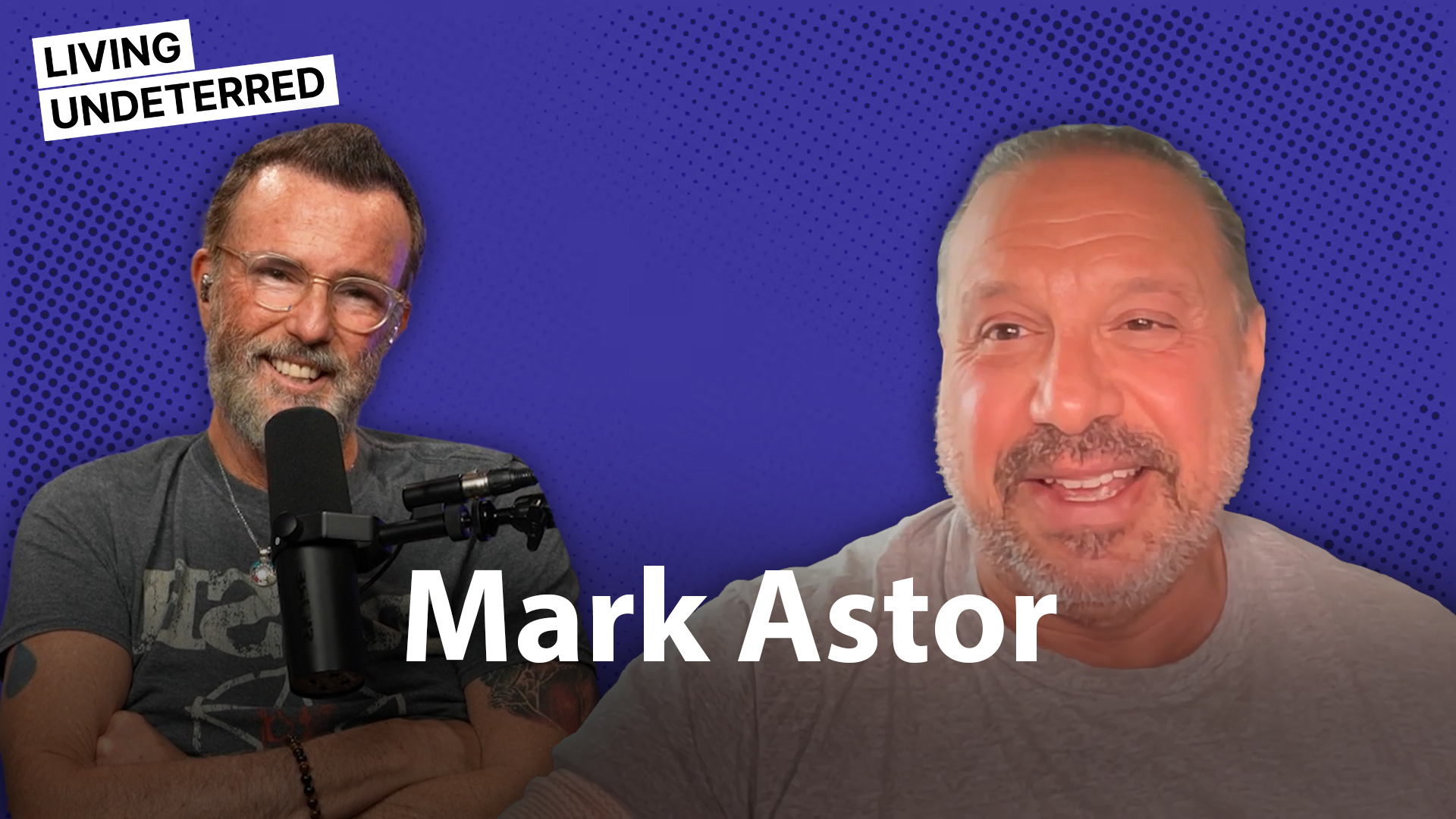
On this episode of the Living Undeterred Podcast, Jeff Johnston sits down with Mark G. Astor, Esq., a Florida attorney focused on addiction, mental health law, Baker Act cases, Marchman Act cases, guardianship, and legal strategies that help families access care when the system feels impossible to navigate.
Their conversation moves through Mark's personal and professional journey, the gaps inside the criminal justice and mental health systems, Jeff's experience with his son Seth, and the urgent need to move further upstream before crisis becomes the only option.
Who is Mark G. Astor?
Mark G. Astor is a Florida-based attorney whose work focuses on helping families navigate addiction, mental health crises, and complex legal situations involving behavioral health. His firm, Astor Simovitch Law, works with families, individuals, and professionals to build legal strategies that support clinically appropriate care.
In the episode, Mark shares that he originally came to the United States from the United Kingdom before studying at the University of Michigan and attending law school at Nova Southeastern University. His early career began in the courtroom as an assistant state attorney in Palm Beach County, where he tried hundreds of jury trials and developed a deep understanding of the criminal justice system. But over time, he kept seeing the same people return again and again, especially individuals struggling with behavioral health issues. That experience changed how he viewed the law.
What did Mark learn as a prosecutor?
Early in his career, Mark explains, the criminal justice system was largely built around punishment. Diversionary courts like drug court, mental health court, and veterans court weren't as available as they are today.
As a young prosecutor, he saw the system's limits up close. People with addiction or mental health challenges would cycle back through the courts, and the available tools were often probation, house arrest, jail, or prison. For Mark, that raised an important question: what happens when someone's behavior is connected to a deeper health issue the criminal system isn't built to solve? That question eventually shaped the work he does today.
Why did Mark move into addiction and mental health law?
After leaving prosecution, Mark spent time in criminal defense and other areas of law, but he didn't feel the same sense of purpose. Later, after learning how to build a law practice from a business mentor, he began thinking seriously about who he wanted to help.
He realized there were families all around the country struggling with addiction and mental health crises, but many didn't know what legal options were available. That became the foundation of his work. Mark began making videos, educating families, and building a practice focused on tools like the Baker Act, Marchman Act, and guardianship. His goal wasn't just to handle cases, but to give families information they often couldn't find anywhere else.
What is the Baker Act?
In the episode, Mark describes Florida's Baker Act as the law that allows the state to intervene when someone is experiencing a mental health crisis. He explains that every state has some version of this kind of intervention process, though the names and details vary.
For Mark, this work became personal after a family member was Baker Acted shortly after his father's death. He saw firsthand how frightening and confusing the experience could be for families. During COVID, more attorneys began calling him because their clients were being Baker Acted and didn't know what to do, so he began studying the statute closely and filing cases to help people navigate the process.
What does Mark believe families are missing?
One of Mark's strongest points is that many families don't know a legal solution may exist. By the time they call his office, the situation has often been building for years. Parents, spouses, and loved ones are exhausted, scared, and unsure how to help someone who may not recognize they need help.
Mark explains that behavioral health conditions can affect someone's ability to make decisions in their own best interest. In those moments, families often need guidance, planning, and a clear path forward.
How does this connect to Jeff's story with Seth?
Jeff brings the conversation back to his son, Seth, who was in prison before his death from fentanyl poisoning. Jeff shares that when Seth was released, there wasn't a strong handoff or clear plan in place, despite his history with substance use. That experience left Jeff asking the question so many families ask: what could we have done differently?
Mark responds by explaining that the state generally has two main systems for people in crisis: the criminal justice system and the mental health system. In his view, neither is consistently good at caring for people as human beings. That part of the conversation is especially powerful because it shows the gap families fall into. A loved one may be released from prison, discharged from a facility, or moved through a legal process, but the family is still left asking what comes next.
Why does Mark say blame doesn't help?
Families often carry enormous guilt when a loved one is struggling. Mark says many come to him stuck in questions like, "Whose fault is this?" Was it mom's side? Dad's side? Trauma? Genetics? The environment?
His response is grounded and compassionate: this isn't about blame. He acknowledges there may be genetic, psychological, or environmental factors involved, but the real focus has to be on the solution. Families need to move out of shame and into planning. In his words, the goal is to bring everyone together, create a game plan, and start ending the chaos.
Why does Jeff believe prevention has to start earlier?
Jeff connects Mark's legal perspective to a larger conversation about prevention. He argues that the current system is mostly reactive: it waits until someone is in crisis, then tries to diagnose, treat, medicate, or institutionalize.
He compares this to financial planning. In finance, people don't wait until retirement to start preparing, they start early. He believes mental wellness should work the same way. Instead of waiting for the "bad phone call," people need coping skills, emotional awareness, and support systems before crisis arrives. That's the upstream approach Brightn is built around.
What role does youth mental health play in the conversation?
Jeff points to the importance of reaching young people earlier, especially in the years when substance use, emotional struggles, and identity challenges often begin to surface. He and Mark discuss how social media, body image pressure, vaping, marijuana, medication culture, and a lack of coping tools are all affecting young people.
Mark shares that he sees cases involving eating disorders, body image struggles, early medication use, and young people facing serious mental health crises. Jeff adds that when young people are struggling, many turn to their phones instead of healthier outlets like movement, sports, connection, or conversation. The concern isn't just that young people are struggling, it's that many are struggling without the tools to understand what's happening inside them.
What does the episode say about treatment?
Jeff and Mark both agree the answer isn't simply "more treatment." The deeper issue is better treatment, better access, better planning, and more support before someone reaches a breaking point.
Mark notes that quality treatment isn't available to everyone. Families with resources or insurance may have more options, while others are left with overwhelmed, under-resourced public systems. He also emphasizes that recovery takes time. A short stay or quick intervention is rarely enough, and people often need a true continuum of care, especially in the first year of recovery.
How does AI come into the conversation?
Toward the end of the episode, Jeff and Mark discuss AI. Mark raises concerns about people using AI tools for legal advice or mental health support when those tools may provide incorrect information.
Jeff agrees that AI has real risks, especially when it isn't trained well or lacks proper guardrails. But he also explains that AI can create meaningful opportunities when it's built carefully, safely, and responsibly. For Brightn, that means using AI as part of an upstream mental wellness tool, not as a replacement for therapy, legal advice, or human care. The conversation lands on a balanced point: AI can be powerful, but only when it's guided by strong ethics, safety, and real-world expertise.
This episode is about more than law. It's about what happens when families are desperate for answers and the systems around them are too fragmented, reactive, or overwhelmed to provide a clear path forward.
Mark G. Astor brings a rare perspective from inside the legal system, shaped by years of working with families facing addiction and mental health crises. Jeff brings the voice of a father, advocate, and founder who knows firsthand what can happen when support comes too late.
Together, they point toward the same truth: families need information, compassion, planning, and earlier support. Because the goal isn't just to respond to crisis, it's to build a world where fewer families have to reach that point in the first place.