Jeffrey Johnston
June 16, 2026
•
6 min read
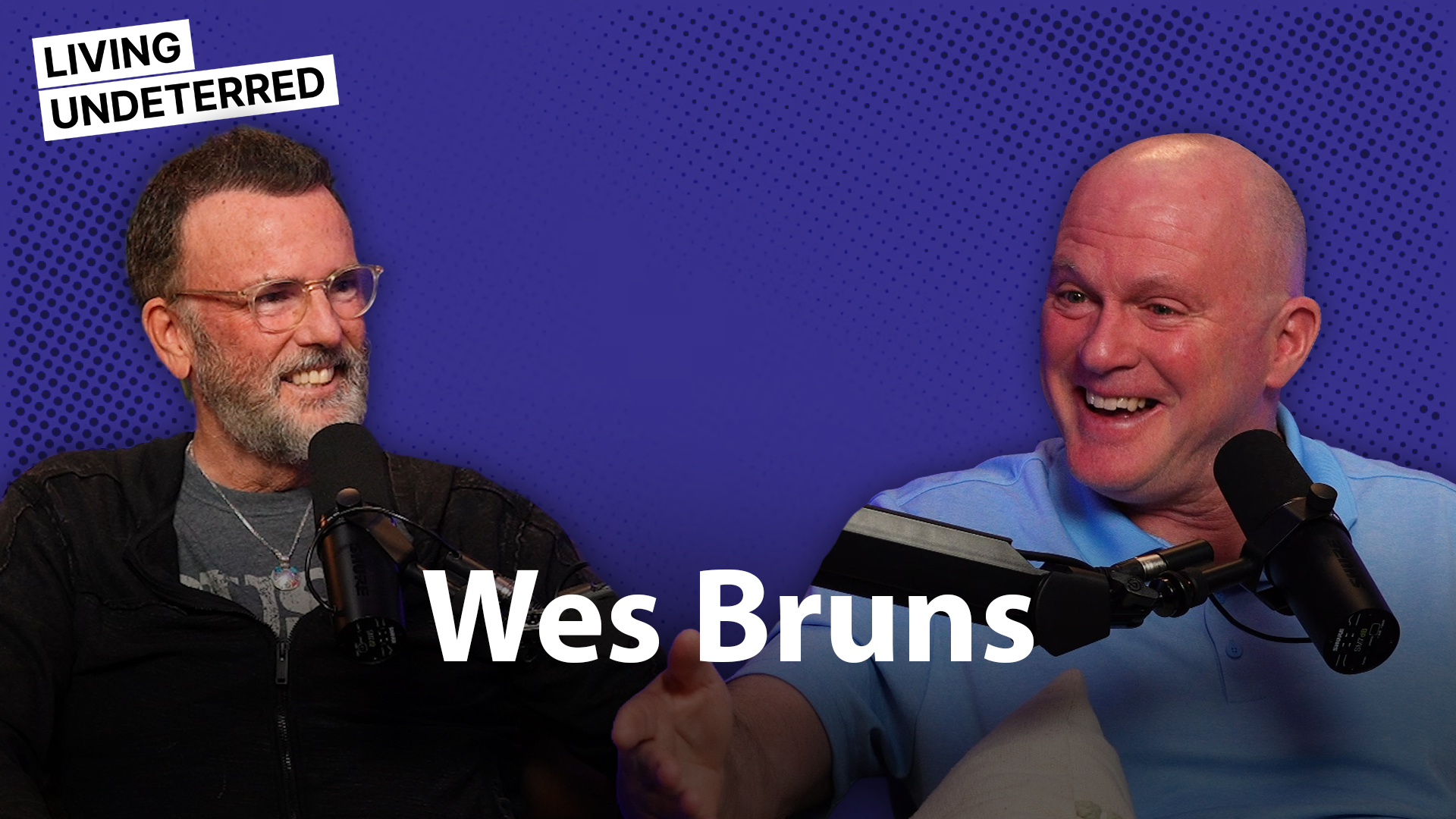
In this episode of the Living Undeterred Podcast, host Jeff Johnston sits down with longtime Iowa coach and mentor Wes Bruns for a deeply emotional conversation about loss, survival, and what it means to keep going after life changes forever.
Wes’s story begins with basketball, family, and the kind of small-town Iowa roots that shaped his identity. But it also includes unimaginable loss. As a young man, Wes lost his father unexpectedly. Years later, during a family Christmas gathering, a carbon monoxide poisoning incident took multiple members of his family and left Wes fighting for his own life.
What follows is not only a story about tragedy. It is a story about rebuilding. About grief that never disappears, but changes shape. About community showing up. About honoring the people we have lost by how we choose to live.
Jeff and Wes speak honestly about the pain that comes with being part of “the club no one asked to join,” but they also talk about something bigger: turning suffering into service, choosing action over sympathy, and finding purpose in the middle of heartbreak.
Grief does not have a finish line.
Jeff and Wes both reflect on how loss changes over time. It may not get easier, but it becomes different. The pain can become less about suffering and more about gratitude, memory, and meaning.
Strength can come from unexpected places.
Wes credits his physical conditioning and years of athletic discipline with helping him survive and recover after the accident. He also shares how coaching, movement, and the gym became forms of therapy throughout his life.
Community matters more than we realize.
From teammates and players to coaches, friends, and family, Wes’s story shows how deeply people can carry one another through tragedy.
Purpose can grow out of pain.
Wes’s upcoming book, When Life Changes the Game, is not just about carbon monoxide poisoning or loss. It is about relationships, resilience, faith, family, coaching, and what it means to keep learning from life.
Honoring the people we have lost means continuing to live.
For Wes, sharing his story is one way of keeping his family’s legacy alive. As he says in the episode, he feels like he is living through his family members and carrying them forward.
Wes Bruns is a longtime Iowa basketball coach, mentor, husband, father, and survivor. Basketball has been a defining thread throughout his life, from his childhood connection to the game through his father to decades spent coaching young athletes.
In the episode, Wes shares that basketball was always “his thing.” Running, lifting, practicing, and being around the game shaped his discipline and identity. Later, coaching became one of the most meaningful parts of his life. What started as an unexpected opportunity at LaSalle High School became a lifelong calling.
Before the accident that would later define so much of his story, Wes experienced a devastating loss as a senior in high school. His father died unexpectedly from a blood clot at age 59.
Wes speaks openly about how difficult that loss was, especially as he tried to move forward into college and adulthood. His father had been a respected coach and educator, and Wes often found himself wondering if he was living his life in a way that honored him.
That question became part of Wes’s life: Am I living this right?
During Christmas in 1992, Wes and his family gathered at a home near the Iowa-Missouri border. It was the kind of family gathering many people recognize: food, conversation, movies, kids playing, people settling in for the night.
But during the evening, family members began unknowingly experiencing the effects of carbon monoxide poisoning. Wes remembers feeling normal, but later learned there were signs that no one could have fully understood in the moment, especially with what was known at the time.
By the next morning, multiple family members had died, and Wes was unconscious. He was eventually carried from the basement, flown for emergency care, and treated in a hyperbaric chamber. He did not come out of the coma until days later.
Wes believes his physical conditioning played a major role in helping him survive. As an athlete and coach, he had spent years training, running, lifting, and staying active. Even during recovery, that mindset showed up.
After waking from the coma, he began pushing himself to move again. He struggled with balance and memory, but he kept walking. He even started using the stairs in the hospital, so much so that his doctor would come looking for him and hear that Wes was on the stairs again.
For Wes, movement was more than rehab. It was part of who he was.
Coaching gave Wes a place to pour his energy, his grief, and his love for people. He talks about wanting to get back to “his boys” after the accident, and throughout the episode, it is clear that coaching was never just about winning games.
It was about relationships.
Wes tells Jeff that he still learns every day as a coach. He talks about being humbled, growing, and helping young people get better. He also shares that he tells his players he will coach them like they are his own sons.
That line says a lot about Wes. His story is rooted in loss, but his life is rooted in showing up for others.
Wes explains that after stepping away from coaching at Jefferson High School, he felt called to write a book. After speaking to a men’s group, others encouraged him to put his story into writing.
The process became emotional and reflective. Through conversations with his ghostwriter and research into his own family history, Wes found himself revisiting moments he may have otherwise forgotten.
Jeff relates to this deeply, sharing how writing after loss helped him preserve memories that time might have blurred.
For Wes, the book is not only about the accident. It is about his father, his family, his wife, his children, his coaching career, his faith, and the relationships that carried him forward.
The title reflects the way life can shift without warning. For Wes, the “game” changed through loss, survival, grief, recovery, and the long process of rebuilding.
He describes the book cover as deeply symbolic: a dark gym, a basketball, a whistle, a free throw line, and light coming through. Wes imagines himself looking toward that light, which he connects to heaven, memory, and the people he has lost.
It is a fitting image for his story. The gym represents where his life began in many ways. The light represents where his purpose continues to lead.
Wes does not describe grief as something that goes away. Instead, he talks about carrying it, living with it, and allowing it to become part of a bigger purpose.
He says he believes he is living through his family members. He also shares that emotion is not always a sign of pain. Sometimes, his tears are connected to happiness, gratitude, and the belief that he will see his loved ones again.
Jeff echoes that idea throughout the conversation. Grief changes. The weight becomes different. The memories remain, but so does the love.
Community is one of the strongest themes in the conversation.
Wes talks about players, coaches, friends, former athletes, and family members who became part of his story. Jeff also reflects on how people showed up for him after the deaths of his son Seth and wife Prudence.
Together, they land on a powerful idea: compassion matters, but action matters too.
Instead of only saying “thoughts and prayers,” Jeff challenges people to ask, “How can I help?” Show up. Knock on doors. Support the mission. Listen to the story. Help carry the weight.
That is where healing often begins.
Wes’s story is a reminder that resilience is not about pretending pain does not exist. It is about continuing to live with love, honesty, and purpose even after loss changes everything.
It is about letting people in.
It is about staying open to gratitude.
It is about choosing to honor the people we have lost through how we treat the people still here.
And for Wes, it is about using his story to help others keep going.
This conversation between Jeff Johnston and Wes Bruns is powerful because it does not try to make grief simple. It does not wrap tragedy in easy answers. Instead, it gives space to the complexity of survival: the sadness, the gratitude, the humor, the faith, the unanswered questions, and the purpose that can still grow after loss.
Wes has lived through the kind of pain no one can prepare for. But through coaching, family, faith, fitness, and storytelling, he continues to show what it looks like to live undeterred.
His story is not only about what happened to him. It is about what he chose to do with it.
And that choice may be the most powerful part of all.
If this episode brings up difficult feelings, you are not alone. If you or someone you know is in immediate crisis, call or text 988 in the U.S. for the Suicide & Crisis Lifeline.