Ben Trotter
June 16, 2026
•
4 min read

TL;DR
May marks the first official announcement of our OpenLoop integration, and we’re already moving into Phase 2 enhancements. What began as therapy booking has now evolved into a more connected care journey: smarter AI therapy recommendations, therapist-ready journaling, automatic session updates, and proactive communication workflows. The result is a far more seamless bridge between AI reflection and licensed clinical care.
Last month introduced therapy booking. This month is about making the entire care experience feel continuous. We’ve begun rolling out Phase 2 of our OpenLoop integration, designed to remove friction before, during, and after therapy sessions.
What’s new
Why it matters
Phase 1 established the booking infrastructure; Phase 2 turns that into a true care workflow. Users are no longer simply scheduling a session — they are now being intelligently guided into therapy, prepared before the appointment, and kept informed afterward. This moves the OpenLoop integration from a point solution into a connected care system that improves continuity, reduces friction, and increases the likelihood that users actually follow through with care.
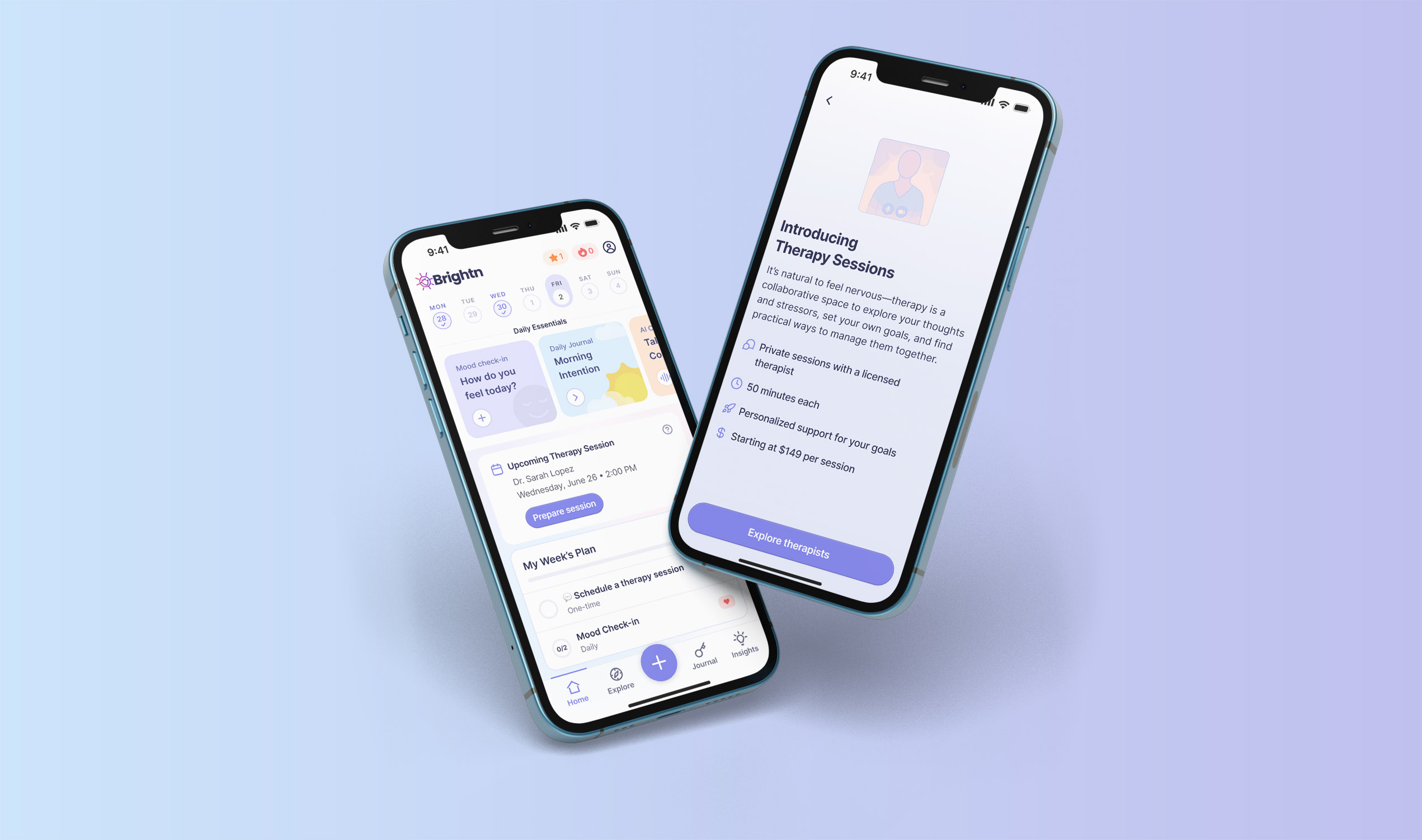
One of the most meaningful updates this month is how Luma now works in service of the OpenLoop experience. Rather than waiting for users to seek help on their own, Brightn now proactively identifies when professional support may be beneficial.
How it works
When a user experiences three or more negative sentiment sessions, Brightn can now begin the next interaction by gently recommending a therapist conversation.
Why it matters
The real innovation is not simply having therapy available — it is surfacing that care at the right moment. This transforms AI from a passive journaling layer into an intelligent triage system that helps users access human support before distress compounds. The timing is what creates the value.
✍️ Therapy Journal Prompt: Making Sessions More Productive
This may be one of the most important UX improvements in the care journey.
Users with a booked therapy session can now complete a therapy-specific journaling prompt and send it directly to their therapist before the session begins.
Why it matters
The hardest part of therapy is often not the session itself — it’s arriving prepared.
This feature helps users clarify what they’re feeling, what patterns are recurring, and what they want to discuss. Therapists enter the session with more context, allowing time to be spent on insight rather than intake.
This is how AI meaningfully improves human care.
One of the biggest friction points in Phase 1 was post-booking uncertainty.
Users booked sessions, but instructions and reminders were not consistently reaching them.
That is now solved.
What’s new
Why it matters
Clear communication is operationally critical. These workflows reduce missed sessions, lower confusion, and improve trust in the care experience. For a telehealth flow, reducing drop-off between booking and attendance is one of the highest-leverage improvements we can make.
Mayl is where the OpenLoop integration begins to feel truly productized.
Not just booking.
Not just reminders.
Not just AI recommendations.
A connected experience from reflection → recommendation → booking → preparation → follow-up care.
This is what it looks like when AI doesn’t replace therapy — it makes therapy work better.