Rylee
January 15, 2026
•
7 min read
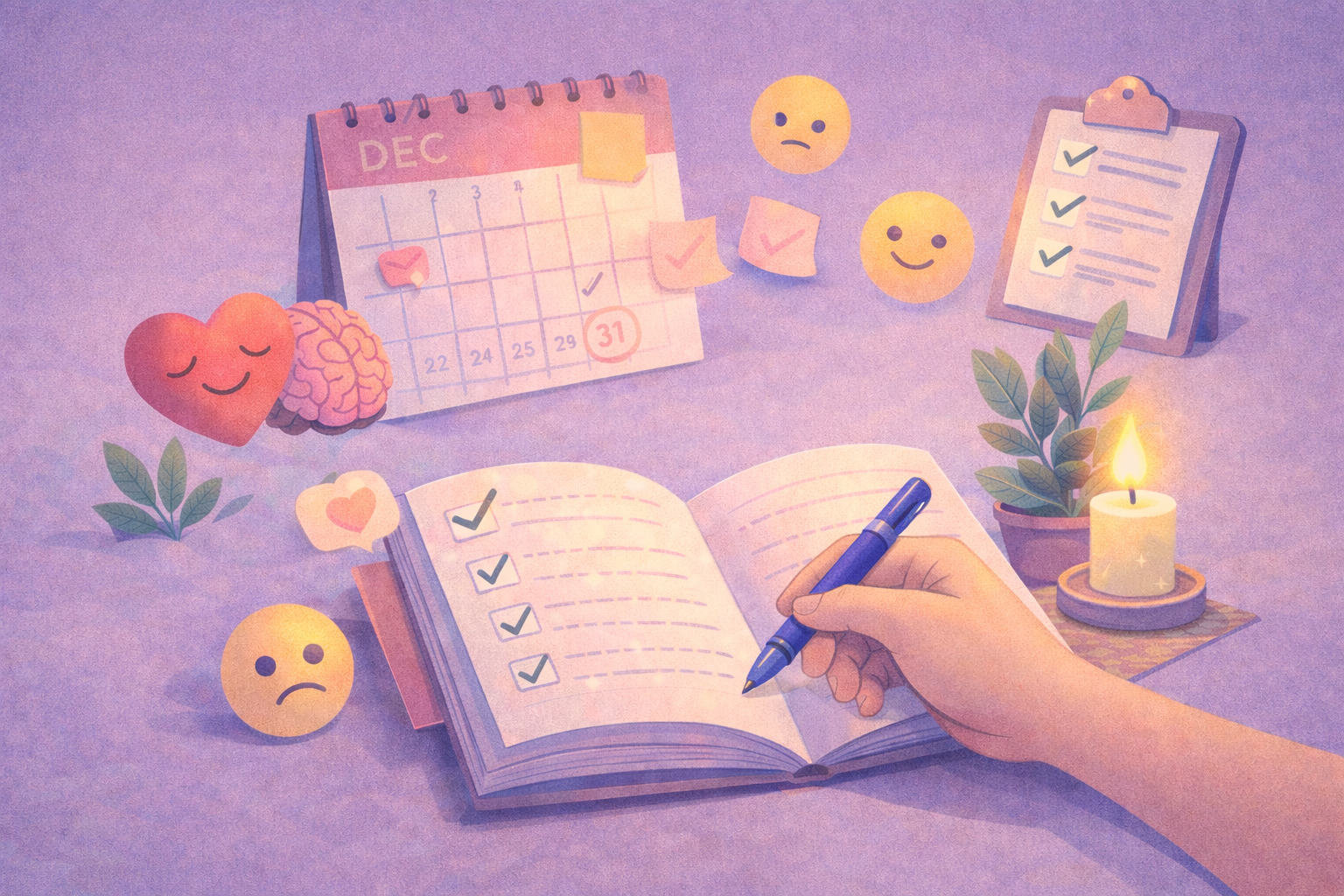
As the year wraps up, a lot of people start reflecting on grades, goals, relationships, jobs, and the million things that have happened since last January. But there’s one area that often gets skipped: your mental and emotional health.
Mental health check-ins matter because the absence of mental illness does not necessarily mean good mental health. In other words, just because you've been functioning doesn't mean you've been feeling okay or thriving.
And for many of us, stress, uncertainty, and the pressure to "have it all figured out" hit harder around this time of year. This is a chance to pause before the next semester, next job search, or next big decision—and ask yourself how you're actually doing.
The end of the year often brings up a mix of emotions. Even if you had moments of joy and wins, you might still feel some pressure, burnout, or stress lingering in the background. Sometimes stress builds slowly and you do not notice it until it starts affecting how you feel day to day.
This check in is not about judging yourself. It is a chance to pause and reset. A moment to look at what supported you, what drained your energy, and what deserves more attention as you move into the new year.
How have I been feeling most days? Sometimes we adapt so much to stress or worry that we don't even realize our emotional baseline has shifted.
What coping strategies did I rely on and did they help or hurt? Coping looks different for everyone. Some strategies (talking, exercise, journaling) support well-being, while others (withdrawing, overeating, substance use) can create new challenges.
Was I honest about my needs? We often downplay what we're feeling and tell others "I'm fine" when internal stress is building.
Did I set boundaries where I needed to? Reflect on how often you said yes when you meant no, especially in friendships, school, and family responsibilities.
Which relationships supported me, and which ones drained me? Your environment and the people in it directly affect your emotional well-being.
Did I make time to rest without guilt? Rest in our society is often undervalued, even though emotional fatigue impacts our daily functioning in all areas of life. Ask yourself if this was a trap you fell into.
Did I notice signs that something might not be right? The American Psychiatric Association identifies fatigue, headaches, tension, sleep disruption, and difficulty concentrating as emotional red flags to pay attention to.
Making space for emotional wellness doesn't have to mean huge life changes. Consistent, small habits can make a real difference in how you think, feel, and respond to stress. You don't have to wait for a major struggle to start taking care of your mental health. Even small, intentional actions create momentum.
The CDC recommends practices such as identifying and managing difficult emotions, replacing negative thoughts with positive ones, spending time in nature, practicing gratitude, connecting with others, and doing activities you enjoy as strategies that support your emotional well-being.
These habits aren't one-time fixes. They are skills and routines that build your resilience, confidence, and emotional stability over time. The more consistently you practice these habits, the more naturally they become part of your daily life—helping you handle challenges, strengthen relationships, and feel more in control of your emotional world as you move into a new year.

Setting mental health goals for the new year works best when those goals grow directly out of your reflections. Instead of trying to reinvent yourself or chase perfect happiness, think about what you learned from this year's check-in and how you want to support your emotional well-being moving forward.
A meaningful goal can be something simple like protecting your energy, being more honest about your needs, or building one habit that keeps you grounded when life gets busy. These goals are not about becoming a new person. They are about understanding what helps you feel steady and supported.
You can also turn your reflections into small commitments. If you noticed that stress built up quietly, maybe your goal is to check in with yourself once a week. If certain relationships drained you, your goal might focus on setting clearer boundaries. If rest was something you avoided, your goal might involve creating space for downtime without guilt.
You do not need a detailed plan to get started. You only need to choose one or two areas you want to nurture. When your goals come from self-awareness instead of pressure, they become steps that actually support your mental health rather than overwhelm it.
A year end mental health check-in allows you to pause before life moves forward again and get honest about how you are really feeling. It creates space to acknowledge the emotional load you carried this year and the strength you showed along the way. Reflection is not about criticizing yourself or reliving difficult moments. It is about recognizing what supported your wellbeing, what challenged your balance, and what you want to intentionally bring with you into the coming year.
You do not need perfect answers or a flawlessly detailed plan. Small steps, simple habits, and honest conversations can create meaningful change. You deserve to move into a new season feeling supported, grounded, and aware of what you need. A check-in is not the end of something. It is the beginning of taking care of your mental and emotional wellness with clarity and compassion one day at a time.
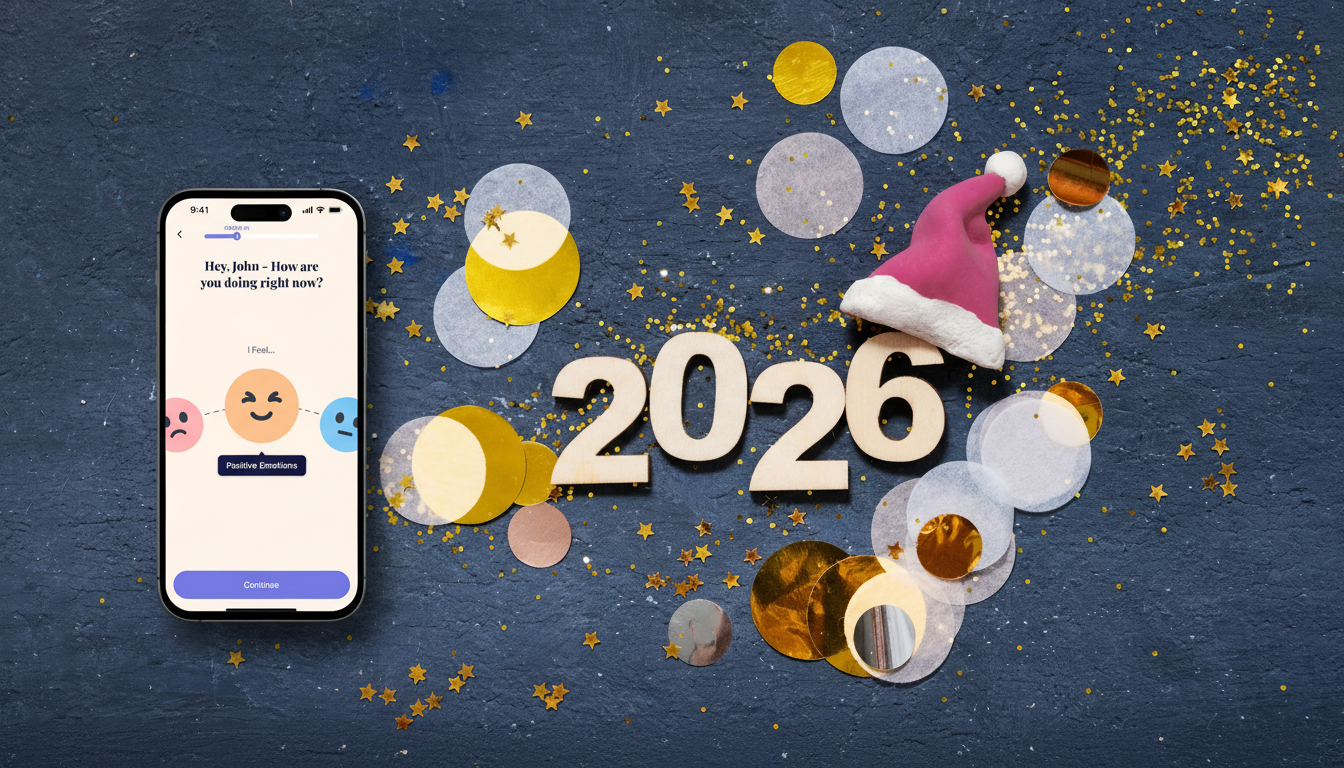
A mental health check-in is most powerful when you have the right tools and support to follow through. Brightn provides guidance that meets you where you are and grows with you over time. You can explore short videos that break down emotional wellness into practical steps, reflect using guided prompts, and access content that helps you understand your feelings with clarity and confidence.
Brightn encourages small, consistent actions that build healthier thoughts and routines. Whether you are managing stress, working through uncertainty, or strengthening relationships, the platform helps you learn strategies, stay accountable, and feel supported as you move forward. You are not expected to have everything figured out. Brightn gives you a place to begin, a way to check in, and support that fits into real life.
Start your journey to calmer celebrations - Download Brightn free
Is a mental health check-in the same as therapy?
No. A personal reflection is something you do independently, while therapy is a collaborative process.
What if I don't know what to say in a reflection or where to start?
You don't need the "perfect" first sentence. Sharing how you've been feeling, what has been stressful, or what has changed recently is a natural place to begin.
Do I need to be in crisis to seek help?
Mental health check-ins are proactive. Addressing challenges early reduces stress and improves your well-being, important things to do before ever experiencing a crisis.
How do I know when a mental health check-in isn't enough?
If you notice ongoing changes in your sleep, appetite, concentration, energy, or mood, it may be helpful to talk with a professional. Emotional strain can show up physically, and support can help you understand what you are experiencing and how to work through it.
Daily Mental Health Check-ins: Transform Your Wellness in 60 Seconds — If this year-end reflection made you realize how rarely you pause, this article helps you turn quick check-ins into an easy daily habit that keeps you more in tune with yourself.
The Power of Boundaries: Protecting Your Mental Energy — A helpful look at how boundary setting can reduce stress, strengthen relationships, and give you more space to focus on your own well being.
The Science of Gratitude and Its Effects on Your Brain — An easy read that explains how gratitude influences your mood and why small moments of appreciation can shift your mental and emotional rhythms.
When Your Body Speaks Your Mind: Decoding the Mental-Physical Health Connection — If you noticed headaches, tension, or burnout this year, this blog will help you understand how your body communicates stress and what those physical signals might be telling you.
New Roads Treatment Center — End of Year Mental Health Check-In
Herzing University — Be the Best You in the New Year: The Power of Mental Health Check-Ins
Mental Health Hotline — Mental Health Check-In Questions
American Psychiatric Association — 7 Check-ins For New Year's Mental Health
CDC — Improve Your Emotional Well-Being