Rylee
January 16, 2026
•
5 min read

As the days grow shorter and the air turns crisp, many people turn inward. Winter offers a pause after months of motion, a time to rest, reflect, and recharge. But for some, the same quiet that brings comfort can also stir loneliness. When solitude becomes isolation, our mental and physical health begin to feel the effects.
Understanding how to balance time alone with meaningful connection can help protect our emotional well-being during the colder months and remind us that rest and relationships can coexist.
Solitude is not the same as loneliness. Solitude can nurture focus, creativity, and self-reflection when it is intentional. It allows us to regulate our emotions, understand our thoughts more deeply, and return to relationships with a clearer sense of self.
Research also shows that people who embrace time alone tend to experience higher self-awareness and personal growth. Short periods of quiet help the brain recharge by reducing cognitive overload and allowing space for imagination and mindfulness.
When solitude is chosen rather than forced, it can feel restorative. Winter’s slower pace can be a natural invitation to pause, journal, meditate, or simply rest. This kind of solitude strengthens our resilience and emotional balance, giving the mind a healthy reset.

Isolation often begins subtly and grows over time. The U.S. Surgeon General’s Advisory on Social Connection warns that loneliness and social disconnection are widespread, with nearly half of adults in the United States reporting measurable loneliness. The report links chronic disconnection to higher risks of heart disease, stroke, dementia, depression, and premature death.
Loneliness and isolation are different. Loneliness is the feeling of being alone, while isolation is the state of having limited contact with others. Isolation more strongly predicts physical decline and early mortality, while loneliness contributes more to emotional distress and depression. Both affect our body’s stress response, increasing inflammation and disrupting sleep and immunity.
Isolation also changes the brain. Penn Medicine reports that chronic social isolation can reduce gray matter in brain regions related to learning, memory, and emotion regulation. Prolonged disconnection alters how the brain processes rewards and social cues, making it harder to rebuild relationships over time.
Without awareness, isolation can quickly replace healthy solitude. Recognizing the difference between choosing quiet and feeling cut off is the first step toward protecting your mental health.
Despite living in the most connected era in history, loneliness continues to rise because of a paradox we all experience at times: constant digital connection can actually increase our disconnection. Social media often amplifies comparison and reduces authentic conversation, creating what psychologists call ‘false intimacy’.
A Harvard Graduate School study found that 61 percent of young adults report serious loneliness. Many described feeling isolated even while surrounded by people online. The study emphasized that meaningful connection requires presence, empathy, and consistent interaction, qualities that can be harder to maintain in digital spaces.
At the same time, Psychology Today notes that perceived social support, or simply knowing that help is available, can significantly reduce anxiety and improve resilience. This sense of support, even when physical contact is limited, protects against feelings of hopelessness and helps people cope with stress more effectively.
In the end, connection does not require constant socializing. It means cultivating relationships that feel reciprocal, safe, and emotionally nourishing.
While winter can make it easier to retreat, it can also be an opportunity to reconnect with purpose and people. Research-based practices offer simple ways to stay grounded and socially engaged.
As the Surgeon General’s Advisory emphasizes, connection is not only a personal act but a public health practice. Reaching out is both healing for you and protective for those around you.

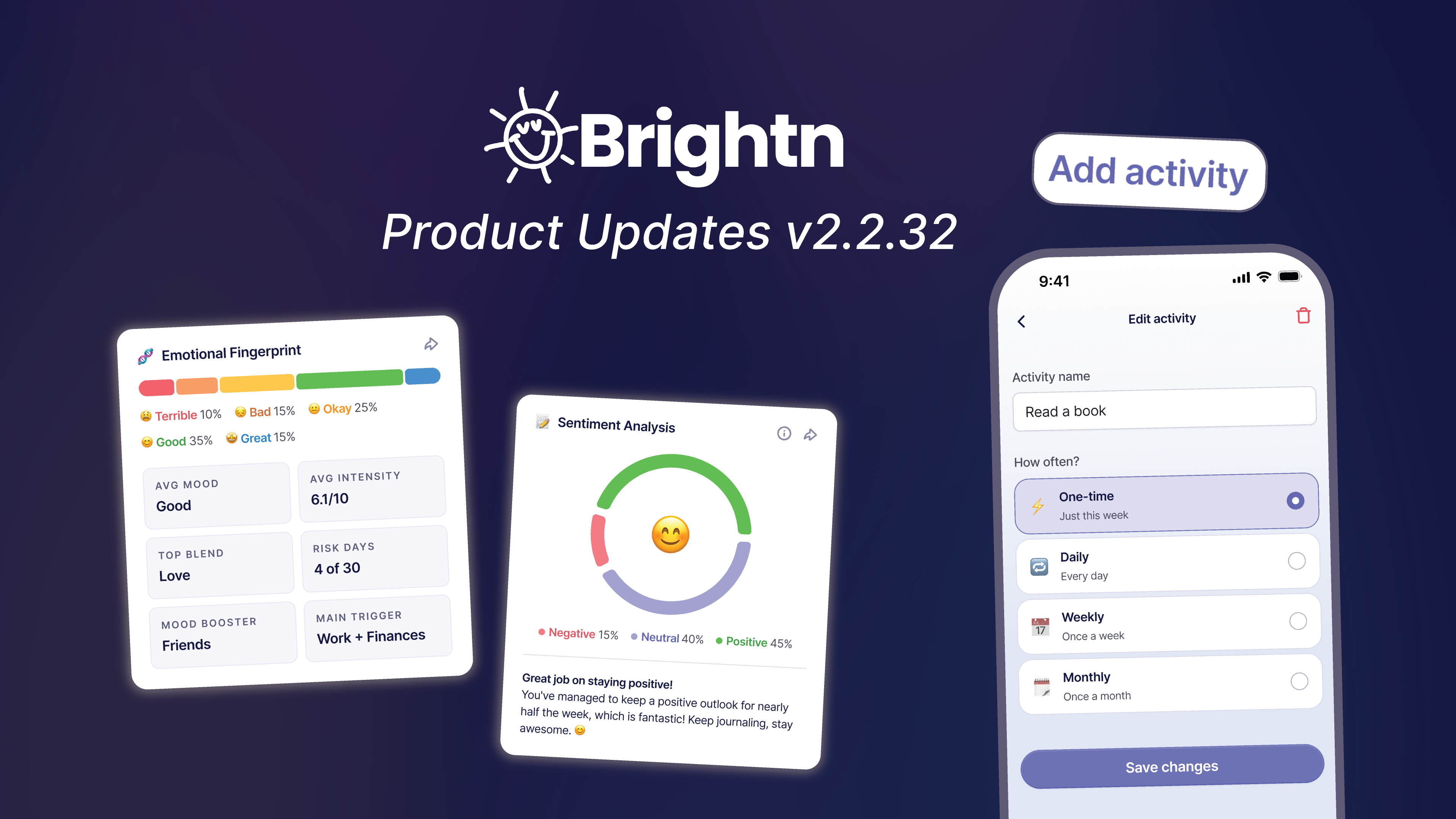
Brightn helps you navigate the balance between solitude and connection with tools designed for reflection and emotional awareness.
🔹 Mood Tracking and Reflection Tools: Notice patterns in your energy and connection throughout the season.
🔹 Guided Prompts: Recognize when quiet time begins to feel like withdrawal and learn gentle ways to re-engage.
🔹 Community Spaces: Connect with others through shared stories, reminders, and supportive check-ins.
By turning reflection into growth and connection into resilience, Brightn helps you move through winter feeling centered, grounded, and supported.

1. What is the difference between solitude and isolation?
Solitude is intentional and restorative. Isolation is often unintentional and linked to distress or withdrawal.
2. Why does loneliness affect physical health?
Chronic loneliness triggers the body’s stress response, raising inflammation, blood pressure, and long-term health risks. Over time, it increases the likelihood of depression, heart disease, and premature death.
3. How can I tell when solitude is turning into isolation?
If time alone begins to feel draining instead of peaceful, or you find yourself avoiding others out of fatigue or fear, that may signal isolation. Reaching out for small, positive contact helps shift the pattern.
🏃 Mindful Movement: Exercise as Mental Health Medicine
Discover how gentle, consistent movement can reduce stress and improve winter mood.
💪 How to Build Emotional Resilience: 7 Science-Backed Strategies for Mental WellnessPractical, research-supported approaches to strengthen adaptability and self-compassion.
💬 You Do Not Need to Be “Fixed” to Deserve Support
A reminder that seeking connection and care is a healthy act of self-respect.