Rylee
August 14, 2026
•
4 min read

Most people think emotional eating is about food. But it's actually more about regulation.
The behavior itself is just the visible part. Underneath it is something much more consistent across research: emotional eating happens when food becomes a tool to manage internal states like stress, boredom, anxiety, or even celebration.
And once you look at emotional eating that way, it becomes a lot easier to understand.

Emotional eating is defined as eating in response to feelings rather than physical hunger. That can include negative emotions like stress or loneliness, but also positive ones like reward or celebration.
That's because food is not just fuel. It is one of the fastest and most accessible ways to change how you feel. It provides immediate sensory reward, distraction, and a temporary shift in mood. That is why people consistently report turning to food during stress, boredom, or emotional discomfort.
One of the most overlooked parts of emotional eating is how learned it is. Many of the patterns start early. Being rewarded with sweets, comforted with food, or celebrating with meals builds associations between eating and emotional relief. Over time, these associations become automatic responses rather than conscious decisions.
There is also a physiological component. Stress increases levels of cortisol, a hormone that is linked to cravings for high-fat and high-sugar foods. These foods provide quick energy and a temporary sense of relief, which reinforces the behavior over time.
So when someone stress eats, it is not just because of a lack of discipline. It is a combination of learned behavior and a biological response.
Understanding the difference between emotional and physical hunger is one of the most practical ways to identify what is actually happening.
Builds gradually over time
Can wait to be addressed
Flexible about what foods sound good
Feels satisfied after eating
Rarely followed by guilt
Comes on suddenly and urgently
Feels like it needs to be fixed now
Craves specific comfort foods
Often not fully satisfied after eating
Frequently followed by guilt
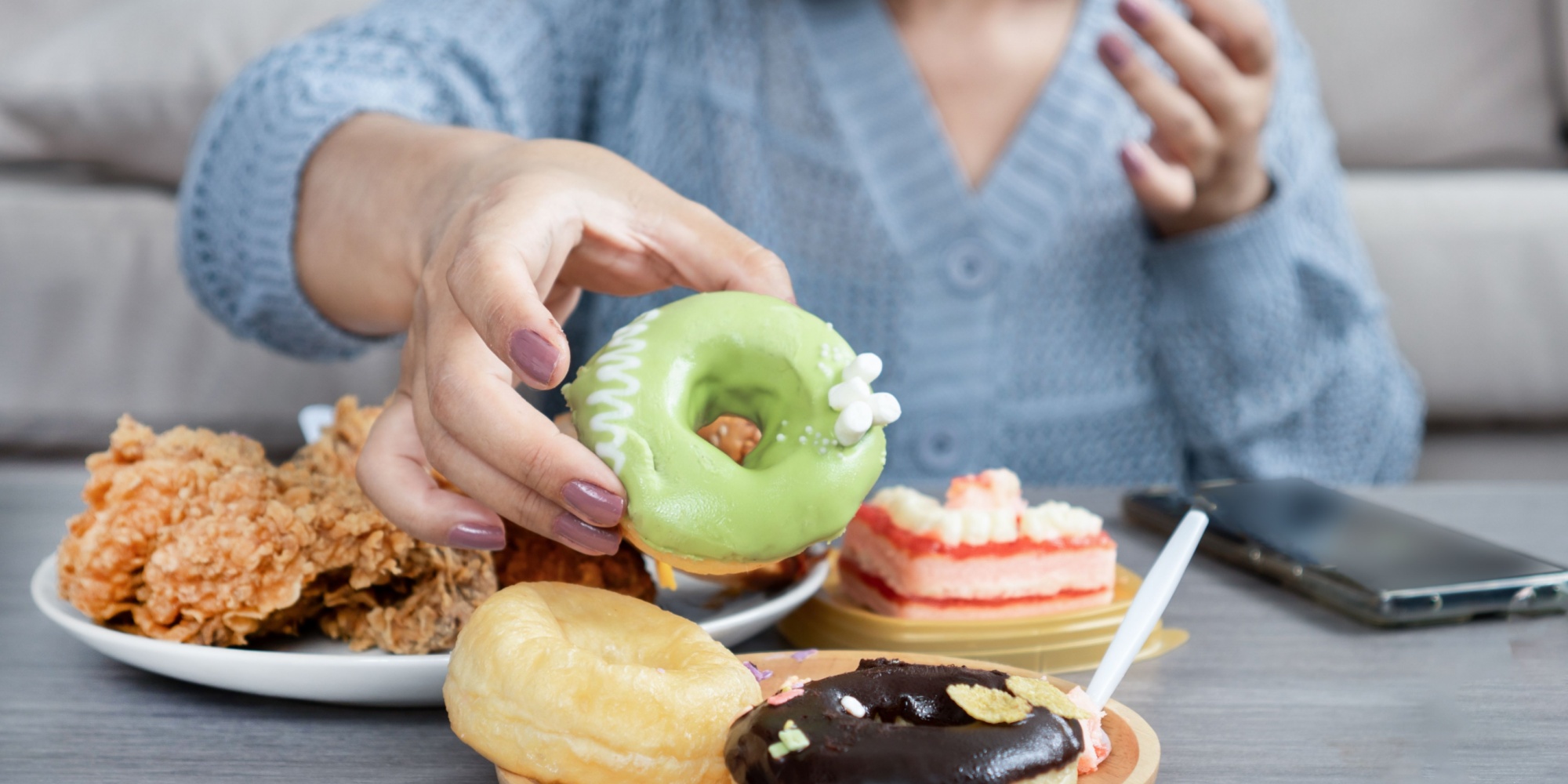
If you look at emotional eating functionally, it is not random. It is solving a problem in the moment — and different triggers point to different needs.
Stress often leads to eating because food provides a quick sense of relief and distraction.
Boredom leads to eating because it creates stimulation and fills time.
Loneliness can lead to eating because it substitutes for connection.
Fatigue can lead to eating because the body is seeking energy.
The key insight is that food is not always the need. It is the method for influencing emotions.
Most advice around emotional eating focuses on control. Eat less. Avoid certain foods. Be more disciplined.
But emotional eating is not primarily a knowledge problem — it is a regulation problem.
When emotions are high, the brain prioritizes immediate relief over long-term goals. That is why willpower alone is unreliable in these situations. Clinical guidance instead emphasizes awareness and interruption. Even a brief pause before eating can help create space to identify what you are feeling and why. And understanding changes how you respond.
Instead of asking "how do I stop emotional eating," a more effective question is:
Because once you identify the function, you have more options.
If the need is stress relief, there are other ways to regulate your nervous system. If the need is connection, food will not fully solve it. If the need is rest, energy from food is only temporary.
The goal is not to eliminate emotional eating entirely. It is to reduce how automatic it is — by understanding what is driving the desire behind it.

At Brightn, we focus on how behaviors connect to mental and physical systems. Emotional eating is a clear example of that connection. It sits at the intersection of stress, habit formation, emotional regulation, and environment.
When you stop treating emotional eating as just a food issue and start treating it as a regulation pattern, you can actually address what is driving it. That is where real change happens.
Yes. Most people engage in it at some point. It becomes a concern when it is your primary way of coping with emotions.
Because it is reinforced both psychologically and biologically. It provides immediate relief, which makes the behavior more likely to repeat.
Awareness. Identifying triggers and patterns is more effective than trying to immediately restrict the behavior.
Not entirely. The goal is to make it less automatic and to build alternative ways to respond to emotional triggers.
HelpGuide. Emotional Eating and How to Stop It.
KidsHealth. Emotional Eating.
NHS Sussex. Managing Emotional Eating.
Cleveland Clinic. Taking Control of Emotional Eating with Dr. Susan Albers.
WebMD. How to Stop Emotional Eating From Stress.
Psychology Today. Why We Engage in Emotional Eating.