Emilie Mauricio
January 15, 2026
•
8 min read

School administrators nationwide face an uncomfortable reality: student mental health needs are growing faster than traditional support systems can handle. While school counselors provide invaluable support, they're often stretched thin across hundreds of students, creating gaps in care that can have serious consequences for student wellness programs.
The numbers tell the story: 1 in 5 students experiences a mental health challenge annually, while the average counselor-to-student ratio sits at 1:464—nearly double the recommended 1:250. Students often wait days or weeks for counseling appointments, and many never seek help due to stigma or scheduling barriers.
What this means for educational institutions: increased behavioral incidents, higher absenteeism, overwhelmed staff addressing issues outside their training, and reactive crisis management instead of preventive student support services.
School counseling remains essential, but it wasn't designed to handle today's volume and complexity of student mental health needs. Students need support outside of school hours, without scheduling appointments, in moments of immediate distress, and without the perceived stigma of office visits. This is where digital mental health platforms and educational technology solutions create meaningful impact.
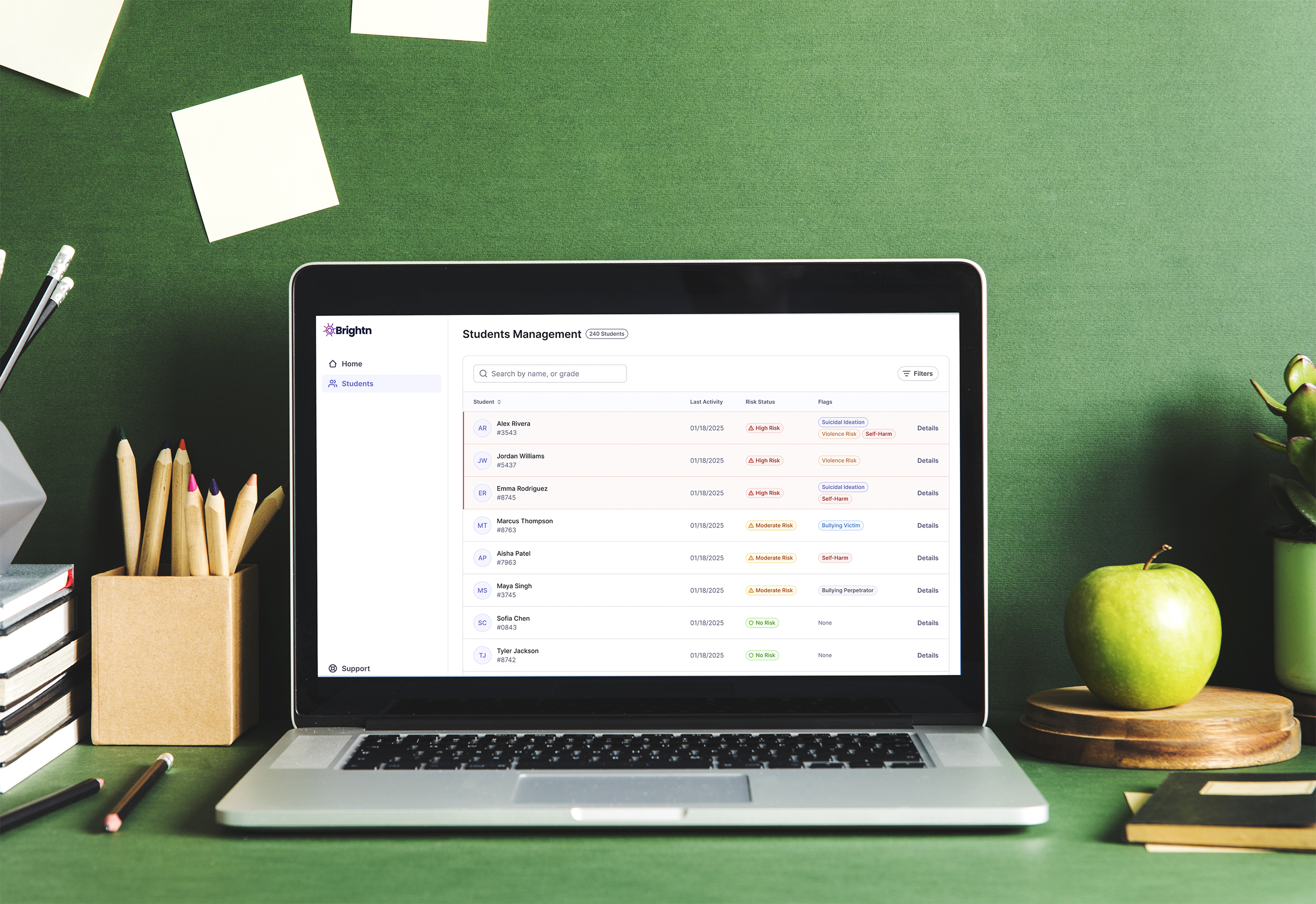
Digital mental health technology provides immediate accessibility when students need support most—during a panic attack at midnight, before a big presentation, or when processing difficult emotions at home. These platforms enable early intervention by identifying concerning patterns before they escalate into crises, offer personalized care at scale through AI adaptation, and provide educational administrators with data-driven insights for better resource allocation in student wellness programs.
Based on research from 54 digital mental health intervention studies, successful platforms combine student-centered design with intuitive interfaces, evidence-based features like personalized content and progress tracking, and administrative value through population insights and measurable outcomes.
Brightn was designed specifically to address these challenges in educational settings nationwide. The platform provides comprehensive student mental health software that serves diverse school communities. The platform provides:
For Students:

For Educational Institutions:
For Administrators:
Educational institutions successfully implementing digital mental health platforms typically follow this approach:
Q: How do digital mental health platforms integrate with existing school counseling services? A: Digital platforms complement rather than replace traditional counseling. They provide 24/7 support while counselors focus on high-priority cases and crisis intervention.
Q: What privacy protections are in place for student mental health data? A: Effective platforms maintain FERPA compliance, use anonymous data collection, and provide transparent privacy policies that build trust with students and families.
Q: How quickly can schools implement digital mental health solutions? A: Most platforms can be implemented school-wide within weeks, with immediate access for students and population-level insights available to administrators within the first month.
Q: What outcomes can schools expect from digital mental health programs? A: Schools typically see reduced crisis interventions, increased student engagement with mental health resources, better data on student wellness trends, and extended counseling capacity.
Q: How do these platforms work for different age groups within schools? A: Quality platforms offer age-appropriate interfaces and content, adapting communication styles and intervention strategies for elementary, middle, and high school populations.

Digital mental health support isn't about replacing human connection—it's about ensuring every student has access to comprehensive mental health resources when they need them. By combining traditional counseling with innovative educational technology, schools can create robust student wellness programs that truly serve their entire student population.
The question isn't whether educational institutions need enhanced mental health support—it's how quickly they can implement evidence-based solutions that make a real difference in students' lives and academic success.
Ready to explore comprehensive digital mental health solutions for your educational institution?
Learn more about evidence-based student mental health technology at brightn.app and discover how schools nationwide are successfully enhancing their student support services through our school partnerships program.

Brightn partners with educational institutions to create comprehensive student mental health programs that serve every student. Our platform combines cutting-edge technology with proven psychological principles to deliver accessible, effective mental health resources. Learn more about our approach to student privacy and implementation process.