Jeffrey Johnston
June 16, 2026
•
7 min read time
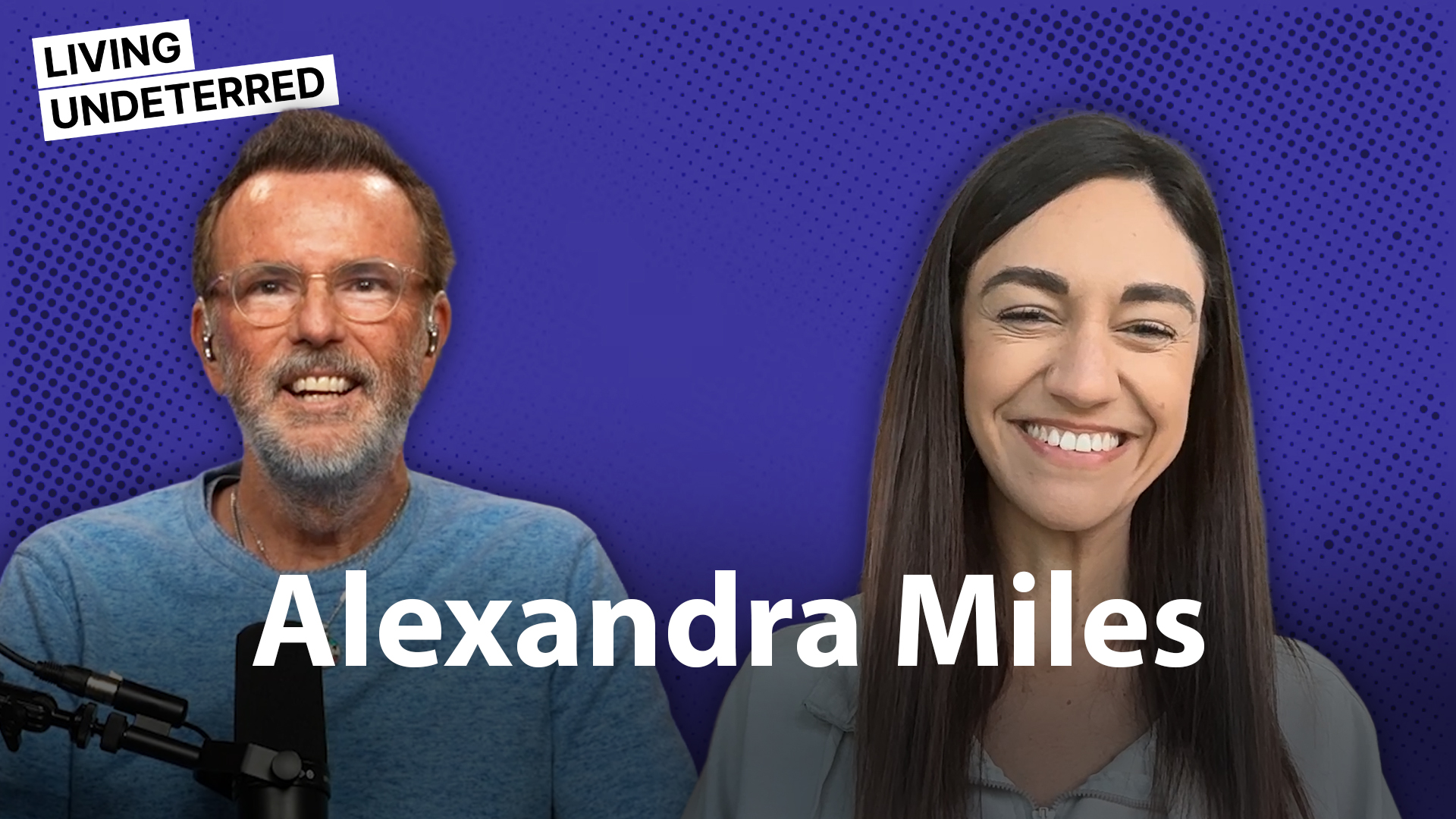
Mental health support does not always start in a therapist’s office. Sometimes it starts with a story.
In this episode of Living Undeterred, Jeff Johnston sits down with Alexandra Miles, founder of Project Blackbird, to talk about stigma, prevention, and why so many people still do not feel safe asking for help. What makes this conversation especially powerful is that Alexandra is not just talking about mental health from a distance. She built Project Blackbird out of her own lived experience and turned that journey into a movement designed to help students and communities feel seen, supported, and connected to real care.
Project Blackbird’s mission is simple but powerful: use storytelling, shared experience, and access to care to help young people shed shame around mental health. Through national events in schools and communities, the organization brings together film, journaling, lived-experience panels, and resource connections to create a space where people can open up and know they are not alone.
This episode is a conversation about what happens when we stop waiting for crisis and start building daily practices, better questions, and more human support systems.
Alexandra: I’m the founder and CEO of Project Blackbird, and I started the organization after going through my own struggles and feeling like I was completely alone. I did not feel safe saying I needed help. I did not feel safe admitting what I was going through. What Project Blackbird became is a nonprofit built to help students and communities feel safer acknowledging mental health, while also connecting them to direct care and real resources.
Alexandra: Storytelling is what opens the door. The film we screen is not a documentary. It is a narrative film, and that matters because narrative helps people lose themselves in the characters and build empathy in a different way. From there, we bring in public figures, athletes, artists, and other role models to share their lived experience. The goal is to help people realize their heroes are human too, and that it is okay to struggle and okay to ask for help.
Alexandra: The work is intentionally not cookie cutter. We try to understand the specific community we are serving and what conversations will resonate most there. That can include eating disorders, substance use, athlete mental health, LGBTQ+ conversations, or broader mental health support. At the end of the day, we want every person in the room to feel seen.
Alexandra: I think we still do not listen enough, ask enough, or understand enough before trying to solve the problem. Stigma looks different across different communities, and we need to understand that better. It is one thing to help someone feel safer opening up, but if they do not know where to go next, that can become overwhelming. The bigger issue is that too many people still do not feel seen, and when someone feels completely alone, that is when things can get especially dangerous.
Alexandra: Because too often people wait until things are already bad. I wish more people saw therapy and mental health support as preparation, not just crisis response. It can help you become a better communicator, better understand yourself, and better prepare for the moments when life does get hard. Prevention is difficult for people to prioritize, but it matters.
Alexandra: I think it starts with small, actionable steps. Bite-sized pieces. Something simple enough that a person can actually repeat it. Therapy can be incredibly valuable, but if it becomes something that only happens once a week without anything changing in daily life, then it can lose momentum. What really creates change is having something small and practical you can come back to every day. When people feel even a little bit better from those actions, they are more likely to keep going.
Alexandra: For a long time, my body was living in constant fight or flight. I felt it physically. It was not just in my thoughts. What changed for me was recognizing that anxiety was real in my body, and also that I needed to get curious about what was driving it. In my case, there were medical and hormonal factors involved too. That experience made me think differently about labels like anxiety or depression. Sometimes they are not the whole story. Sometimes they are signals telling us to look deeper.
Alexandra: Yes, because if we only label what we are feeling, we can miss what is underneath it. Why am I feeling anxious? Why am I feeling depressed? Is it a life change, stress, trauma, environment, health, or something else? I am not saying there is never a place for medication or clinical support. There absolutely is. But I do think there is power in asking better questions and trying to understand what is really going on.
Alexandra: I would say that struggling does not mean you are broken. It means you are human. I also think people need to remember that therapy is relational. Not every therapist is the right fit the first time, and that does not mean therapy cannot help. It may simply mean you have not found the right person yet. There is so much value in giving yourself permission to keep looking for the support that fits your situation.
Alexandra: Project Blackbird is national, and we want to connect with schools and communities across the country. Donations help us continue offering direct support and bringing programs to places that otherwise might not be able to afford them. The mission is bigger than one event. It is about creating access, connection, and a safer way for young people to start these conversations.
This episode of Living Undeterred is a reminder that healing does not always begin with a perfect plan. Sometimes it begins with feeling seen. Sometimes it begins with one honest conversation. Sometimes it begins with a story that makes you realize you are not the only one carrying something heavy.
Alexandra Miles is building Project Blackbird around that exact truth. Through storytelling, vulnerability, and real access to care, she and her team are helping young people move out of silence and into connection.
And that is what makes this episode so meaningful. It is not just a conversation about mental health. It is a conversation about how we create safer spaces, better questions, and more human ways to help people before they reach a breaking point.
Project Blackbird’s 2026 Annual Gala is happening Friday, May 8 at Nationals Park in Washington, D.C., bringing together advocates, community leaders, athletes, and supporters for an evening focused on expanding access to youth mental health care. The event helps fund free therapy, mental health education, and direct support for students nationwide, and Jeff Johnston will be speaking as part of the night’s mission-driven program.