Rylee
April 16, 2026
•
5 min read

Stress is part of being human. In short bursts, it helps you stay alert, motivated, and responsive. But when stress becomes constant, your brain and body begin to adapt in ways that can quietly harm your mental health.
Many people living with chronic stress do not realize how deeply it affects their brain. Over time, stress can change how you think, feel, remember, and regulate emotions. The good news is that your brain is adaptable, and with the right practices, your stress baseline can be reset.
Chronic stress occurs when stressors persist over long periods without enough recovery time. Unlike acute stress, which fades once a threat passes, chronic stress keeps your nervous system in a prolonged state of activation.
According to the American Psychological Association, chronic stress can lead to anxiety, depression, sleep problems, memory issues, and physical health complications when the body remains in survival mode for too long. Over time, stress stops feeling like a response and starts feeling like your normal state.
When the brain perceives threat, it activates the stress response system, releasing hormones like cortisol and adrenaline. This is helpful in the short term. But when stress is ongoing and constant, the brain begins to rewire itself.
The amygdala is the brain’s threat detection center. Research shows that chronic stress increases activity in the amygdala, making the brain more sensitive to perceived danger. This can lead to heightened anxiety, irritability, and emotional reactivity even in nonthreatening situations.
The prefrontal cortex helps with decision making, focus, impulse control, and emotional regulation. Chronic stress reduces activity in this region, making it harder to think clearly or manage emotions. This is why stress often leads to brain fog, poor concentration, and difficulty regulating emotional responses.

Stress interferes with the hippocampus, a region involved in memory and learning. Harvard Health reports that long term stress can impair memory formation and recall, especially under pressure. When your brain is focused on survival, higher order thinking takes a back seat.
Your stress baseline is the level of stress your nervous system considers normal. We all have one, but with chronic stress, this baseline shifts upward. Instead of returning to calm after stress passes, your body remains partially activated. This leads to persistent tension, fatigue, and emotional exhaustion.
Many people become stuck in stress cycling without enough recovery time, leaving the nervous system dysregulated. Resetting your stress baseline means teaching your nervous system how to return to safety again.
Resetting chronic stress does not require eliminating stress entirely. It requires restoring balance through consistent regulation.
Simple practices like slow breathing, gentle movement, and time in nature activate the parasympathetic nervous system, which promotes rest and recovery. Even brief moments of regulation help retrain your brain.
Sleep is essential for clearing stress related toxins from the brain. Research shows that poor sleep worsens stress sensitivity and emotional regulation. Overall, improving sleep quality is one of the most powerful ways to reset your stress baseline.

Chronic stress is intensified by constant mental demands. Mayo Clinic emphasizes that organizing tasks, setting boundaries, and reducing nonessential commitments helps lower our stress load. Predictability helps the brain feel safer.
Awareness is the first step toward regulation. Unchecked stress often becomes invisible because it feels normal. Regular emotional check ins help you notice early signs of overload before burnout sets in.
If stress feels constant, overwhelming, or begins affecting daily functioning, professional support can help. Structured stress management strategies or therapy are effective in reducing long term stress impacts. Seeking support of any kind is not a failure. It is a protective step to better support your brain and body.
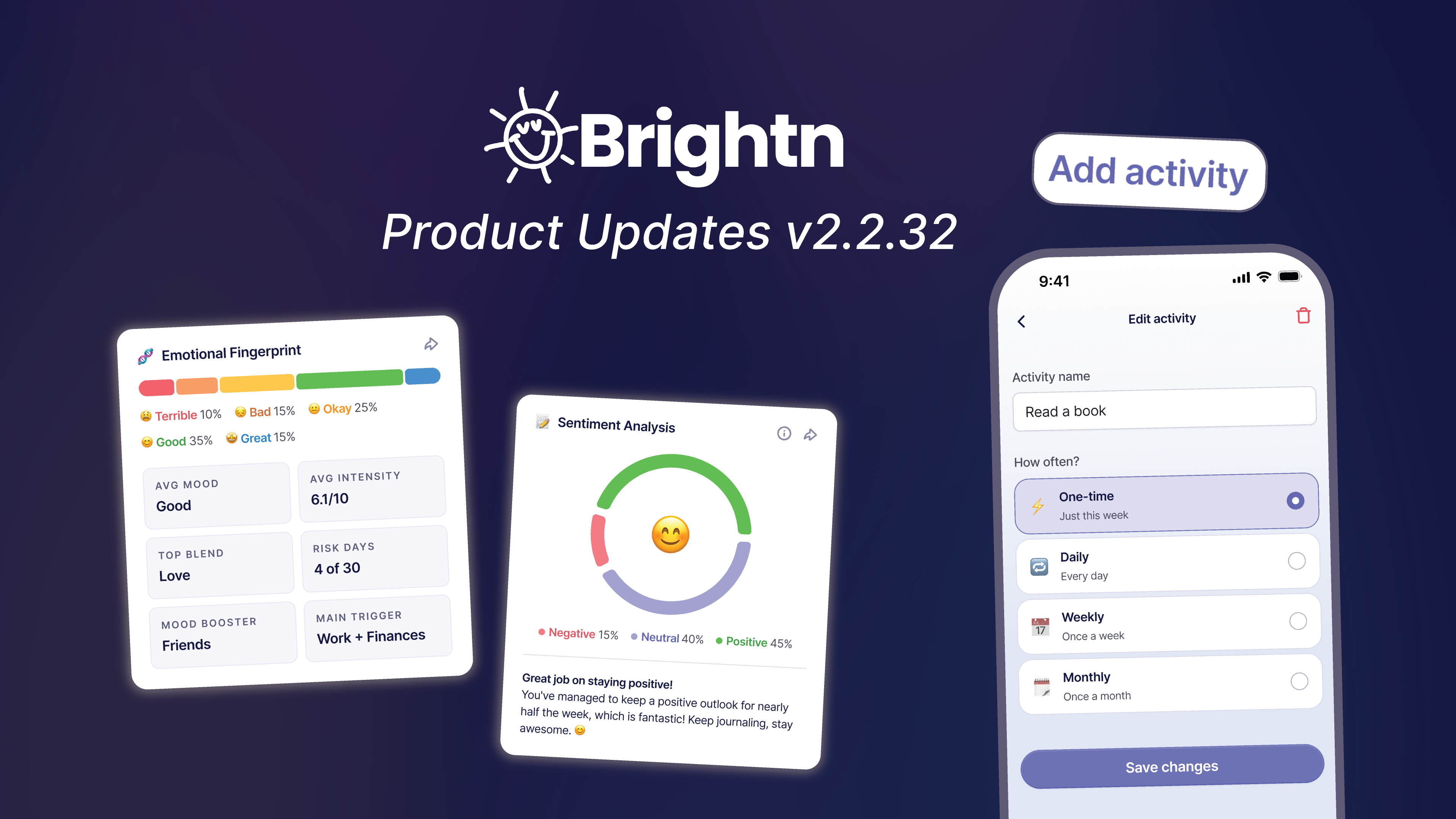
Resetting chronic stress is easier when support is consistent and accessible. Brightn helps you identify stress patterns, regulate emotions, and build daily habits that support nervous system recovery. Through guided journaling, mood tracking, and AI driven insights, Brightn helps you notice what raises your stress baseline and what brings it down.
Instead of staying stuck in survival mode, Brightn helps you create space for calm, clarity, and emotional balance.
Start your journey to better mental health — Download Brightn free

Chronic stress can change brain function, but many changes are reversible with consistent regulation and recovery.
It varies by person and situation, but small daily practices can begin shifting your baseline over time. Starting is the most important step.
No. Genetics, life experiences, and support systems all influence stress responses. It’s important to remember that how you experience stress might be different than your family or friends.
Yes. Chronic stress impairs the brain regions responsible for memory, focus, and decision making.
Mayo Clinic. Chronic stress puts your health at risk
https://www.mayoclinic.org/healthy-lifestyle/stress-management/in-depth/stress/art-20046037
American Psychological Association. Chronic stress
https://www.apa.org/topics/stress/chronic
University of Alabama at Birmingham. How chronic stress rewires the brain
https://www.uab.edu/news/news-you-can-use/how-chronic-stress-rewires-the-brain
Harvard Health Publishing. Protect your brain from stress
https://www.health.harvard.edu/mind-and-mood/protect-your-brain-from-stress
Psychology Today. 7 Small Ways to Reset and Regulate Your Nervous System
https://www.psychologytoday.com/us/blog/everyday-resilience/202503/7-small-ways-to-reset-and-regulate-your-nervous-system