Jeffrey Johnston
April 8, 2026
•
4 min read
Some episodes are less about a single topic and more about a life mission in motion.
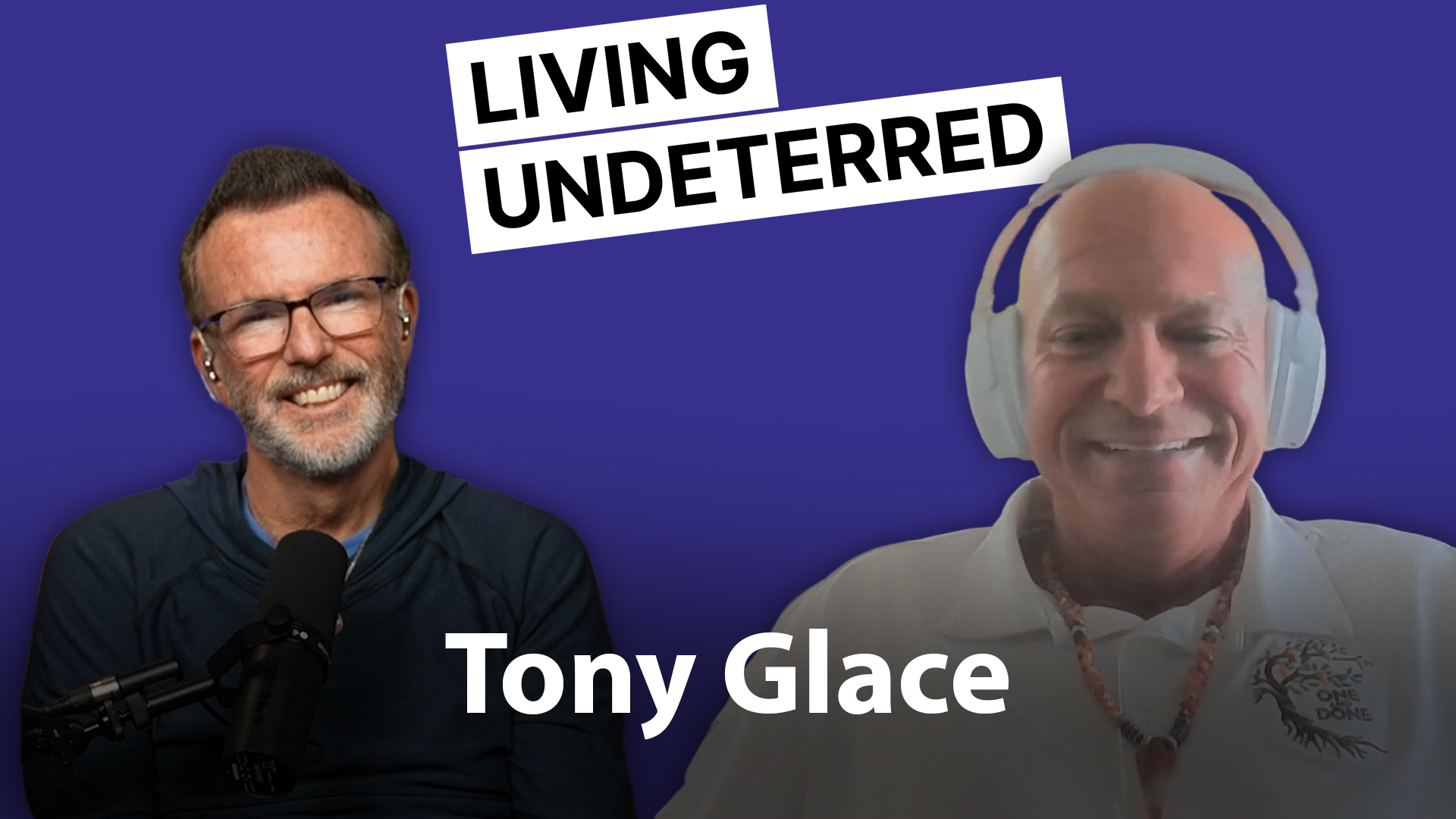
In this episode of Living Undeterred, Jeff Johnston sits down with Tony Glace, founder and board chair of One and Done, for a deeply personal conversation about healing, plant medicine, spiritual transformation, veteran suicide, and what it really takes to rebuild a life after trauma. Tony shares how his own experience with addiction and recovery reshaped his purpose, why he believes reintegration is the missing piece in the healing journey, and how One and Done is working to support veterans after medically supervised treatment abroad.
At the center of the conversation is a bigger idea: healing does not end with a breakthrough. It has to be carried into daily life, relationships, routines, and identity. Tony argues that recovery is not just about what happens in one powerful moment. It is about what happens next, and whether people have the support to build something new from it.
Listen to the full episode here:
Tony: I’m the founder and board chair of One and Done, a nonprofit focused on helping U.S. military veterans rebuild their lives after medically supervised treatment experiences abroad. For me, the heart of this mission is not simply treatment itself, but what comes after it. I believe reintegration is the part too many people miss.
Through One and Done, we’re focused on helping veterans and their families translate breakthrough experiences into long-term, everyday recovery. The bigger vision is to create a structured, supportive environment where healing can actually continue once someone gets home.
Tony: My turning point began with ketamine-assisted healing after years of heavy drinking and repeated attempts to quit alcohol. I had tried over and over to stop, but I kept falling back into the same cycle. That experience became spiritually transformative for me, and it helped break something I had not been able to break on my own.
From there, I got deeper into the world of plant medicine, advocacy, and policy. But more than anything, what came out of that transformation was a desire to help other people experience real healing too, especially veterans.
Tony: I believe the biggest gap in recovery is often not the breakthrough moment. It’s the follow-through.
In my view, plant medicine might only represent 10 to 20 percent of the process. The other 80 to 90 percent is integration. That means retraining the brain, changing routines, strengthening relationships, and learning how to live differently after treatment. That is where real change either holds or falls apart.
Tony: I see a lot of veterans traveling abroad for treatment, then coming home without enough real-world support to help them hold onto the gains they made. They may come home transformed, but then struggle in their marriages, family dynamics, and day-to-day life because the people around them are not prepared for that change.
That is why our model includes spouse and partner support. The vision grew from helping one individual veteran into creating a fuller reintegration structure that includes couples work, family preparation, and practical support for the transition home.
Tony: I see it as a reintegration model built around structure, environment, and consistency. The plan includes one-on-one support, couples integration, nutrition guidance, physical training, wellness tools, and practical lifestyle coaching. My goal is to create an environment where veterans are treated with dignity and given the space to rebuild.
I want this to be more than a concept. I want it to be a place that truly welcomes people home and gives them the tools to build a new life around the healing they’ve already begun.
Tony: The answer is urgency.
I’m starting with veterans because the veteran suicide crisis is too severe to ignore. I want to build something that can save lives, reduce suffering, and offer veterans a better path forward. That is what is driving me.
This is not just about treatment. It’s about rebuilding lives, restoring purpose, and creating support systems strong enough to actually make a difference.
Tony: I think about life through the lens of purpose. I believe people create their reality through what they put out into the world, and I believe painful experiences can open the door to destiny, then ultimately legacy.
For me, adversity does not have to be wasted. It can become service. It can become leadership. It can become the very thing that helps someone else survive what once almost took you under. That is how I think about purpose now.
Tony: Spirituality plays a major role in how I see my life and this mission. I speak openly about faith, God, and what I believe is a larger calling on my life. I do not see One and Done as just a nonprofit. I see it as a mission rooted in personal transformation and service.
For me, healing changed what mattered to me. It changed how I see people, how I show up in the world, and what I believe my life is supposed to be used for.
Tony: I want people to know that healing is possible, support matters, and no one has to carry everything alone.
At the end of the day, I want people to love themselves, take care of themselves, and keep going through whatever they are facing. I also want people to understand the importance of showing up for each other. Sometimes being there for somebody at the right moment can change everything.
This episode is about more than plant medicine or nonprofit work. To me, it’s really about what becomes possible when pain is transformed into purpose, and when what you’ve survived becomes a lifeline for someone else.
If you want, I can now drop this directly into the full blog so you have one clean final version.
This episode of Living Undeterred is a powerful look at healing after trauma, the importance of reintegration, and the kind of purpose that grows out of lived experience.
Tony Glace brings urgency, conviction, and deep personal belief to this conversation. Whether he is talking about addiction, recovery, veteran suicide, or the future of One and Done, his message is consistent: breakthrough moments matter, but they are only the beginning. Real healing happens when people are supported long enough to build a new life around that change.
And that is what makes this episode resonate. It is not just about what helped Tony heal. It is about what he is now trying to build so that other people, especially veterans and their families, have a real chance to heal too.
Check out more about One and Done here: https://oneanddone.org/