Jeffrey Johnston
March 19, 2026
•
6 min read
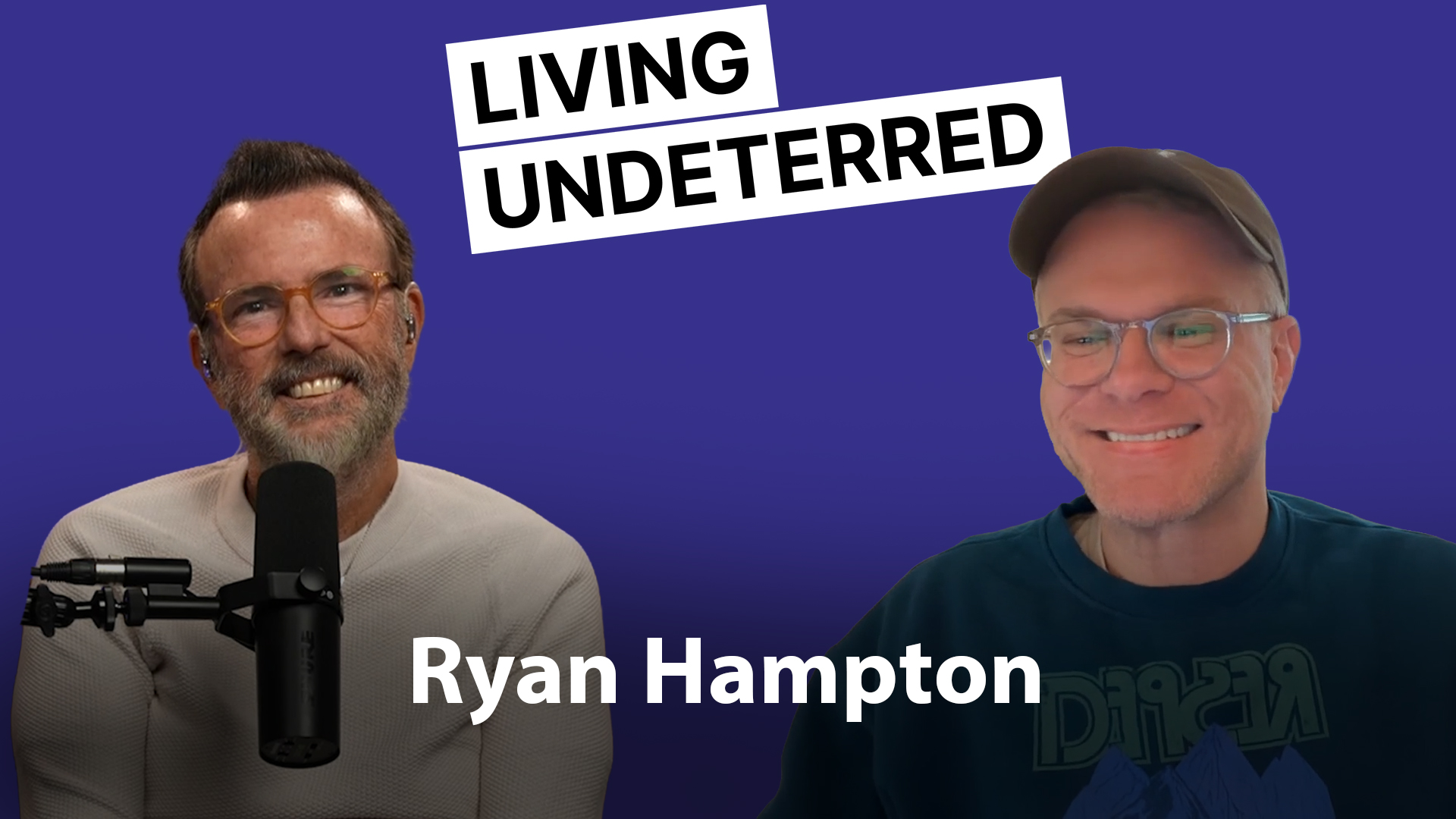
In this episode of Living Undeterred, Jeff Johnston sits down with Ryan Hampton, nationally recognized advocate, author, founder of Mobilize Recovery, and a person in long-term recovery. What follows is a grounded, honest conversation about addiction, mental health policy, overdose prevention, personal accountability, recovery pathways, and what it really takes to create lasting change.
Ryan shares how his lived experience shaped his work, why he decided to run for office in Nevada, what he learned from taking on Purdue Pharma and the Sackler family, and why the future of mental health support has to include both personal responsibility and better systems of care.
Ryan introduces himself first as a person in long-term recovery from addiction and mental health challenges. He shares that he recently celebrated 11 years sober and has spent that time turning lived experience into advocacy, writing, and direct action.
He is the author of American Fix, Unsettled, and Fentanyl Nation, and the founder of Mobilize Recovery, a national nonprofit dedicated to elevating the voices of people impacted by addiction and mental health challenges in policy conversations. Through Mobilize Recovery, Ryan and his team have distributed more than a million doses of naloxone across 24 states and are piloting peer support programs that place certified recovery peers in emergency rooms.
He also shares major personal news in the episode: he was named to the Time100 Health list as one of the most influential voices shaping global health in 2026.
Ryan explains that he is running for the Nevada State Assembly because he believes policy has to be shaped by people who understand the reality of the crisis firsthand.
He talks about Nevada’s struggles with mental health care access, including provider shortages, limited resources, low reimbursement, and ongoing gaps in care. His hope is to help move the state from reactive crisis response toward something more durable and preventative.
He frames this vision through the idea of a care economy. For Ryan, that means investing in mental health infrastructure, healthcare workers, home health, and community support in a way that improves lives while also strengthening the economy. He sees better care not just as a moral issue, but as a workforce, infrastructure, and long-term economic issue too.
Ryan is candid about how difficult it is to run for office.
He talks about the emotional toll, the constant fundraising, and the reality of becoming a public target. He reflects on the cheap shots, attack ads, and personal criticism that come with entering politics, especially as someone whose recovery story has been shared publicly for years.
What stands out most is his mindset. He does not pretend it is easy, but he also does not let it define him. He shares a practical perspective that helped him deal with online attacks: if you would not stop and argue with someone screaming at you on a street corner, you probably do not need to engage with them online either.
That perspective says a lot about how he approaches both advocacy and recovery. Stay grounded. Breathe. Keep moving.
Ryan traces that work back to his early advocacy years, when he started digging into the story behind OxyContin, Purdue Pharma, and the Sackler family.
At first, he knew Purdue only as the name on the label of a drug he had once used. But as he learned more about the company’s marketing practices, legal history, and role in the opioid epidemic, he became increasingly determined to act.
In 2018, he helped organize a major protest outside Purdue Pharma’s headquarters in Stamford, Connecticut, where hundreds of families gathered to demand accountability and reinvestment into community-based solutions. That action increased his visibility and helped position him as a leading advocate in the fight for justice.
When Purdue filed for bankruptcy in 2019, Ryan applied to join the Unsecured Creditors Committee, a group appointed through the Department of Justice to represent those harmed by the company. He was appointed to the committee and later elected co-chair.
Ryan says the experience changed him.
He went into the process believing it would be about justice, accountability, and real support for victims and families. What he found instead was a legal and financial process driven largely by money, power, and competing interests.
He speaks openly about how difficult it was to watch victims receive the smallest slice of the pie while states, hospitals, and insurers fought over larger portions. He also describes the emotional tension of sitting inside a system he once viewed from the outside and realizing how different those two perspectives really are.
Eventually, Ryan resigned from the committee in protest and became one of the most outspoken critics of the process. He later wrote about it in Unsettled and Fentanyl Nation, testified before Congress, and continued pushing for bankruptcy reform so future settlements would not repeat the same mistakes.
Ryan approaches that question carefully.
He acknowledges that national overdose numbers have been moving in a better direction and points to several reasons why: wider naloxone distribution, stronger recovery support systems, and easier access to treatment options like buprenorphine in primary care settings.
But he is also clear that one positive trend line does not mean the crisis is over.
From where he sits in Nevada, he is still seeing warning signs. He notes that some places are continuing to experience increases in overdose deaths, and he worries that access to care remains fragile. He is especially concerned about what happens when policy changes make treatment harder to access or harder to afford.
His takeaway is balanced but urgent. Yes, there may be reasons for cautious optimism. But without sustained investment and long-term commitment, progress can reverse quickly.
This becomes one of the most thoughtful parts of the episode.
Jeff raises a direct question about accountability, asking how much of recovery and mental wellness ultimately comes down to personal choice. Ryan’s response is nuanced.
He says clearly that he believes in personal accountability. Every day, he makes conscious decisions that support his wellbeing and reduce harm in his life. But he also knows from experience that getting to the point where you can make those decisions often requires support, treatment, and the right tools.
For Ryan, recovery was not simply about deciding to stop. Medication helped his brain heal. Community helped rewire his patterns. Time, support, and new behaviors helped him build a different life.
His point is not that accountability does not matter. It is that accountability works best when people actually have access to the care, stability, and support that make change possible.
Ryan says sometimes yes, but not in the way people often mean.
He agrees that systems can become overly fragmented and difficult to navigate. But he pushes back on the idea that one simple answer works for everyone. Instead, he describes recovery as highly individualized.
He compares it to treating a serious illness. You do not try one thing, declare it the only answer, and stop there. You use the tools available, keep adjusting, and stay open to what works for that person.
That is why he strongly supports multiple pathways to recovery. He talks about the importance of community, medication, peers, structure, and other forms of support. He also points to the growing conversation around psychedelics as another example of why the field needs openness, research, and humility rather than rigid thinking.
His philosophy is simple: use the whole kitchen sink. The goal is not ideological purity. The goal is helping people heal.
Ryan makes the case that no one can do this alone.
He describes the current addiction and mental health care system as something being held together by duct tape and the goodwill of exhausted people. That image captures both the strain on the system and the reason collaboration matters so much.
For him, advocacy is not about building personal legacy. It is about recruiting new people, new ideas, and better ways forward. He believes the best advocates should ultimately be trying to work themselves out of a job by helping build a system that no longer depends on constant crisis response.
That same mindset comes through in his vision for care, policy, and recovery. Better outcomes happen when people stop working in silos and start building together.
At the end of the episode, Jeff asks Ryan what he would want to do if time, success, and opportunity all lined up.
Ryan’s answer is simple: teach.
It is a fitting ending. After years of advocacy, organizing, writing, and showing up in difficult spaces, what he wants most is to share what he has learned in a way that helps others grow. That desire says a lot about who he is and why his voice continues to resonate.
This episode is a powerful reminder that recovery is not one-size-fits-all, and real change does not happen through slogans alone.
Ryan Hampton brings a rare combination of lived experience, policy insight, humility, and urgency to this conversation. He understands the personal cost of addiction and mental health struggles, but he also understands the structural failures that keep too many people stuck.
His message is clear. People need accountability, yes. But they also need access. They need support. They need options. They need community. And they need systems that do not wait until crisis to care.
That is what makes this conversation so important. It is not just about what has gone wrong. It is about what it will take to do better.