Rylee
January 15, 2026
•
5 min read

The holidays can be a time of joy and connection, yet they also bring moments of stress and emotional tension. Family gatherings might spark laughter and warmth, but they can also surface old hurts or feelings of loneliness. Managing these emotions is not about avoiding family but about showing up with awareness, compassion, and care for yourself. When we understand why the season can feel both comforting and challenging, we can approach it with more empathy and less pressure for everything to be perfect.
Family relationships carry deep emotional roots. The same patterns that shaped us growing up, like being the "peacemaker," the "fixer," or the one who stays quiet to keep the peace, often resurface around the holidays.
According to UT Southwestern Medical Center, familiar settings and family interactions can reactivate emotional responses connected to early experiences. When we return home, our brains often shift back into old roles or reactions without us realizing it. Recognizing this helps us respond with awareness instead of autopilot. It also allows us to see our family members through a more compassionate lens, understanding that they, too, may be falling into familiar patterns.
Between financial strain, travel, disrupted routines, and heightened expectations, the holidays often amplify emotional reactivity. A Texas A&M Vital Record report explains that emotional triggers become more common when expectations collide with reality, especially within close family environments. The season's pressures—wanting to please everyone, meet family traditions, or avoid conflict—can create an emotional overload before celebrations even begin.
.png)
As Harvard Health notes, holiday gatherings can stir feelings of comparison, resentment, or frustration, especially when old dynamics resurface. When stress levels rise, the brain shifts into protection mode, making us more likely to misread tone, react quickly, or withdraw altogether. Add to that the cultural expectation to be cheerful, and it's easy to feel like you're falling short if your emotions don't match the festive atmosphere.
The truth is, mixed feelings during the holidays are normal. You can feel grateful for time with loved ones and still find it emotionally taxing. Both can exist at once.
Boundaries are not barriers. They are a form of self-respect that help us protect our peace and connect more authentically with others. Emory University experts recommend setting clear expectations with family before gatherings to prevent misunderstandings and reduce stress.
If you know certain topics or interactions drain you, planning ahead can make a big difference. Setting boundaries doesn't mean you are cold or distant, it means you are showing up in a way that is sustainable for your mental and emotional health.
Here are a few strategies supported by UT Southwestern's Behavioral Health Center:
Plan your exits: Have a simple phrase ready if a conversation becomes uncomfortable, such as "Let's talk about something else."
Stay grounded: Take short breaks to reset, go outside for a walk, stretch, or breathe deeply before returning to the group.
Release the pressure: You don't have to fix family dynamics that have existed for years. Focus instead on what you can control—your reactions and your mindset.

As therapist Nedra Glover Tawwab says, "Boundaries are how we teach others to show up for us, and how we show up for ourselves."
Ready to practice better emotional boundaries this holiday season? Download Brightn to access guided reflections and mood tracking tools that help you stay grounded during family gatherings.
Even when the season feels overwhelming, it can still be a time to reconnect on new terms. J.P. Morgan Insights highlights the power of focusing on shared values and moments of understanding rather than disagreements. When we choose empathy over perfection, conversations become more meaningful and less reactive.
If you're feeling disconnected, remember that emotional connection doesn't have to come from family alone. Reach out to a friend, neighbor, or community member. Sometimes the best form of family is the one we build ourselves: people who see and support us as we are.
Simple acts like helping with a meal, sharing memories, or even laughing over an old story with others can restore a sense of warmth and grounding. These moments of presence, no matter how small, are what make the holidays feel genuine.

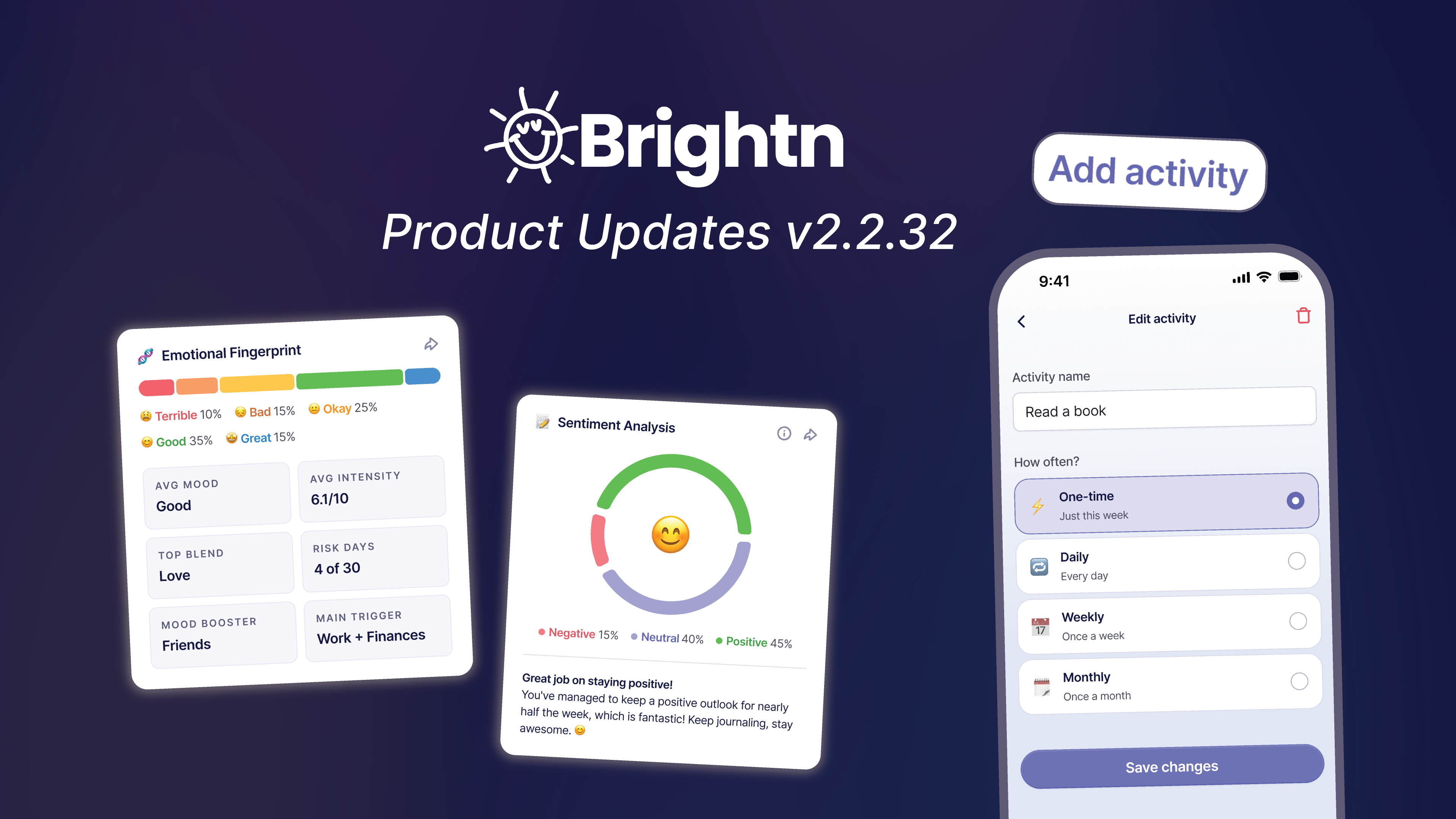
Brightn makes emotional awareness easier to practice, especially during stressful seasons.
🔹 Guided reflections: Explore prompts like "What do I need to feel grounded before I go home?"
🔹 Mood tracking: Notice emotional patterns throughout the holidays and learn what affects your balance most.
🔹 Community spaces: Connect with others navigating similar family and relationship stressors, no matter where you spend the season.
Whether you are traveling home, celebrating with friends, or spending the holidays on your own, Brightn helps you move through the season with clarity, compassion, and calm.
Get Brightn on iOS or Android and start building your emotional wellness toolkit today.

Family dynamics tap into deep emotional patterns and expectations. Even small interactions can trigger memories or roles from the past, making it harder to stay grounded.
Focus on staying calm instead of being right. Use short pauses to breathe before responding and steer conversations toward shared memories or lighter topics.
Connection can take many forms. Reach out to a trusted friend, join a community event, or volunteer. Genuine connection doesn't always come from family. It can come from kindness and shared experiences.
Guilt is normal when you start prioritizing your needs. Over time, setting healthy limits leads to stronger, more balanced relationships built on mutual respect.
Notice when you start feeling irritable, tired, or emotionally detached. These cues signal it's time to step back, rest, or take a short break before burnout sets in.

The holidays don't have to drain your emotional energy. With the right tools and strategies, you can navigate family dynamics, set healthy boundaries, and find genuine moments of connection—even during the most challenging seasons.
Start your mental wellness journey today. Download Brightn for guided support, mood tracking, and a community that understands what you're going through.