Emilie Mauricio
March 23, 2026
•
7 min read
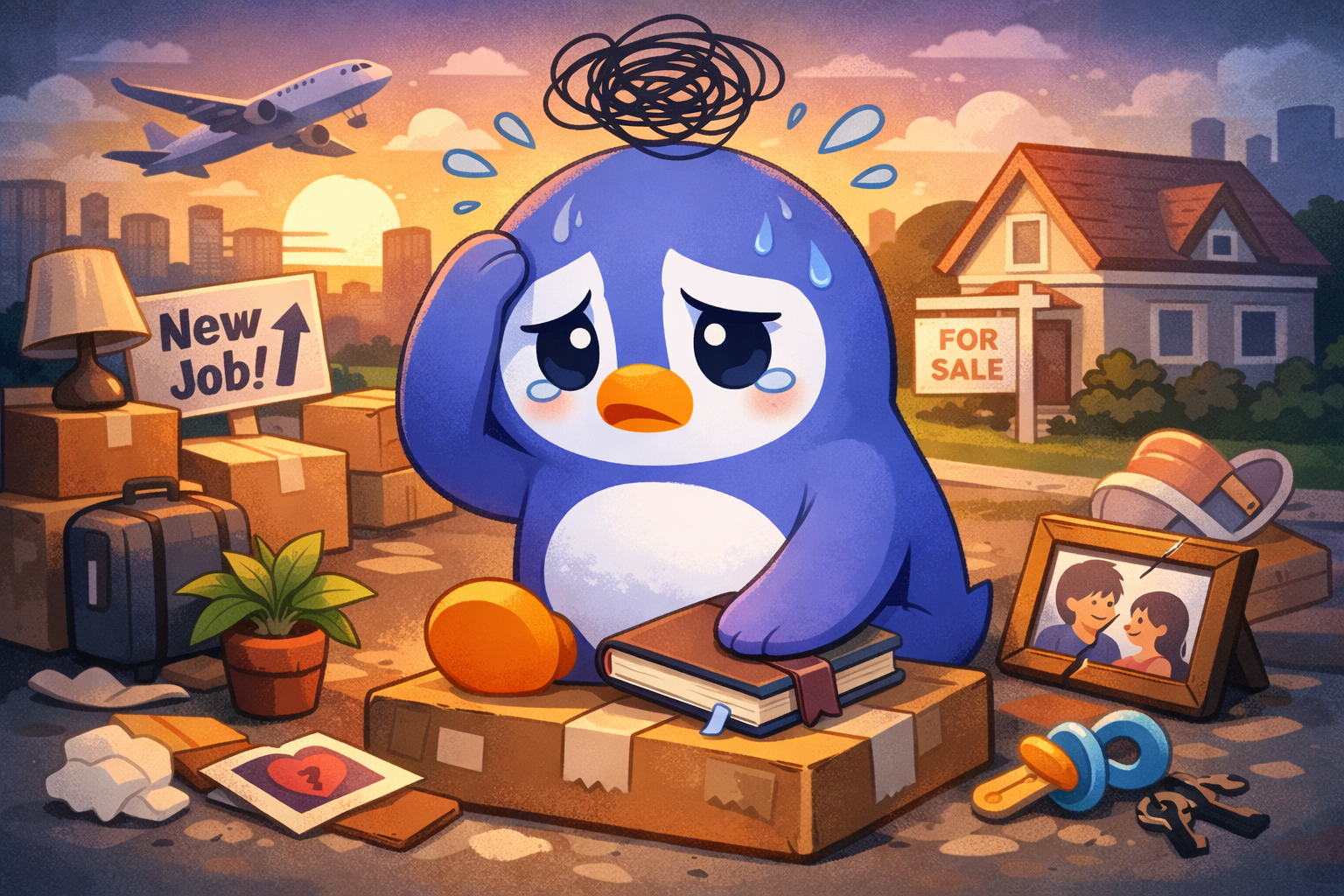
Moving to a new city. Starting a new job. Ending a relationship. Becoming a parent. Losing someone you love. These moments are supposed to be significant—and they are. What nobody mentions is how completely disorienting they can be, even when they're exactly what you wanted.
Major life transitions don't just change your circumstances. They shake the foundation of your identity, routines, and sense of stability. Your brain has to rebuild its map of the world while you're actively living in it. That's exhausting, and it's why transitions—even positive ones—can trigger anxiety, depression, and a persistent feeling that you're not handling things as well as you should be.
You are. This is just hard.
Your brain loves predictability. It's built entire systems around anticipating what comes next so it can conserve energy and keep you safe. When your life changes dramatically, those systems suddenly don't work anymore. The coffee shop where you used to decompress doesn't exist in your new neighborhood. The colleague who understood your work style isn't at your new job. The identity you built over years ("I'm a student," "I'm married," "I'm a manager") no longer fits.
Psychologists call this "role transition" stress, and research shows it's one of the most significant predictors of mental health challenges. Your brain is doing triple duty: grieving what you lost, navigating unfamiliar territory, and trying to construct a new version of normal. All while everyone around you might be expecting you to just... adjust.
The sneaky part? Positive life changes can be just as destabilizing as negative ones. That dream job still means leaving behind the comfort of knowing exactly how your day will unfold. That new baby is a miracle who also obliterates your sleep, autonomy, and previous identity. Society celebrates these transitions, which can make you feel guilty or confused about why you're struggling instead of purely joyful.
Understanding where you are in a transition can help you stop fighting the process and start working with it. Most major life changes follow a predictable emotional pattern, even though the timeline varies wildly from person to person.
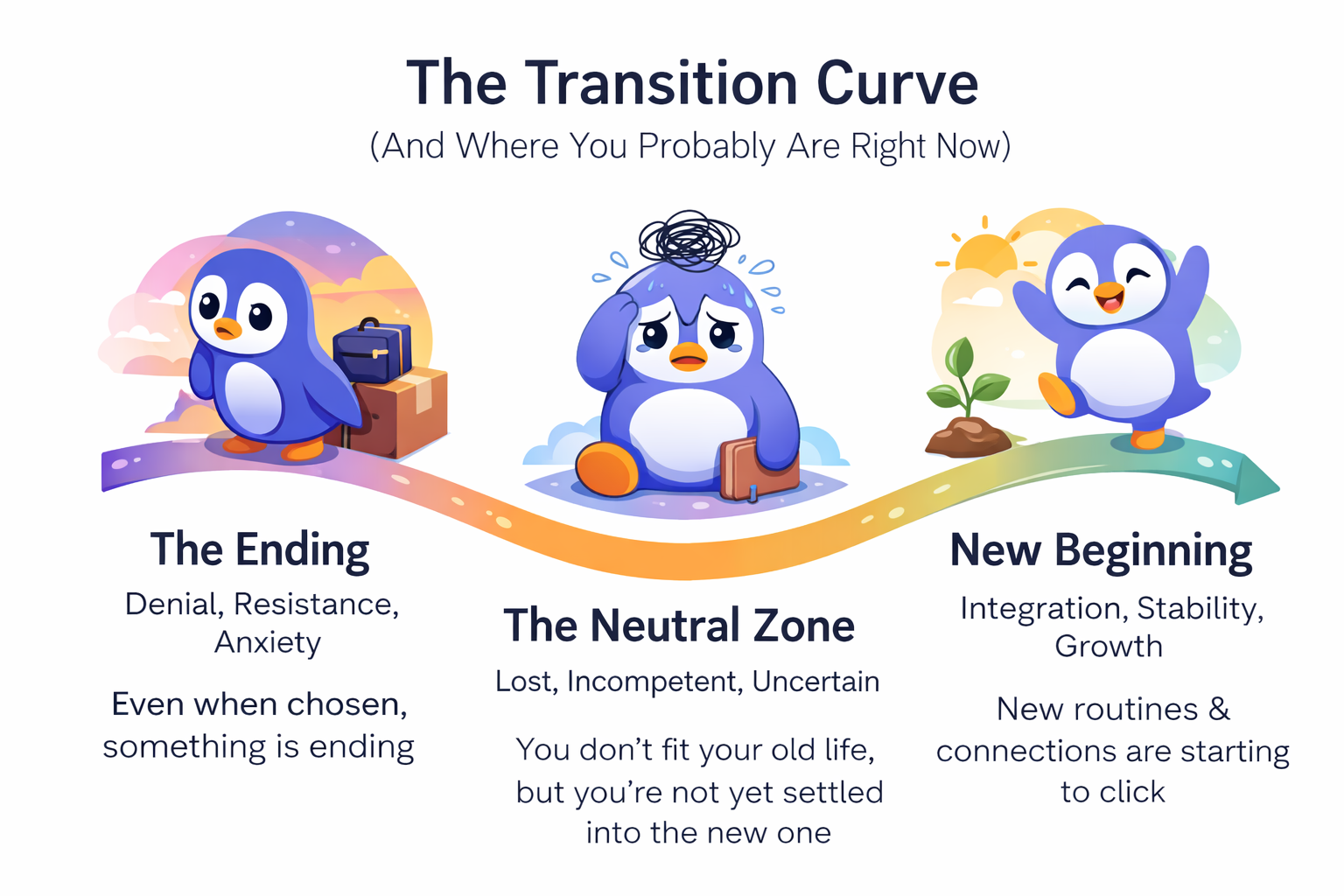
The Ending: Even when you chose the change, something is ending. This phase often brings denial, resistance, or anxiety. You might find yourself clinging to old routines that no longer fit or second-guessing your decision entirely. This isn't weakness—it's your brain trying to protect you from the discomfort of uncertainty.
The Neutral Zone: This is the messy middle where you're no longer who you were but not yet who you're becoming. Nothing feels natural. Simple tasks take three times as long. You might feel lost, incompetent, or like you've made a terrible mistake. This is the phase most people don't talk about, which makes it even more isolating when you're in it. It's also, unfortunately, the phase you can't skip.
The New Beginning: Eventually, things start clicking. You develop new routines, build new connections, and integrate this change into your identity. You stop bracing for impact and start actually living again. This doesn't mean everything is perfect—it means the transition has settled into your new baseline.
The problem is you can't rush through these phases. You can only support yourself while you move through them.
Name what you're grieving. Even if you wanted this change, you're allowed to mourn what you're leaving behind. Maybe it's the version of yourself who had different priorities, the relationships that won't survive the distance, or simply the comfort of knowing how things worked. Acknowledging loss doesn't mean you regret your choice—it means you're being honest about the full experience.
Create closure rituals. Your brain needs markers to signal that something has ended. This could be as simple as a goodbye dinner with coworkers, journaling about what a chapter of your life meant to you, or literally packing up physical reminders of your old life. Rituals help process emotions that don't fit neatly into words.
Protect your basics. When life is chaotic, double down on the fundamentals: sleep, movement, nutrition, and connection. These aren't luxuries you'll get to when things settle down—they're the foundation that helps you cope with the chaos. Your body doesn't know the difference between good stress and bad stress; it just knows you're under pressure and needs extra support.

Lower your expectations drastically. You're essentially learning a new language while everyone around you is speaking fluently. Of course you feel incompetent. This phase requires you to be a beginner again, which is deeply uncomfortable if you're used to being competent. Give yourself permission to be bad at things temporarily without making it mean something about your worth or capabilities.
Build tiny anchors of familiarity. You can't recreate your old life, but you can create small touchpoints of stability. Maybe it's your morning coffee ritual, a weekly call with someone who knew you before, or a specific playlist that grounds you. These anchors remind your nervous system that not everything is unfamiliar.
Track small wins. When everything feels hard, it's easy to focus only on what isn't working. Each day, write down three things you navigated, learned, or survived. Not accomplished—just handled. "I figured out the bus route." "I introduced myself to a neighbor." "I got through a hard day without falling apart." Progress in transitions doesn't look like productivity. It looks like persistence.
Use tools that create structure when your life doesn't have any. Brightn helps you maintain consistency with mood tracking and mental health check-ins even when your daily routine is completely upended. Having data about your patterns can help you identify what's helping and what's making things harder.
Test and iterate. Your new life won't look like your old life, and trying to force it into that shape will only create frustration. Experiment with new routines, communities, and identities. Some won't fit. That's information, not failure. Building a life that works for who you're becoming requires trial and error.
Redefine your support system. The people who supported you through your old life might not understand or be equipped for this new version. That's okay. Actively seek out people who are navigating similar transitions or who accept you as you are now, not as you were. This might mean joining new communities, finding a therapist who specializes in life transitions, or being more intentional about who gets your energy.
Integrate the transition into your story. At some point, this major change stops being "the thing that's happening to you" and becomes part of who you are. You're not the person who just moved—you live here now. You're not new at this job—you work here. This integration doesn't happen all at once, but you'll notice moments where the new normal stops feeling new.
Transitions are hard on everyone, but sometimes they trigger or unmask mental health conditions that need professional support. Pay attention if you notice:

These aren't signs you're weak or failing at the transition. They're signs your brain needs more support than you can provide on your own, and there's zero shame in that.
It's not linear. You'll have good days where you feel like you're finally adjusting, followed by terrible days where you question everything. That's not regression—it's just how healing and adaptation actually work. Two steps forward, one step back is still forward motion.
You don't have to love it right away. You can simultaneously know you made the right choice and hate how hard it is. Both things can be true. Toxic positivity tells you to focus on gratitude and silver linings, but sometimes you just need to acknowledge that this sucks right now, even if it's ultimately good for you.
Some relationships won't survive. Not everyone will understand your choice or be willing to grow alongside you. Transitions often reveal which relationships were built on circumstance versus genuine connection. This is painful, but it's also information about who belongs in your next chapter.
You're allowed to change your mind. Just because you chose something doesn't mean you're locked in forever. Life is long, and you're allowed to make different choices as you get new information about what works for you. Sometimes the bravest thing you can do is admit a transition isn't serving you and make another change.
Your identity is more flexible than you think. You are not your job, your relationship status, your location, or your role. Those are parts of your life, not the whole of who you are. Transitions strip away the external markers you've used to define yourself, which is terrifying and also an opportunity to discover what remains when everything else changes.
Life will keep changing. That's not pessimism—it's reality. Building mental health practices now means you'll have tools ready when the next transition inevitably arrives.

Develop a personal reset routine. Know what helps you when everything feels chaotic. Maybe it's getting outside, calling a specific friend, journaling, or moving your body. Having a go-to practice means you don't have to figure out self-care from scratch when you're already overwhelmed.
Build emotional flexibility. Practice sitting with discomfort in small doses so you develop tolerance for the bigger upheavals. This might look like trying new things regularly, having difficult conversations before they become crises, or intentionally doing things that push you slightly outside your comfort zone.
Cultivate relationships based on who you are, not just what you do. Friendships built on shared circumstances (coworkers, neighbors, fellow parents at school pickup) are valuable but vulnerable to life changes. Invest in relationships with people who know and accept your core self, independent of your current role or location.
Track your patterns over time. Understanding how you typically respond to stress and change helps you anticipate your needs during transitions. Download Brightn to create a baseline of your mental health patterns so you can spot when a transition is pushing you outside your normal range and take action early.
The cultural narrative around major life changes is deeply dishonest. It shows you the before and after—the old life, then the new happy chapter—without acknowledging the messy, uncertain, sometimes miserable middle where most of the actual living happens.
If you're in that middle right now, nothing is wrong with you. You're not handling it poorly because you're struggling. You're having a completely normal human response to significant change, and the struggle is part of the process, not evidence you've failed at it.
Support your mental health by being honest about where you actually are, not where you think you should be. Ask for help. Lower the bar. Trust that your brain will eventually build new maps and this will feel less like freefall. And remember: the fact that it's hard doesn't mean you made the wrong choice. Sometimes it just means you're in the middle, and the only way out is through.
Navigating a major life change? Download Brightn to track your mental health patterns, identify what helps during transitions, and get personalized support while you're building your new normal. Available on iOS and Android.