Rylee
April 13, 2026
•
5 min read

Emotional clarity is not about controlling your feelings or staying positive all the time. It is about understanding what you feel, why you feel it, and how those emotions influence your thoughts and decisions.
When emotions go unprocessed, they tend to take up mental space. This can make it harder to focus, problem solve, or feel grounded. Research consistently shows that improving emotional clarity supports better decision making, stress regulation, and overall mental wellness.
And the good news is that emotional clarity is not a fixed trait. It can be strengthened through simple, daily practices.
Emotional clarity refers to your ability to identify, differentiate, and understand your emotions. Psychologists describe it as knowing not just what you feel, but also the source of those feelings.
When your emotional clarity is low, emotions can feel confusing or overwhelming for longer periods of time. When your clarity is high, emotions become informative rather than disruptive in the moment and long term.
Emotions and cognition are deeply connected. When strong emotions remain unprocessed, they can consume our brain power and interfere with clear thinking. Negative emotions can lock up mental bandwidth, making it harder to focus, make decisions, or stay present.
Improving emotional clarity helps you:
Emotional clarity does not remove difficult emotions (that’s not possible or realistic). Instead, it helps you work with them more effectively.

Emotional clarity is built through consistency rather than intensity. Small, repeatable habits are more effective than occasional deep reflection.
Simply labeling emotions can reduce their intensity. Research shows that naming emotions helps activate brain regions involved in regulation rather than reactivity. Taking a moment to ask yourself what you are feeling and why can improve your clarity and reduce emotional clutter.
Mindfulness helps you observe emotions without judgment. According to Mayo Clinic, mindfulness practices improve our attention, emotional balance, and stress management by keeping us grounded in the present moment. Even one minute of focused breathing can help create space between emotion and reaction.
Emotions often show up physically before we recognize them mentally. Paying attention to tension, restlessness, stomach aches, or fatigue can provide early clues about your emotional state.
Short daily journaling helps externalize emotions instead of holding them internally. Writing one or two sentences about how you feel and what may have caused it can improve emotional clarity over time. It’s about validating yourself and show yourself that you are there for you.
Daily habits like movement, sleep, and connection play a key role in emotional clarity. NHS highlights evidence based steps to mental wellbeing, including staying active, connecting with others, and paying attention to the present moment. Overall, emotional clarity improves when your nervous system feels supported.

Emotional clarity can be more difficult during periods of stress, burnout, or major life changes. This makes sense because strong emotions may temporarily cloud thinking.
Psychologists emphasize that practice acknowledging emotions rather than suppressing them helps restore clarity over time. Think of it like a muscle–practing it in times of non-difficult periods means you are more prepared to use those strategies in difficult periods.
To make emotional clarity part of daily life, start small.
Emotional clarity is easier to build when reflection is structured and supported.
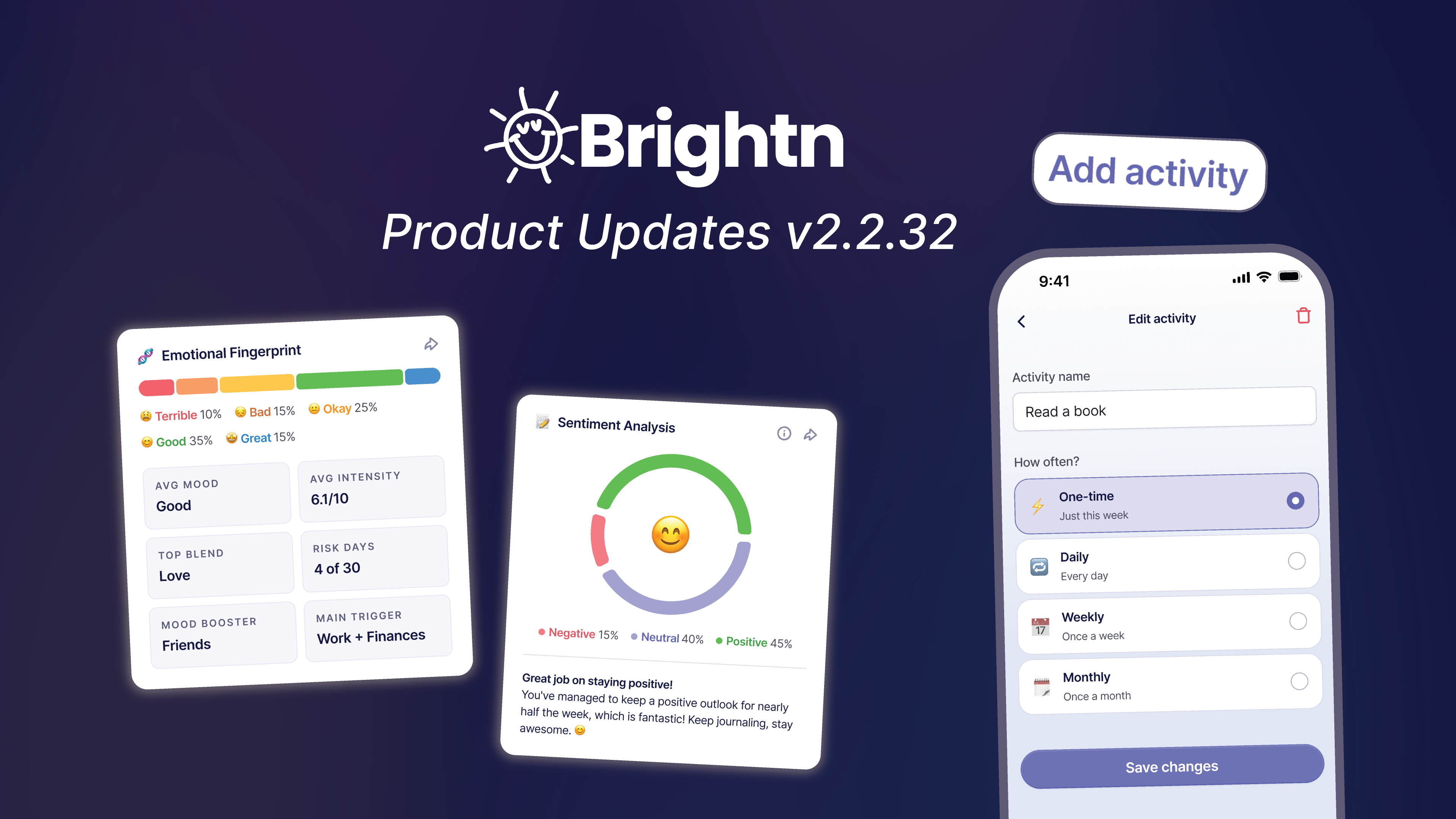
Instead of guessing how you feel or why, Brightn helps you build awareness one day at a time. Emotional clarity grows through small moments of reflection. Brightn helps you make those moments consistent. Through guided journaling, mood tracking, and AI driven insights, Brightn helps you identify emotional patterns and understand what influences them.
Start your journey to better mental health — Download Brightn free

Emotional clarity means understanding what emotions you are experiencing and what caused them.
Yes. Emotional clarity supports emotional regulation, clearer thinking, and healthier decision making.
It varies, but consistent daily practices can improve your emotional clarity over time.
Tools like journaling, mindfulness, or guided reflection can help improve your emotional awareness. The more you do it, the better you will get at it.
Personality and Individual Differences. Emotional clarity and emotional regulation
https://pmc.ncbi.nlm.nih.gov/articles/PMC3170750/
Psychology Today. A Simple Test of Your Emotional Clarity
https://www.psychologytoday.com/us/blog/fulfillment-at-any-age/202511/a-simple-test-of-your-emotional-clarity
Mayo Clinic. Mindfulness exercises
https://www.mayoclinic.org/healthy-lifestyle/consumer-health/in-depth/mindfulness-exercises/art-20046356
Healthline. Habits to improve mental health
https://www.healthline.com/health/mental-health/habits-to-improve-mental-health
NHS. Five steps to mental wellbeing
https://www.nhs.uk/mental-health/self-help/guides-tools-and-activities/five-steps-to-mental-wellbeing/