Emilie Mauricio
January 15, 2026
•
3 min read

Feeling stuck between therapy sessions or unsure how to continue personal growth without formal support? If you’re searching for a proactive, affordable option that guides you beyond the waiting rooms and high costs of traditional therapy, Brightn may be the next step toward rediscovering balance, motivation, and long-term purpose.
Therapy can be transformative, but many people find themselves navigating long waitlists, prohibitive fees, or drifting away from treatment due to life’s demands. For those who have “dropped out” of therapy or are simply in between appointments, the gap in support can be discouraging. Brightn was created for these moments—when you need structure, consistency, and encouragement without the complexity of scheduling or the financial strain of frequent sessions.
According to the Anxiety and Depression Association of America (ADAA), over 40 million adults in the U.S. struggle with anxiety disorders, yet only 36.9% receive treatment1. This gap highlights the need for accessible tools that empower individuals to take control of their mental health in a more approachable and sustainable manner. By offering an affordable alternative, Brightn makes mental wellness accessible to individuals who might otherwise feel stuck. The app is available whenever you need it, reducing the frustration of delayed progress and the uncertainty of waiting for your next therapy appointment. Through a self-guided and structured approach, Brightn ensures that each day contributes meaningfully to your emotional well-being, restoring a sense of momentum and purpose that may have been lost2.
“Brightn ensures that each day contributes meaningfully to your emotional well-being, restoring a sense of momentum and purpose.”
Instead of feeling adrift, Brightn provides a purposeful roadmap grounded in three key areas—health, wealth, and purpose. In this app you’ll find everything you need to stay engaged and build a healthier mindset, from curated wellness tasks and lessons to inspiring challenges that help you move beyond knowing what to do and toward actively doing it.
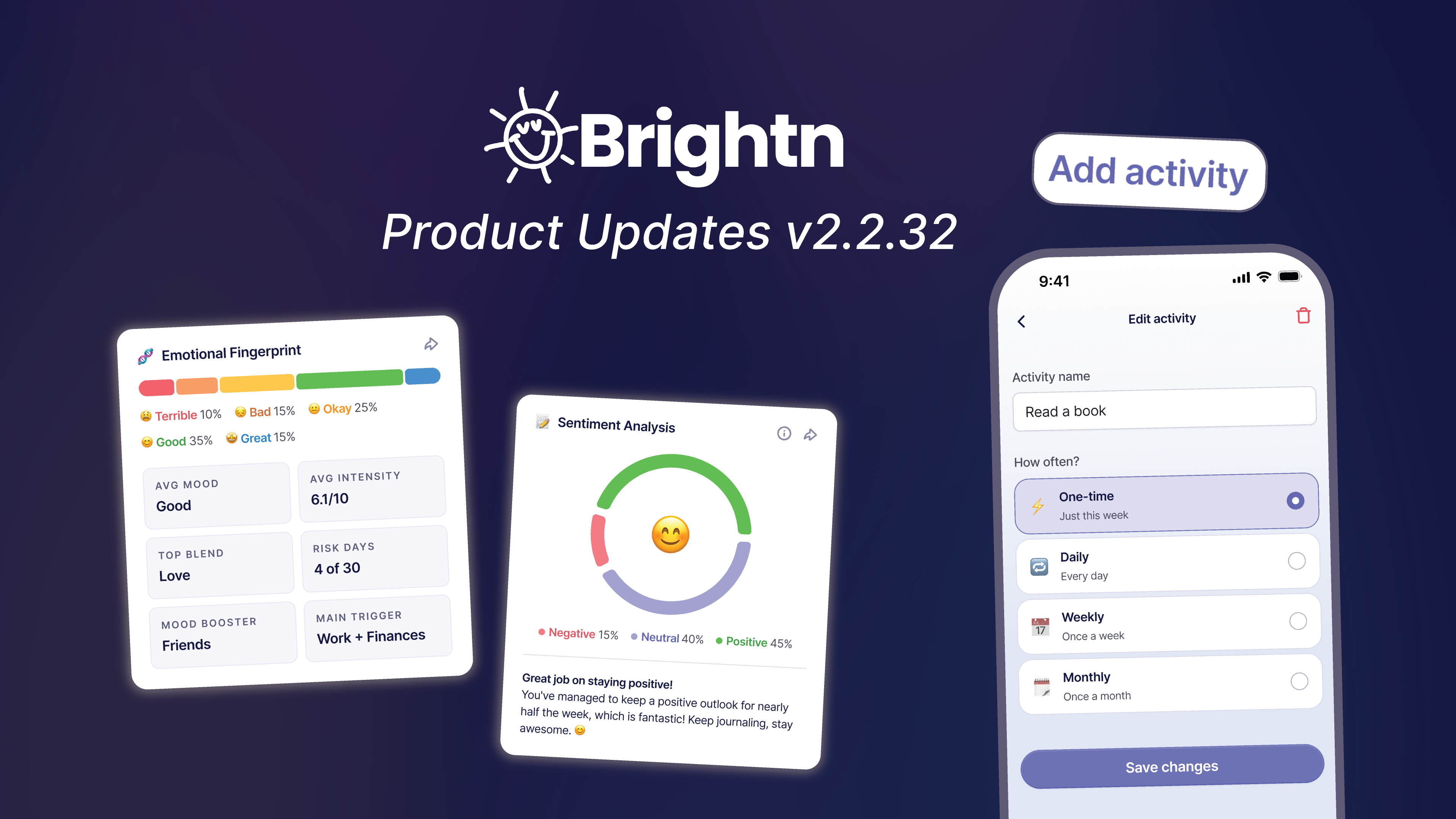
Your daily plan in Brightn incorporates manageable tasks such as brief mindfulness exercises, journaling prompts, and mood check-ins. Alongside these, you’ll gain insights through lessons designed to deepen your understanding of emotional well-being, habit formation, and goal-setting. Rather than tackling vague self-improvement goals, you’ll have a structured environment that nurtures gradual, sustainable change3.
While therapy often focuses on pressing emotional needs, Brightn’s purpose-driven challenges invite you to look deeper. By aligning daily actions with your core values and long-term aspirations, these challenges help you cultivate genuine, lasting motivation. They guide you to identify and work toward personal goals—be it career clarity, stronger relationships, or renewed self-confidence—offering a clear path to rediscovering purpose and direction.
As you engage with these challenges, you’re not just staying busy; you’re creating a solid foundation for resilience and personal fulfillment. With each small victory, you reinforce your capacity for growth. Over time, you’ll witness tangible shifts in your perspective, energy levels, and overall sense of well-being, all without the constraints of regular therapy appointments5.
It’s important to acknowledge that Brightn isn’t a substitute for professional mental health care. Instead, think of it as a complementary resource—an affordable, accessible bridge that fills in the gaps. If you’re between therapy sessions, temporarily without care, or saving up for professional help, Brightn ensures you don’t have to put your mental wellness on hold. By providing guidance, structure, and ongoing support, Brightn maintains the positive momentum you might otherwise lose6.
There’s no need to wait for the perfect conditions to prioritize your mental health. Brightn places the tools for emotional resilience right at your fingertips, allowing you to maintain and deepen the progress you’ve made or take the first step if you’ve been feeling stuck. Through consistent engagement, personalized insights, and purpose-driven goals, Brightn helps you embrace a balanced life enriched by health, wealth, and a renewed sense of purpose.
Ready to take control of your mental well-being? Download Brightn today and discover an approach that transforms waiting and uncertainty into proactive, meaningful growth.