Jeffrey Johnston
February 5, 2026
•
6 min read
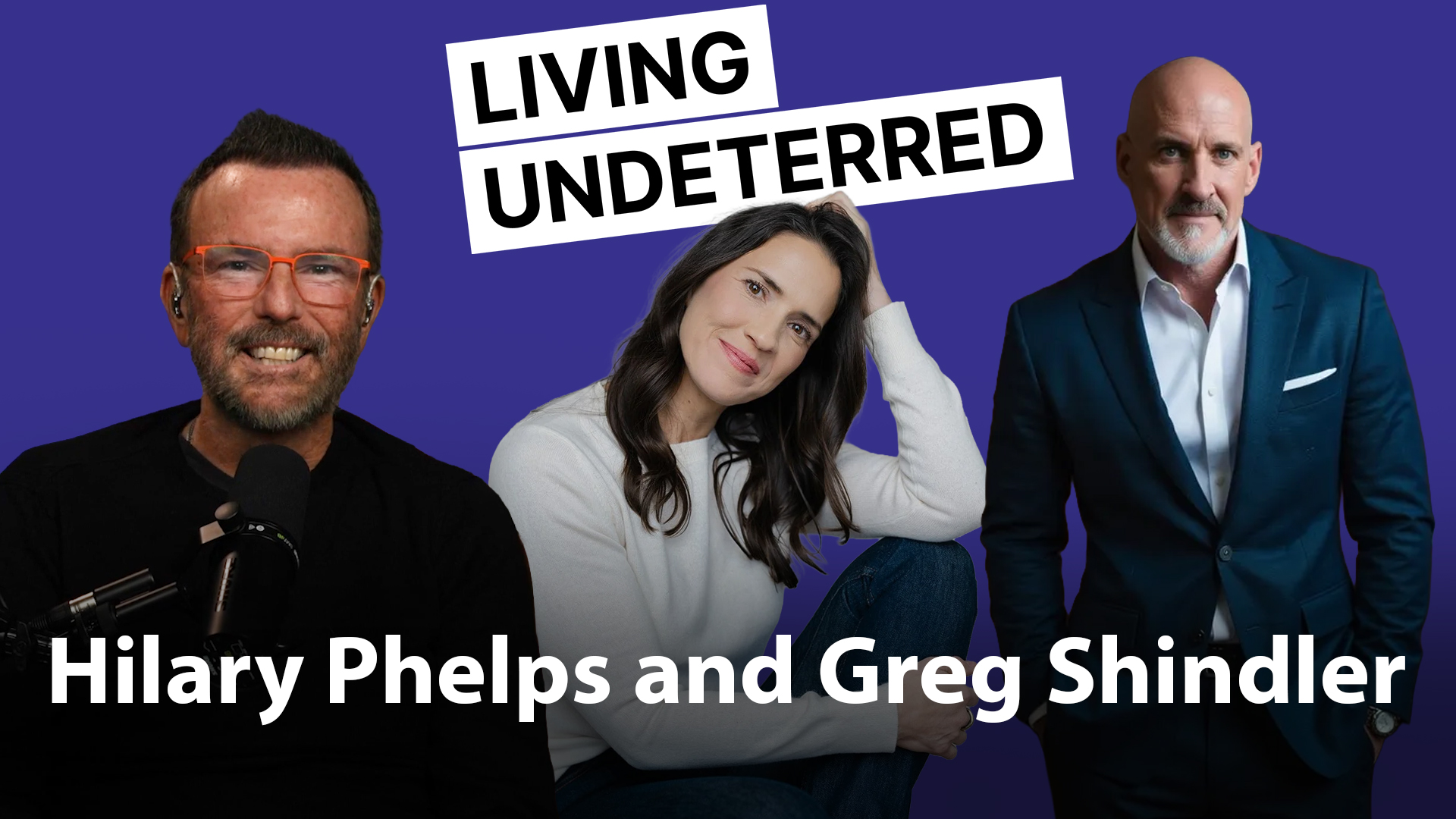
In this episode of Living Undeterred, Jeff Johnston sits down with Hilary Phelps and Greg Shindler for an honest conversation about recovery, conscious leadership, and what it really takes to break cycles that run through families. What starts as a warm reunion quickly turns into something deeper: how pain reshapes identity, why connection matters more than performance, and what it looks like to turn lived experience into service.
Hilary shares her recovery story, including how early substance use began as self-medication, and how the daily practices of community, somatic tools, meditation, and self-respect keep her grounded today. Greg opens up about his personal history with loss and suicide, and the commitment he made to stop inherited patterns with him. Together, they explore the difference between “talking about change” and creating containers where people actually transform, then carry that impact back into the world.
Listen to the full episode here:
Q: What do you do today that keeps you grounded in recovery?
Hilary: Community, recovery groups, meditation, yoga, somatic tools, and honest conversation. She frames it as “choose your hard”: either do the daily practices that protect your life, or return to patterns that create misery.
Q: When did you realize substances weren’t serving you anymore?
Hilary: She started drinking and using substances in middle school, originally to self-medicate depression. She stayed functional on the outside for years, which helped her deny the severity. Over time, she built a toolkit that supported her sobriety and helped her navigate major life transitions.
Q: How do you think about sobriety after losing your son and your wife?
Jeff: He reframes it as honor and commitment, not deprivation. He describes it as a “living amends,” and says alcohol has no pull because it immediately connects to what he’s lost and what he refuses to repeat.
Q: What was your turning point with alcohol?
Greg: A “not today” moment. After a multi-day binge, he looked in the mirror, hated what he saw, said “not today” out loud, and never drank again. He talks about surrender, and “playing the tape all the way through.”
Q: Greg, why is the decision to stay sober so clear for you now?
Greg: He shares that he’s experienced two parent suicides. Knowing the statistics and the risk, he refuses to move closer to that legacy. He has three sons, and he’s determined the cycle stops with him.
Q: Did being Michael Phelps’ sister create pressure that impacted your path?
Hilary: She explains it didn’t drive her substance use. She was a top swimmer herself as a kid, and Michael’s later openness about mental health helped normalize speaking publicly. She highlights how hard “men in mental health” and “women in addiction” can be to talk about, and why visibility matters.
Q: What’s the hard truth about helping someone who’s struggling with addiction?
Hilary: People protect the substance like a best friend, even when it’s destroying them. She emphasizes that change happens when someone is ready.
Jeff: He shares how painful it is to watch someone implode, and why families often hear “they need to hit rock bottom,” even though that can be dangerous. He argues you can’t intervene too early.
Q: What is The Right Room and how can people support it?
Hilary: The Right Room helps women navigate transitions through 1:1 coaching, group cohorts, a podcast, and writing work focused on women in addiction. A membership offering is planned for 2026. (She shares that details are available at her website.)
Q: What is Omeo and who is it for?
Greg: Omeo is an invitation-only membership for visionary leaders, founders, creators, and changemakers who want to align capital, consciousness, and community to create impact at scale. He shares the website and email for those who want to learn more.
This episode is a reminder that healing is rarely loud, clean, or linear. It’s built through the choices you make when no one’s watching: the practices you protect, the relationships you nurture, and the cycles you refuse to pass on.
Hilary and Greg speak with the kind of grounded clarity that only comes from living through it, then deciding to live forward anyway. And Jeff brings it home with a simple truth: when you’ve been pulled out of the abyss, you don’t forget what it felt like. You reach back.
Start your journey to calmer celebrations - Download Brightn free