January 15, 2026
•
6 min read
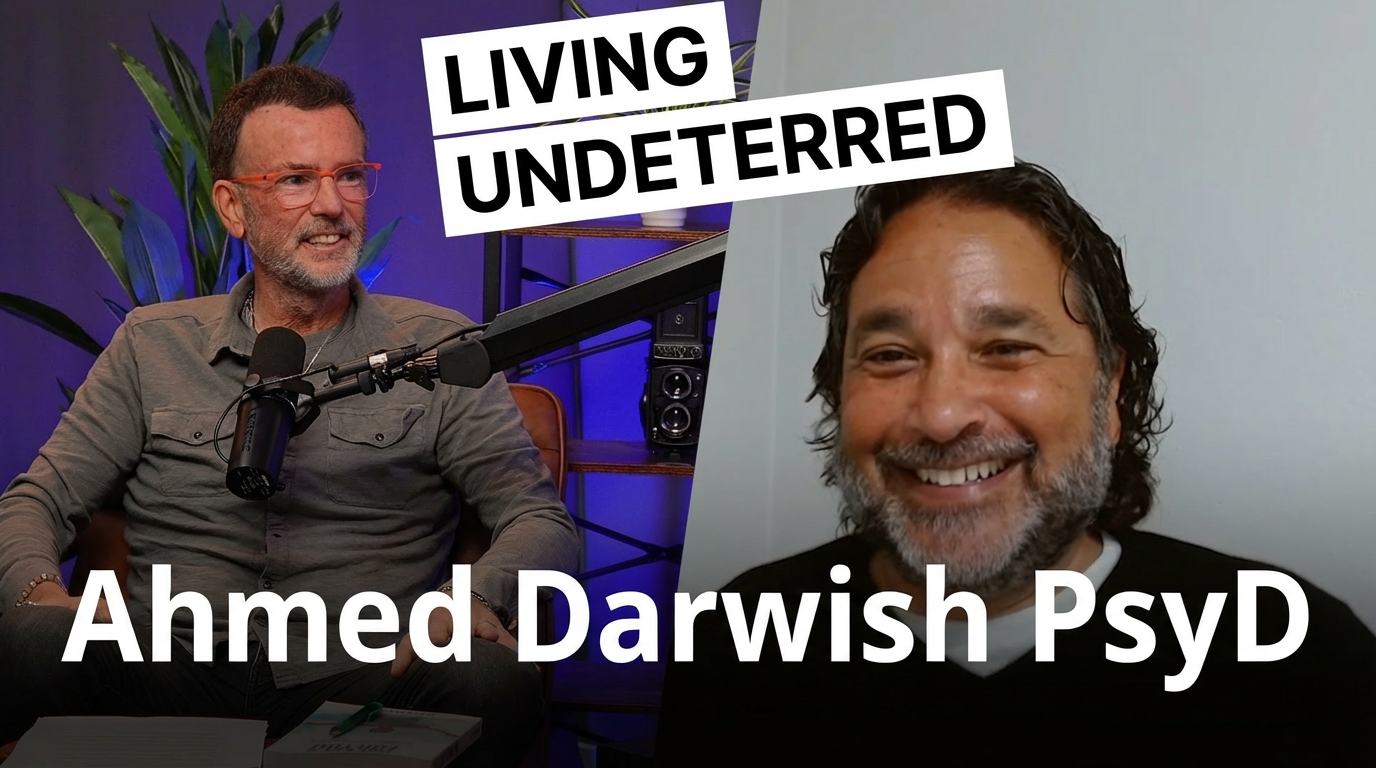
Some conversations feel less like interviews and more like mirrors.
This episode with Ahmed Darwish PsyD, a psychologist, trauma expert, and founder of The Living Organism Project, is one of them.
Ahmed sits down with Jeff Johnston to explore the experiences that shaped him, from growing up in a home filled with trauma to becoming the “family psychologist” at a young age. He explains how childhood survival strategies can become adulthood strengths, why so many people today are in a “spiritual crisis,” and what healing looks like in a world overwhelmed by stress, fear, and rapid technological change.
He also dives deep into the future of mental health, including psychedelics, talk therapy, bilateral stimulation, and AI. For Brightn listeners, his perspective on technology as a tool for democratizing mental wellbeing is especially powerful.
This Q&A is adapted from the full interview, preserving Ahmed’s voice, insight, and wisdom.
Listen to the full episode here:
Ahmed: I grew up in a household filled with trauma. There was substance abuse, suicide attempts, alienation… all kinds of things. From a young age, I became the family psychologist because that was how I survived. I learned to read people, listen, and understand what kept me safe.
But I also had this part of me that wanted people to feel good. So I was always trying to figure out, “How do I stay safe and help someone else feel better?”
Those instincts eventually grew into my life’s work.
As a kid, my dream was to be a professional baseball player. When that didn’t happen, the next dream was to help make the world better. And everything I experienced in my family — all the trauma — eventually shaped the expertise I would later share with others.
Ahmed: First, there are different categories.
One is learning to name what happened. Talk therapy is still invaluable. Once you can name the trauma, you can create a plan for how you want to relate to it.
Another category involves bilateral brain stimulation like EMDR. When you stimulate both hemispheres of the brain, you open new neural pathways that help people process traumatic memories more safely.
And then there's the emerging space of plant medicine and psychedelics. These can be powerful for trauma, but they must be used carefully, especially for people with bipolar or psychotic disorders in their family history. They can be activating instead of healing.
Ahmed: We’re moving toward recognizing just how limited the old systems are — especially when they exist inside a society that is itself overwhelming people.
We’re starting to honor the idea that:
One of the biggest frontiers is alignment with personal values. When people understand their values and observe whether they’re living in alignment with them, symptoms often reduce.
We’re also seeing technology play a bigger role. When used well, technology increases access to care and helps people build self-awareness outside of traditional therapy sessions. That’s where tools like Brightn come in.
Ahmed: I think the sky’s the limit.
AI is democratizing information. Everyone now has access to something incredibly smart, which means the playing field shifts. People who didn’t have resources before now have tools they can use.
The key challenge is making sure AI is guided ethically — avoiding manipulation, hallucinations, or harmful interactions. We’re still learning.
But as a complement to human support?
AI could be extraordinary. Especially when built with compassion, evidence-based frameworks, and strong guardrails — like what Brightn is doing.
I believe AI should be integrated into every subject in every classroom. It’s becoming part of our psychological, creative, and educational landscape.
Ahmed: Many people are questioning their beliefs, their meaning, their purpose. Some feel abandoned by the God they grew up believing in. Others have no belief system and wish they did.
My view is this:
God doesn’t choose the qualified. God qualifies the chosen.
We are all chosen for something in this life. And the challenges we face are part of the qualifying. They shape us into who we’re supposed to become.
I also believe we’re in a period of regression before a collective launch. Just like children regress before they hit the next developmental milestone, society is doing the same. And that gives me hope. We’re moving toward authenticity. Toward living in alignment with our values. Toward a world where we share our individuality rather than hoard and isolate ourselves.
Ahmed: Absolutely.
If one person in one place can make a choice that spreads a virus worldwide… then why can’t one person make a choice that spreads hope the same way?
The Living Organism Project is built on that idea.
That our choices ripple outward. That healing, peace, and purpose can spread just as easily as fear and pain.
It’s about understanding that we are interconnected — and using that understanding to create positive change at scale.
Dr. Ahmed Darwish reminds us that trauma does not define us — it shapes us. Healing is possible at any stage of life when we learn to name our experiences, honor our values, and tap into the inner wisdom we already carry.
He believes AI, when grounded in compassion and evidence-based practice, can play a transformative role in mental wellness. And he challenges us to rethink our values, our spirituality, and our connection to one another in a world overwhelmed by distress.
If you’re ready to take a step toward healing, reflection, and grounding, Brightn can help.
Our daily journaling, mood tracking, and guided wellness paths give you a safe space to process what you’re carrying — and build strength one day at a time.
👉 Download Brightn today and start your free trial.